
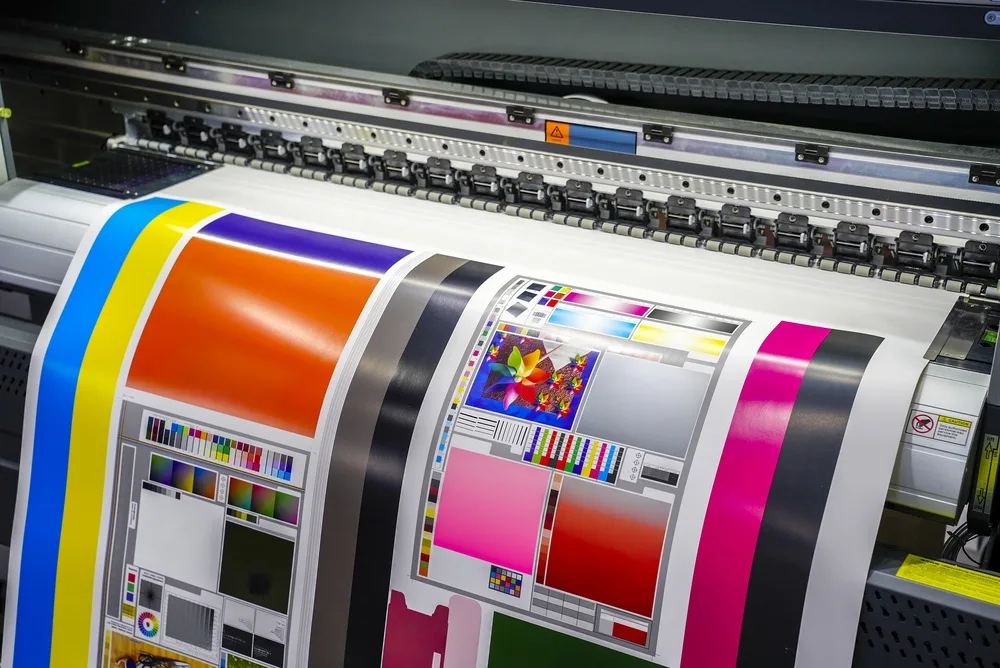
From Creative Files to Real-World Results: How Modern Printing Supports Business Marketing
A business may have a strong website, active social media profiles, and a recognizable logo, but its brand experience does not have to stop at a screen. Printed materials continue to give businesses practical ways to communicate with customers in physical spaces.
Business cards, brochures, apparel, signs, postcards, trade show displays, promotional products, and other printed materials can all contribute to how a company is recognized. When these materials follow a consistent visual direction, they can strengthen brand recognition across different customer touchpoints.
For businesses operating in competitive local markets such as Southwest Missouri, combining digital communication with physical marketing can create a broader and more consistent presence.
To make the most of print, however, businesses need to understand some of the fundamentals behind modern printing, including artwork preparation, color systems, apparel decoration methods, and brand consistency.
Why Physical Marketing Still Has a Place in Modern Business
The growth of digital marketing has made it easier for businesses to reach customers online, but physical marketing still provides something digital channels cannot completely replicate: a tangible brand experience.
A customer can keep a business card, pick up a brochure, wear a branded shirt, or see a company sign repeatedly while driving through town. These physical interactions can help reinforce a company's identity over time.
Printed marketing can also complement online campaigns.
For instance, a postcard campaign can introduce a service and direct recipients to a website using a QR code. A trade show brochure can encourage visitors to follow a company's social media profile. Branded apparel can increase visibility while employees interact with customers.
The important factor is coordination. When print and digital materials use similar colors, messaging, imagery, and branding, customers receive a more consistent experience.
Start With the Right Artwork
The quality of a finished printed product often begins with the quality of the artwork supplied for production.
One important distinction is between raster and vector graphics.
Raster graphics are composed of individual pixels and are commonly found in formats such as JPG, PNG, and TIFF. They work well for photographs and detailed images, but enlarging a low-resolution raster file can cause visible pixilation.
Vector artwork uses mathematical paths instead of fixed pixels. Because of this, vector graphics can generally be scaled to different sizes while maintaining sharp edges. Logos, icons, illustrations, and text-based graphics are common examples where vector artwork can be particularly useful.
This becomes especially important when the same logo needs to appear on different materials. A company might use its logo on a business card one day and on a large outdoor sign the next.
Businesses preparing artwork for print can learn more about raster and vector image formats before submitting files for production.
Using suitable artwork from the beginning can reduce production delays and help maintain a professional appearance across different printed products.
Understanding the Difference Between RGB and CMYK
Color is another important consideration when moving a design from a digital screen to a physical product.
Digital screens typically use RGB, which stands for red, green, and blue. Traditional process printing commonly uses CMYK, which represents cyan, magenta, yellow, and black.
Because screens and printing processes produce color differently, an image displayed on a monitor may not look exactly the same when reproduced with physical inks.
This is particularly relevant for businesses with established brand colors. A company's signature color may appear across its website, stationery, signage, packaging, apparel, and promotional materials. Without proper color preparation, differences can become noticeable between applications.
Designers and business owners should therefore check the requirements of their chosen printing process before submitting artwork.
For additional information about preparing digital colors for print, this guide to RGB and CMYK explains the basic differences and why they matter.
Selecting the Right Apparel Printing Method
Custom apparel can turn everyday clothing into another opportunity for brand exposure. Businesses use printed shirts, uniforms, sweatshirts, and other garments for employees, events, promotions, and customer giveaways.
Two popular decoration options are direct-to-film printing, commonly called DTF, and screen printing.
Screen printing uses screens to transfer ink onto a garment and is often associated with larger production runs and certain types of bold, straightforward artwork.
DTF printing uses a digital printing process to create a transfer that is then applied to the garment. It can be useful for detailed artwork, gradients, and designs containing multiple colors.
The appropriate method depends on several factors, including the number of garments, artwork complexity, garment material, number of colors, and desired finish.
Rather than choosing a method based only on popularity, businesses should consider the specific requirements of their project. A comparison of DTF and screen printing can help when evaluating these options.
Make Every Marketing Material Look Like Part of the Same Brand
A recognizable brand is built through repetition and consistency.
A logo is only one part of that process. Colors, fonts, photography, graphic styles, messaging, and layout choices can all influence how customers perceive a business.
Consider a company whose website uses one color palette while its brochures, uniforms, business cards, and storefront graphics use completely different visual styles. Each item could look acceptable individually, but together they may not create a strong sense of brand continuity.
Businesses can improve consistency by establishing basic visual guidelines and applying them across both digital and physical marketing.
These guidelines may cover:
- Logo placement and sizing
- Primary and secondary brand colors
- Typography
- Photography styles
- Graphic elements
- Marketing language
- Signage and apparel designs
- Printed promotional materials
Maintaining these standards can make it easier for customers to connect different marketing materials with the same business. Businesses looking for additional branding ideas can explore this guide to building a strong brand identity.
Create a Coordinated Presence at Trade Shows
Trade shows, conferences, and corporate events are environments where printed materials can work together particularly well.
Instead of relying on a single banner, businesses can create a coordinated display using retractable banners, backdrops, table covers, brochures, business cards, promotional products, apparel, and other branded materials.
Consistency matters because event attendees may encounter a company from several directions during the same event. A matching visual style can make those different materials feel connected.
Large-format printing also introduces additional artwork considerations. A logo that looks sharp on a business card needs to remain clear when reproduced at a much larger size. Vector artwork is often valuable for logos and typography, while photographs should have enough resolution for the intended output size.
Businesses preparing for an upcoming event can explore ideas for trade show and corporate event marketing materials.
Early planning is also important. Ordering materials close to an event date can create unnecessary pressure if artwork changes, production takes longer than expected, or additional materials are needed.
Give Every Printed Piece a Purpose
Not every printed product needs to perform the same marketing function.
A business card may be designed for networking. A brochure can provide detailed information. A flyer may promote a particular offer or service. A postcard can support a local campaign, while a banner can increase visibility at a physical location or event.
The strongest print campaigns begin by identifying what the material is expected to accomplish.
For example, a local company could mail postcards to potential customers in a specific area. The postcard might highlight a service, provide a short explanation of its value, and include a QR code that leads to a landing page. The company could then use digital advertising or email marketing to reinforce the same message.
In this type of campaign, the printed piece is not working independently. It is part of a broader customer journey.
Businesses interested in understanding how physical materials can support promotional campaigns can explore this overview of print advertising.
Connect Print With Digital Marketing
Modern printing does not have to compete with digital marketing. The two channels can work together.
A printed brochure can direct customers online. A business card can include a social media handle. A postcard can use a QR code to connect with a landing page. A trade show display can encourage visitors to scan a code for additional information.
This approach creates multiple opportunities for customers to interact with the same brand.
The key is maintaining consistency between the physical and digital experience. If a customer scans a QR code on a postcard and lands on a page with completely different branding or messaging, the connection can feel weaker.
Using consistent design elements across channels helps create a more unified customer experience.
Better Printing Starts With Better Planning
Successful print marketing involves more than choosing a product and sending a file to a printer.
Businesses need to think about the purpose of the material, the audience, artwork quality, color requirements, production method, physical size, materials, quantity, and distribution.
A well-prepared project can also make it easier to maintain consistency across different marketing materials. The same properly prepared logo and brand assets can potentially be adapted for stationery, apparel, signage, promotional products, event displays, and other applications.
For businesses in Southwest Missouri and other local markets, this combination of thoughtful design and strategic printing can support a recognizable presence both online and offline.
Turning Design Into a Real-World Brand Experience
The printing process begins with a digital concept, but its impact happens in the real world.
A well-designed logo becomes a sign customers see from the road. A digital illustration becomes a brochure or banner. A brand color moves from a website onto apparel or promotional products. A marketing message becomes a postcard that reaches a potential customer at home.
Each printed piece represents another opportunity to communicate what a business offers and how it wants to be remembered.
When artwork is prepared correctly, colors are managed carefully, printing methods are selected appropriately, and visual standards remain consistent, print can become an effective extension of a company's broader marketing strategy.
For modern businesses, the goal is not simply to print more materials. It is to create physical marketing that works together with digital communication to build a clear, recognizable, and consistent brand experience.