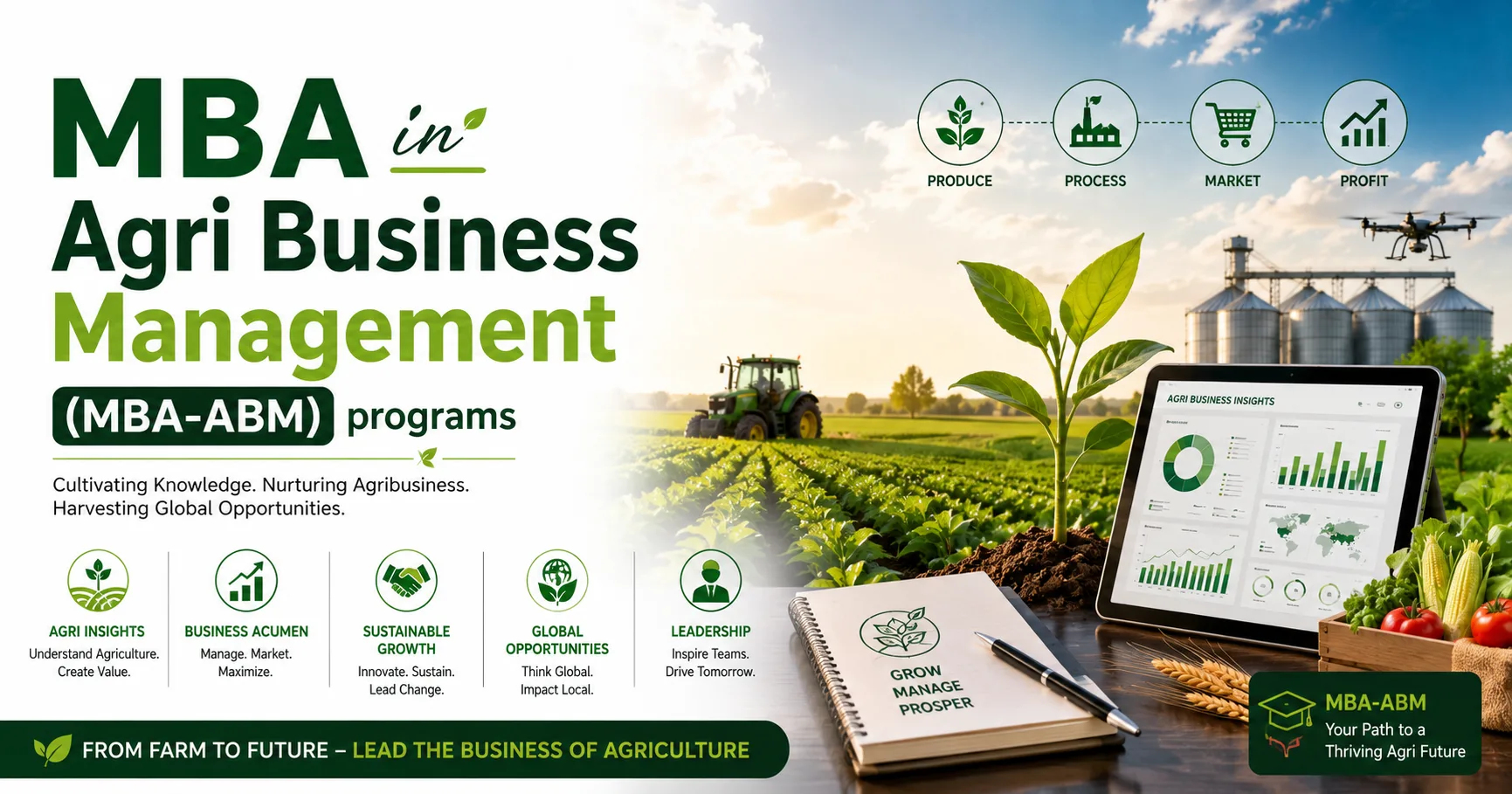
The agriculture and food industries are rapidly evolving with the adoption of digital technologies, smart farming systems, automation and data-driven supply chains. Modern agribusiness is no longer limited to traditional farming practices. Today, industries require professionals who understand agriculture, business management, food processing, technology, sustainability, and market dynamics. This is why MBA in Agri Business Management (MBA-ABM) programs are becoming increasingly valuable for students interested in the future of agri-tech and food business.
The MBA-ABM program at KCT Business School is designed to prepare students for emerging opportunities in agribusiness, agri-tech startups, food processing industries, supply chain management, rural marketing, and sustainable agriculture. The program combines business management education with agriculture-focused industry knowledge to create future-ready professionals.
The Growing Importance of Agri-Tech and Food Business
Agriculture is undergoing a major transformation due to technological advancements and changing consumer demands. Innovations such as Artificial Intelligence (AI), precision farming, IoT-enabled agriculture, drone monitoring, automation, smart irrigation, blockchain-based food tracking, and digital marketplaces are reshaping the industry.
At the same time, the food business sector is expanding rapidly due to:
- Rising global food demand
- Growth in food processing industries
- Increasing focus on food safety
- Expansion of export markets
- Sustainable farming practices
- Demand for organic and healthy food products
- Technology-driven supply chain systems
This transformation has created a huge demand for professionals who can bridge the gap between agriculture and modern business management.
Industry-Focused MBA-ABM Curriculum
The MBA-ABM program at KCT Business School focuses on both agriculture and management fundamentals. Students gain practical knowledge in areas such as:
- Agri Business Management
- Food Supply Chain Management
- Rural Marketing
- Commodity Trading
- Agribusiness Finance
- Agri Export Management
- Food Processing Management
- Farm Business Analytics
- Agricultural Economics
- Sustainable Agriculture Practices
This multidisciplinary learning approach helps students understand how modern agribusiness ecosystems operate. (kctbs.ac.in)
Exposure to Emerging Agri-Tech Innovations
Technology is now a major part of agriculture and food production. MBA-ABM students are introduced to modern agri-tech trends that are shaping the future of the industry.
Key technology areas include:
- Precision Farming
- Artificial Intelligence in Agriculture
- IoT-Based Smart Farming
- Drone Technology
- Farm Automation
- Data Analytics for Agriculture
- Smart Supply Chain Systems
- Digital Agriculture Platforms
Understanding these innovations helps students become capable of managing technology-driven agribusiness operations and agri-tech startups.
Developing Skills for Food Business Management
The global food business industry requires professionals who can manage complex supply chains, ensure food quality, improve operational efficiency, and understand changing consumer behavior.
MBA-ABM helps students develop expertise in:
- Food Production Management
- Food Marketing Strategies
- Quality Assurance
- Packaging and Distribution
- Cold Chain Logistics
- Food Retail Management
- Consumer Market Analysis
- Export and International Trade
These skills are highly valuable for careers in food manufacturing companies, retail chains, agri-export businesses, and food technology firms.
Strong Focus on Supply Chain and Logistics
Efficient supply chain management plays a critical role in modern agribusiness and food industries. MBA-ABM students learn how agricultural products move from farms to consumers through integrated logistics systems.
Students gain knowledge in:
- Procurement Management
- Warehousing
- Distribution Networks
- Cold Storage Management
- Inventory Planning
- Agricultural Commodity Markets
- Transportation and Logistics
This prepares graduates for managerial roles in large agribusiness corporations and food distribution companies.
Encouraging Entrepreneurship and Agri-Tech Startups
The agricultural startup ecosystem is growing rapidly in India and across the world. MBA-ABM encourages students to explore entrepreneurial opportunities in:
- Agri-Tech Startups
- Organic Farming Businesses
- Food Processing Units
- Agricultural Consultancy
- Smart Farming Solutions
- Agri E-Commerce Platforms
- Sustainable Farming Ventures
Students learn business planning, market analysis, startup financing, and innovation management, which are essential for building successful agribusiness ventures.
Industry Exposure and Practical Learning
One of the major advantages of MBA-ABM is practical industry exposure. Students interact with agriculture professionals, agribusiness companies, food industry experts, and supply chain specialists.
The program may include:
- Industry Visits
- Internship Opportunities
- Live Projects
- Case Studies
- Research Activities
- Entrepreneurial Workshops
- Agribusiness Training Programs
This real-world exposure helps students understand current market trends and industry challenges.
Career Opportunities After MBA-ABM
MBA-ABM graduates can pursue careers across multiple industries, including agriculture, food processing, agri-tech, rural development, exports, and supply chain management.
Popular career roles include:
- Agribusiness Manager
- Food Supply Chain Manager
- Agri Export Executive
- Rural Development Officer
- Commodity Analyst
- Food Business Consultant
- Agri Marketing Manager
- Procurement Manager
- Agri-Tech Business Analyst
- Farm Operations Manager
The increasing demand for food security, sustainable agriculture, and digital farming solutions continues to create excellent career opportunities in this sector.
Why MBA-ABM Is a Future-Ready Management Program
The future of agriculture depends on innovation, sustainability, technology integration, and efficient business management. MBA-ABM prepares students for this transformation by combining agriculture expertise with leadership and management skills.
Students gain:
- Business management knowledge
- Technology awareness
- Industry exposure
- Entrepreneurial skills
- Supply chain expertise
- Financial and marketing capabilities
- Innovation-driven thinking
This combination makes MBA-ABM graduates highly valuable in the evolving global agribusiness industry.
Final Thoughts
The MBA-ABM program at KCT Business School equips students with the skills needed to succeed in modern agri-tech and food business industries. As agriculture becomes increasingly technology-driven and globally connected, the demand for qualified agribusiness professionals continues to rise.
For students interested in agriculture, food industries, technology, entrepreneurship, and sustainable business development, MBA-ABM offers a strong foundation for long-term career growth and leadership opportunities in the future of agribusiness.