
The construction material industry plays an important role in infrastructure development, commercial construction, and residential projects. Businesses dealing with cement, concrete, aggregates, sand, and other construction materials must manage multiple operations, including inventory, production, transportation, order processing, and billing.
Managing these activities manually or through disconnected software can lead to operational delays, inaccurate records, material wastage, and communication gaps. This is where ERP solutions for the construction material industry become valuable. They help businesses bring different operations onto a single platform, improve coordination, and maintain better control over daily activities.
Challenges Faced by Construction Material Businesses
Construction material suppliers and manufacturers handle several interconnected processes. Without a centralized management system, even routine tasks can become difficult to manage.
Some common operational challenges include:
- Inventory Management: Tracking raw materials, finished products, and stock movement across multiple locations.
- Production Planning: Coordinating production schedules with customer orders and material availability.
- Order Management: Managing customer orders, delivery schedules, and billing without errors.
- Transportation Coordination: Monitoring vehicle movement, dispatch schedules, and delivery status.
- Data Management: Maintaining accurate business records across different departments.
These challenges can affect productivity, increase operating costs, and make business planning more complicated.
How ERP Solutions Improve Construction Material Operations
An ERP system connects essential business functions and provides a centralized view of operations. Instead of maintaining separate records for inventory, production, sales, and transportation, businesses can manage these activities through integrated software.
1. Better Inventory and Stock Management
Inventory management is essential for construction material businesses. ERP software helps track raw materials, stock availability, material consumption, and dispatch records. This allows businesses to maintain appropriate inventory levels and reduce unnecessary material purchases or shortages.
2. Streamlined Production Management
For construction material manufacturers, production planning requires proper coordination between material availability, production capacity, and customer requirements. ERP solutions help organize production activities, monitor material consumption, and maintain production records.
3. Improved Order and Dispatch Management
Handling multiple customer orders and delivery schedules can become complicated without proper coordination. An ERP system helps manage orders, prepare dispatch schedules, and maintain delivery information. This improves communication between sales, production, and logistics teams.
4. Efficient Transportation Management
Transportation is a major part of construction material operations, particularly for ready-mix concrete businesses. ERP software can help coordinate vehicle allocation, dispatch planning, and delivery tracking, allowing businesses to manage transportation activities more effectively.
5. Accurate Billing and Financial Records
ERP systems connect operational activities with billing and financial processes. Businesses can maintain customer accounts, generate invoices, track payments, and access transaction records from a centralized platform.
Why Construction Material Businesses Need Industry-Specific ERP Software
Generic business management software may not always address the specific requirements of construction material manufacturers and suppliers. For example, ready-mix concrete plants require specialized features for batching, mix design, quality control, transit mixer scheduling, and delivery management.
Industry-specific ERP software is designed around these operational requirements. It helps businesses manage their workflows more effectively while reducing dependency on spreadsheets and manual documentation.
A suitable ERP solution should offer scalability, centralized reporting, real-time operational visibility, and integration between different business functions.
Choosing the Right ERP Solution for Your Business
Before investing in ERP software, construction material businesses should evaluate their operational requirements and future growth plans.
Consider the following factors:
- Industry-specific modules and features.
- Inventory and production management capabilities.
- Dispatch and transportation tracking.
- Reporting and business analytics.
- User-friendly interface and accessibility.
- Customization and scalability.
- Technical support and implementation services.
Selecting the right software can help businesses improve operational efficiency and build a more organized management process.
Conclusion
As the construction material industry continues to grow, businesses need reliable systems to manage production, inventory, transportation, and customer operations. ERP solutions for the construction material industry provide a centralized approach to managing these activities, improving coordination, and supporting better business decisions.
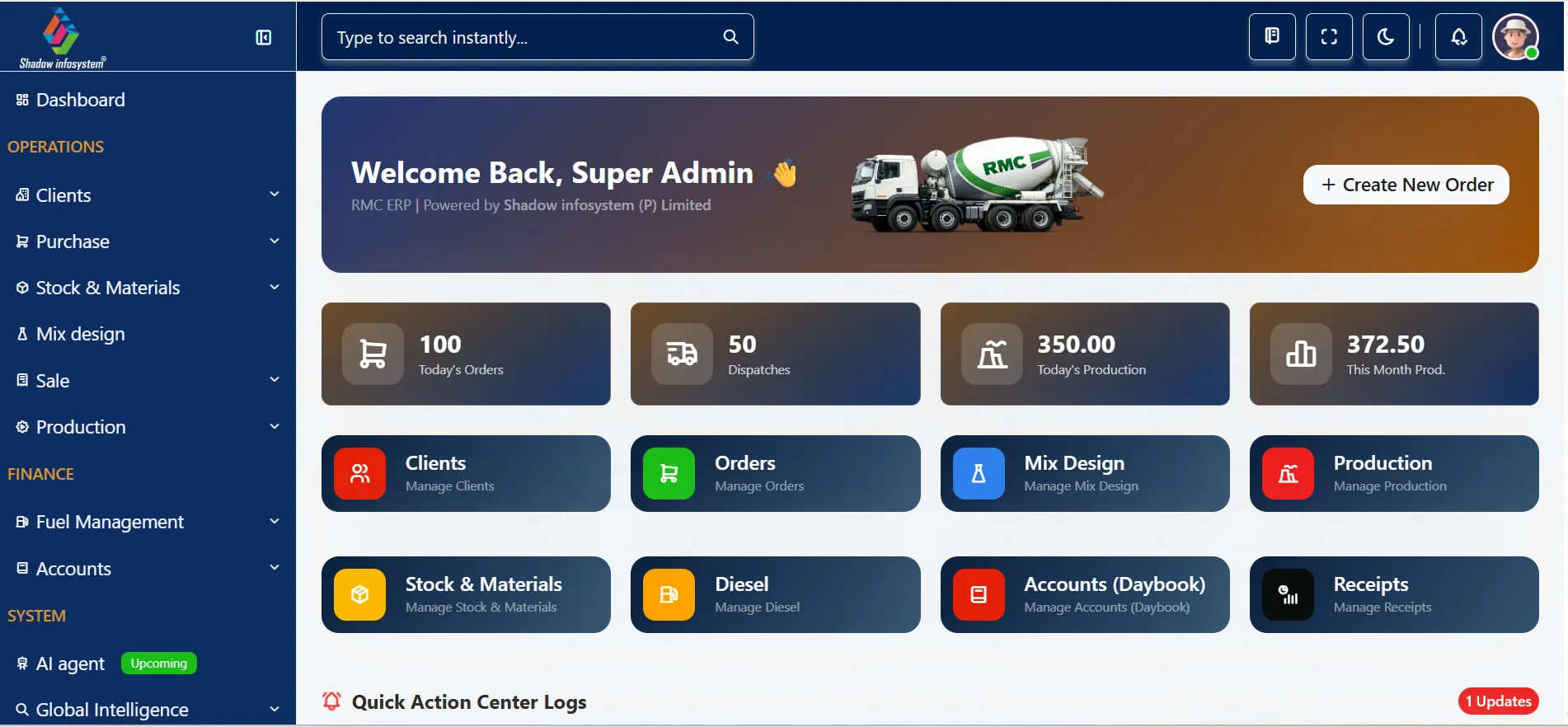
Companies looking for industry-focused ERP development can explore Shadow infosystem'sRMC ERP solutions, designed to support ready-mix concrete plant operations through integrated business management capabilities.
Frequently Asked Questions (FAQs)
1. What are ERP solutions for the construction material industry?
ERP solutions for the construction material industry are software systems that help businesses manage inventory, production, order processing, transportation, billing, and other operations through a centralized platform.
2. How can ERP software improve construction material business operations?
ERP software improves business operations by automating routine tasks, reducing manual errors, streamlining workflows, and connecting different departments. It also provides better visibility into inventory, production, orders, and deliveries.
3. Why do construction material businesses need industry-specific ERP software?
Industry-specific ERP software addresses the unique requirements of construction material businesses, such as material consumption, production planning, batching, dispatch management, transportation coordination, and quality control.
4. What features should construction material ERP software include?
A suitable ERP solution should include inventory management, production planning, order management, dispatch scheduling, transportation tracking, billing, financial management, and centralized reporting.
5. How does ERP software benefit ready-mix concrete (RMC) plants?
ERP software helps RMC plants manage batching operations, mix designs, raw material inventory, production records, transit mixer scheduling, dispatch, delivery, and billing. It improves coordination between departments and supports more efficient plant operations.