Real estate has long been one of the most attractive investment classes, but it has also been one of the least accessible. High capital requirements, lengthy transactions, limited liquidity, and geographical restrictions often prevent many investors from participating.
Real estate tokenization is changing this landscape by converting ownership rights in physical properties into blockchain-based digital tokens. These tokens allow investors to buy, sell, or trade fractional ownership in real estate while maintaining transparent ownership records.
Driven by the rapid adoption of Real World Asset tokenization, investors, developers, and enterprises are increasingly partnering with experienced RWA tokenization companies to launch compliant digital asset platforms. This guide explains how real estate tokenization works, its benefits, challenges, and why it is becoming one of blockchain's fastest-growing applications.
What Is Real Estate Tokenization?
Real estate tokenization is the process of converting ownership rights of a physical property into digital tokens stored on a blockchain.
Each token represents a share or fraction of ownership in a real estate asset such as:
- Residential apartments
- Commercial buildings
- Office spaces
- Hotels
- Warehouses
- Industrial properties
- Vacation rentals
Instead of purchasing an entire property, investors can purchase a fraction through blockchain-issued security or utility tokens (depending on regulations).
What Is Real World Asset (RWA) Tokenization?
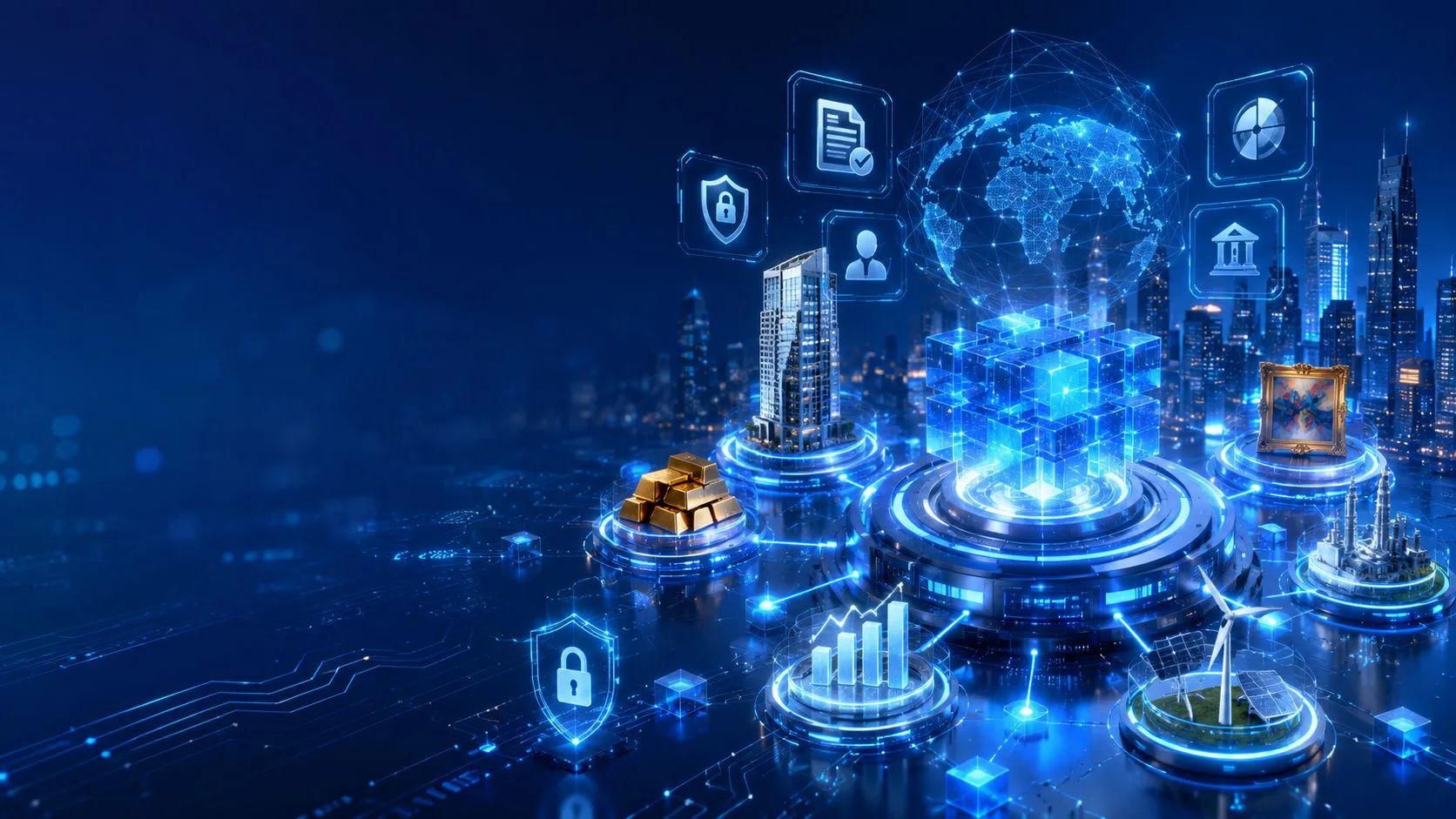
Real World Asset tokenization refers to transforming tangible assets into blockchain-based digital tokens.
These assets include:
- Real estate
- Precious metals
- Government bonds
- Treasury bills
- Fine art
- Collectibles
- Carbon credits
- Commodities
- Intellectual property
Among all RWAs, real estate represents one of the largest markets because trillions of dollars worth of property remain highly illiquid.
How Does Real Estate Tokenization Work?
The tokenization process typically follows these steps.
1. Property Selection
A residential or commercial property is selected.
2. Legal Structuring
Ownership is transferred into a legal entity such as an SPV (Special Purpose Vehicle).
3. Asset Valuation
The property's market value is independently assessed.
4. Smart Contract Development
Blockchain smart contracts define:
- Ownership shares
- Dividend distribution
- Governance
- Compliance rules
- Transfer restrictions
5. Token Issuance
Digital tokens are minted representing ownership shares.
6. Investor Onboarding
Investors complete:
- KYC
- AML verification
- Accreditation (where required)
7. Secondary Trading
Approved investors can trade tokens on compliant marketplaces, improving liquidity.
Benefits of Real Estate Tokenization
1. Fractional Ownership
Investors can purchase small portions of premium real estate instead of buying an entire property.
2. Increased Liquidity
Traditional property sales may take months. Tokenized assets can potentially be traded much faster on regulated secondary markets.
3. Global Investment Access
Blockchain removes geographical barriers, allowing investors from different regions to participate, subject to local regulations.
4. Lower Investment Barriers
Tokenization significantly reduces minimum investment requirements.
5. Transparency
Blockchain provides an immutable record of:
- Ownership
- Transactions
- Dividend payments
- Asset history
6. Faster Settlement
Smart contracts automate ownership transfers, reducing paperwork and settlement time.
7. Reduced Administrative Costs
Automation decreases reliance on intermediaries and streamlines processes such as distributions and reporting.
Types of Real Estate That Can Be Tokenized
- Residential properties
- Commercial offices
- Shopping malls
- Hotels
- Student housing
- Industrial warehouses
- Mixed-use developments
- Luxury villas
- REIT portfolios
- Rental income properties
Real Estate Tokenization Use Cases
1. Commercial Real Estate Investment
Companies tokenize office buildings to attract multiple investors.
2. Luxury Property Investment
High-value villas can be fractionally owned by hundreds of investors.
3. Rental Income Distribution
Smart contracts automatically distribute rental income according to token ownership.
4. Cross-Border Investments
International investors gain exposure to real estate markets without complex ownership structures.
5. Real Estate Funds
Investment firms tokenize portfolios to improve accessibility and liquidity.
Challenges of Real Estate Tokenization
Despite its benefits, tokenization still faces several challenges.
1. Regulatory Compliance
Different countries have varying regulations for digital securities and tokenized assets.
2. Market Liquidity
Secondary markets for tokenized real estate are still developing.
3. Custody and Security
Private key management and digital asset custody require robust security practices.
4. Legal Frameworks
Ownership rights, taxation, and investor protections must be clearly defined.
5. Investor Education
Many investors are still unfamiliar with blockchain-based ownership models.
How RWA Tokenization Companies Build Tokenized Real Estate Platforms
Experienced RWA tokenization companies typically deliver an end-to-end solution that combines blockchain infrastructure with regulatory and operational features. Core capabilities often include:
- Asset onboarding workflows
- Smart contract development
- Digital token issuance
- Investor KYC/AML integration
- Compliance management
- Investor dashboards
- Digital wallet integration
- Secondary marketplace support
- Dividend distribution automation
- Asset management tools
- Reporting and analytics
- Multi-chain deployment (where appropriate)
Selecting a technology partner with experience in Real World Asset tokenization can help reduce implementation risks and support compliance with applicable regulations.
How to Start a Real Estate Tokenization Project
A typical implementation roadmap includes:
- Define the investment model and business objectives.
- Select the property or portfolio to tokenize.
- Conduct legal and regulatory assessments.
- Choose a suitable blockchain network.
- Develop audited smart contracts.
- Integrate KYC/AML and investor onboarding.
- Issue digital tokens.
- Launch a compliant investor portal.
- Enable reporting, governance, and (where permitted) secondary trading.
Future of Real Estate Tokenization
Real estate tokenization is expected to play a significant role in the broader adoption of blockchain for finance and investment. As regulations mature, institutional participation increases, and digital asset infrastructure evolves, tokenized property markets may become more liquid and accessible.
The continued growth of Real World Asset tokenization is likely to expand opportunities for developers, asset managers, and investors seeking more efficient ways to manage and invest in real estate. In this environment, RWA tokenization companies are expected to focus on interoperability, compliance, and scalable platform development to support enterprise adoption.
Conclusion
Real estate tokenization combines blockchain technology with property ownership to create a more accessible and efficient investment model. By enabling fractional ownership, improving transparency, and streamlining transactions, it has the potential to broaden participation in real estate markets while reducing operational friction.
As the ecosystem develops, organizations exploring tokenized property solutions should evaluate legal requirements, technology architecture, and platform capabilities carefully. Working with experienced providers in Real World Asset tokenization can help ensure that projects are built with security, compliance, and long-term scalability in mind.
FAQs
Q. What is real estate tokenization?
Real estate tokenization is the process of converting ownership rights in a property into blockchain-based digital tokens that represent fractional or full ownership.
Q. What are RWA tokenization companies?
RWA tokenization companies are technology providers that build platforms and infrastructure for tokenizing real-world assets such as real estate, bonds, commodities, and other physical assets.
Q. Is real estate tokenization legal?
It can be legal when implemented in accordance with the securities, property, and financial regulations applicable in the relevant jurisdiction.
Q. What are the benefits of Real World Asset tokenization?
Key benefits include fractional ownership, improved transparency, greater accessibility, potential liquidity improvements, and automated processes through smart contracts.
Q. Can tokenized real estate generate rental income?
Yes. Depending on the investment structure, token holders may receive distributions tied to rental income or other returns, subject to the terms of the offering and applicable regulations.