Opening the Door: A Campus Transformed by Change
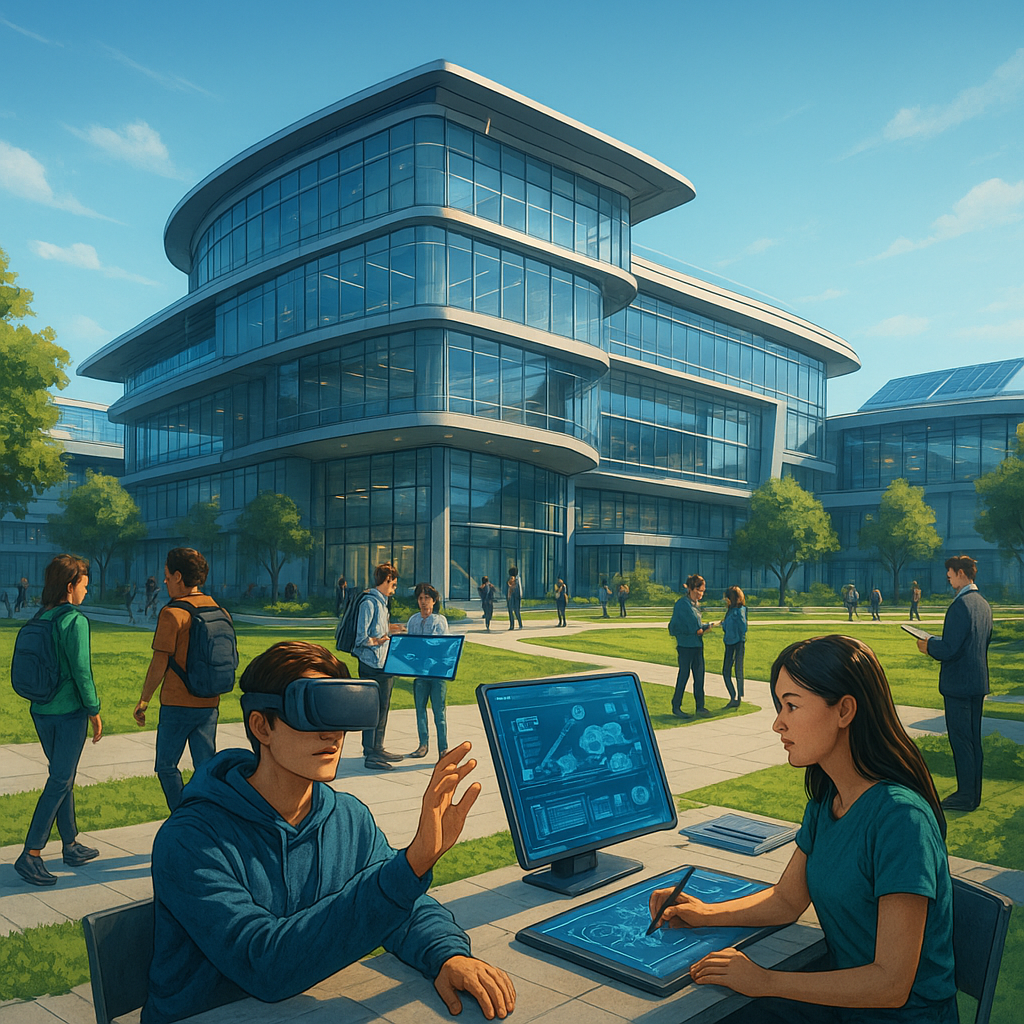
In the spring of 2026, a striking scene unfolded at a leading research university in the United States. The sprawling campus, once dominated by lecture halls filled with hundreds of students, now hosted a hybrid of physical and virtual classrooms. Students interacted seamlessly through holographic interfaces and AI-driven tutors, while traditional professors adapted their roles to become facilitators of personalized learning journeys. This transformation is not isolated; it signals a profound shift in what it means to attend university. Far from the ivory tower stereotype, universities today are battlegrounds of innovation, grappling with evolving demands from students, employers, and society at large.
Universities remain pivotal in shaping knowledge economies, yet their models have come under intense scrutiny. Enrollment fluctuations, soaring tuition costs, and questions about relevance have sparked debates worldwide. The question is no longer if universities must change, but how they can do so effectively to maintain their role as engines of opportunity and innovation.
“The traditional university model is at a crossroads. Adaptation is not optional; it is essential for survival and relevance in the 21st century.” – Dr. Lena Howard, Education Futurist
Historical Context: The Evolution of the University Model
The modern university as we know it traces its roots to medieval Europe, where institutions like the University of Bologna and Oxford began as centers for theological and philosophical discourse. Over centuries, universities expanded their scope to include sciences, humanities, and professional studies, becoming hubs of intellectual inquiry and societal leadership. The 19th and 20th centuries saw the rise of mass higher education, democratizing access and fueling industrial and technological revolutions.
The post-WWII era especially marked a boom in university attendance, supported by government funding and the GI Bill in the U.S., alongside similar initiatives elsewhere. This expansion established universities as a primary path to upward social mobility and economic opportunity. However, the model largely relied on in-person lectures, standardized curricula, and credentialing as hallmarks of success.
Entering the 21st century, the internet and globalization introduced new challenges and opportunities. Online learning platforms emerged, alternative credentialing gained traction, and the labor market’s demand shifted towards skills and adaptability rather than just degrees. Universities initially responded with hybrid programs and research commercialization but struggled to overhaul entrenched bureaucratic structures.
Today, as we approach the mid-2020s, universities face a reckoning prompted by technological disruption, shifting student expectations, and fiscal pressures. The model that once seemed immutable must evolve or risk obsolescence.
Core Analysis: Data Reveals a Landscape in Flux
Recent data highlights the magnitude of transformation underway. According to the National Center for Education Statistics (NCES), U.S. undergraduate enrollment declined by 9% between 2020 and 2025, with similar trends noted in Europe and parts of Asia. This decline correlates with rising tuition costs—averaging nearly $40,000 per year for private institutions—and growing student debt, which now exceeds $2 trillion nationally in the U.S.
Yet demand for postsecondary education remains high globally, with an estimated 220 million students enrolled worldwide in 2025, according to UNESCO. The paradox arises from shifting modalities and expectations. The rise of alternative education providers like coding bootcamps, micro-credential platforms, and corporate-sponsored learning initiatives challenges the monopoly universities once held on credentialing and skill development.
Employers increasingly prioritize competency and flexibility. A 2026 survey by the World Economic Forum found that 68% of hiring managers preferred skills-based assessments over traditional degrees. This dynamic forces universities to rethink curricula and delivery methods.
The financial sustainability of universities is also under pressure. Public funding cuts are common, and the pandemic accelerated a reevaluation of resource allocation. Institutions diversified revenue streams by expanding research commercialization, international student recruitment, and partnerships with industry, but these strategies have limits.
Internationalization remains a double-edged sword. While global student mobility reached a historic peak in 2024, geopolitical tensions and immigration policies in 2026 have curtailed movement, affecting universities reliant on foreign tuition.
- Enrollment Trends: Declines in traditional full-time students but growth in lifelong learners and part-time enrollees.
- Financial Pressures: Tuition increases juxtaposed with decreasing public funding.
- Employer Expectations: Shift toward skills and competencies over degrees.
- Technology Adoption: Growth of AI tutors, virtual labs, and personalized learning platforms.
- Globalization Challenges: Impact of geopolitics on student mobility.
“Universities must become agile organizations that balance heritage with innovation to meet the demands of a rapidly changing world.” – Prof. Marcus Liu, Higher Education Policy Analyst
Current Developments in 2026: Innovation Meets Tradition
The year 2026 marks significant milestones in university innovation. Institutions are integrating AI-powered tools extensively—not merely as supplementary but as core to pedagogy. Adaptive learning platforms analyze student performance in real-time, customizing content delivery to optimize outcomes. For example, the University of Toronto’s AI-driven learning environment has improved student retention rates by 15% within two years.
Hybrid education models dominate. Post-pandemic lessons have cemented the value of flexible learning, combining on-campus experiences with virtual engagement. Universities invest heavily in state-of-the-art infrastructure such as mixed-reality labs and global classrooms, fostering collaboration beyond borders.
Moreover, there is renewed emphasis on interdisciplinarity and experiential learning. Programs blend STEM, humanities, and social sciences to prepare students for complex societal challenges. Internships, co-op placements, and community projects are embedded within curricula, reflecting employer demands for practical skills.
Significant partnerships between universities and industry have expanded in scope and scale. For instance, Tuskegee University’s collaboration with AWS (Amazon Web Services) exemplifies this trend, launching cutting-edge AI and machine learning courses that align closely with workforce needs. This approach reduces the skills gap and enhances employability.
Financial models are also evolving. More universities implement income-share agreements and competency-based tuition to reduce upfront costs and align incentives with student success. Scholarship programs increasingly target underrepresented groups to address equity concerns.
On the regulatory front, governments worldwide are updating accreditation standards to include digital credentials and micro-credentials, validating alternative learning pathways. This shift legitimizes nontraditional education and challenges universities to compete on quality and flexibility.
- AI integration in curriculum and assessment
- Expansion of hybrid and virtual learning environments
- Increased interdisciplinary and experiential education
- Strategic university-industry partnerships
- Innovative financial models and equitable access initiatives
Expert Insights: Shaping the Future of Higher Education
Leading voices in education emphasize that universities must embrace transformation with strategic foresight. Dr. Amira Solis, a global education consultant, underscores the importance of ‘student-centered ecosystems’ that harness technology without losing human connection. “AI can personalize learning, but universities must ensure emotional intelligence and critical thinking remain central,” she explains.
From an institutional perspective, universities that integrate research, teaching, and societal engagement are more resilient. The University of Melbourne’s recent restructuring to create transdisciplinary hubs exemplifies this. These hubs break down silos, enabling collaboration across faculties and with external partners.
Faculty roles are also evolving. Professors now act as mentors, content curators, and innovation facilitators. This shift requires professional development and institutional support to cultivate new skill sets. According to a 2026 survey by the Chronicle of Higher Education, 62% of faculty members report increased use of AI tools in their teaching practice.
Industry leaders stress that universities must align curricula with workforce realities while fostering lifelong learning mindsets. “The half-life of skills is shrinking. Universities must equip students to adapt continuously,” says Raj Patel, Chief Learning Officer at a global tech firm.
Equity remains a critical concern. Experts highlight that digital divides and socioeconomic disparities can widen if universities do not intentionally design inclusive programs. Partnerships with community organizations and governments are essential to bridge these gaps.
“Universities are not just knowledge factories; they are incubators of critical citizenship and innovation. Their future depends on balancing tradition with transformation.” – Dr. Amira Solis, Education Consultant
Looking Ahead: What to Watch in University Education
As universities move forward, several trends will shape their trajectory:
- AI and Automation: Expect deeper integration of AI not only in teaching but also in research and administrative operations, improving efficiency and personalization.
- Decentralized Credentials: Blockchain and digital badges will gain prominence, enabling learners to assemble modular qualifications recognized globally.
- Lifelong Learning Ecosystems: Universities will expand beyond traditional degree programs to support continuous upskilling and reskilling throughout careers.
- Global Collaboration: Virtual exchange programs and joint degrees across continents will become commonplace, fostering intercultural competencies.
- Equity and Access: Innovative financial models and inclusive policies will be critical to democratizing education amid economic uncertainty.
These directions require universities to be agile, responsive, and mission-driven. The balance between preserving academic rigor and embracing innovation will define success. For prospective students, understanding these shifts is crucial for making informed decisions. For policymakers, supporting flexible, equitable funding frameworks will underpin sustainable higher education ecosystems.
Those seeking practical guidance to navigate university life in this evolving landscape can refer to resources like Starting University: Practical Steps and Insights for a Successful Launch. Meanwhile, students aiming to excel can benefit from advanced strategies detailed in Mastering University Success: Proven Strategies from Leading Experts. These comprehensive guides reflect the multifaceted realities of modern university education.
Conclusion: Reinvention as Imperative
Universities stand at a pivotal juncture. The institution’s centuries-old prestige is challenged by technological disruption, demographic shifts, and changing societal expectations. Yet, this moment also offers unprecedented opportunities to redefine what higher education can be—more accessible, adaptable, and connected to real-world impact.
Embracing innovation while safeguarding the core mission of fostering critical inquiry and social advancement is no small feat. It demands visionary leadership, inclusive policymaking, and robust collaboration across sectors. The universities that succeed will not merely survive but thrive as vital contributors to knowledge, equity, and economic growth in 2026 and beyond.