
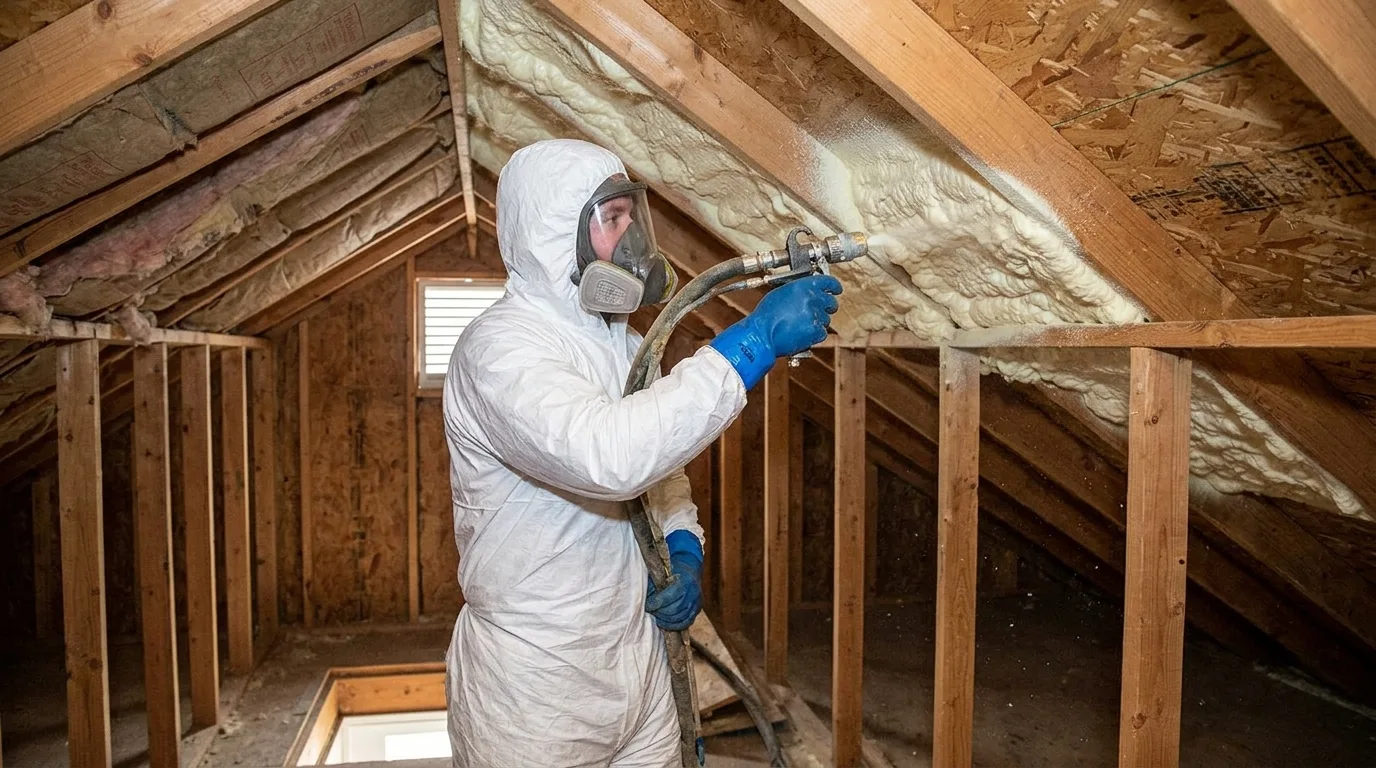
Homeowners face extreme winter conditions where temperatures regularly drop below zero, and high winds sweep through the area. Installing high-quality spray foam insulation in Mat-Su Valley, AK, solves this problem by creating an airtight thermal envelope that seals every crack and gap. This advanced material stops heat loss and drafts instantly, ensuring your living space remains warm and comfortable even during the coldest months.
This guide explains the science behind this thermal barrier, details how it outperforms traditional materials, and provides practical advice for upgrading your property. Understanding these thermal properties helps you make an informed decision for your winter preparation.
- Modern thermal seals block cold wind from entering your living spaces.
- The material conforms to the exact shape of your building framing.
- Upgrading helps lower your heating bills during long winter stretches.
Why do subzero temperatures require high-performance thermal barriers?
Standard building materials often fail when the subzero winds blow from the mountains. Traditional fiberglass batts allow air to pass through, which significantly reduces their ability to hold heat when you need it most. Upgrading your insulation stops this movement of cold air and keeps your heating system from working overtime.
Without a continuous barrier, warm air escapes through your attic while pulling freezing air into your crawl space. This convective loop wastes energy and creates uncomfortable cold spots across your floors.
- Air movement through small gaps accounts for significant winter heat loss.
- Traditional materials lose thermal resistance when exposed to moisture or high winds.
- An airtight seal keeps your indoor temperatures stable throughout the day.
- Protecting your attic stops ice dams from forming on your roof.
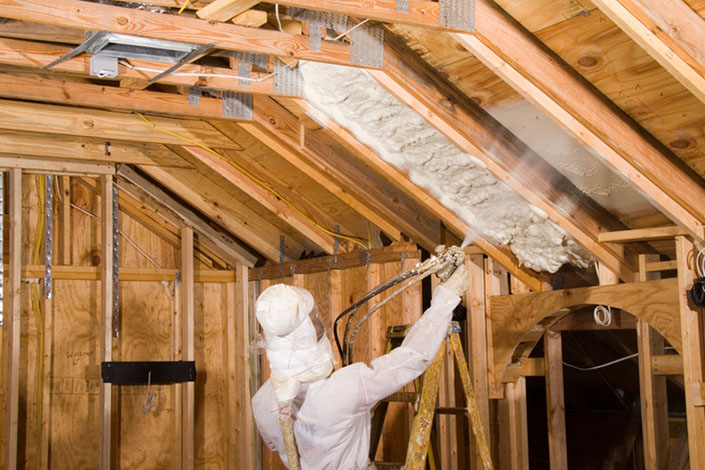
How does spray foam stop extreme cold and the Matanuska winds
The secret lies in how the material expands when applied to your walls, ceiling, and crawl space. It grows up to thirty times its liquid volume, filling every tiny crack, electrical outlet gap, and joint. Using spray foam designed for cold weather in Alaska ensures that your property gets a custom-fit barrier that blocks both drafts and moisture.
According to building science data, air leakage accounts for up to 40 percent of a building's heating and cooling energy loss. By stopping this air movement, the expanding foam creates a dense shield that the wind cannot penetrate.
- Expansion allows the foam to seal hard-to-reach areas in your framing.
- The dense structure prevents wind wash from stripping away your indoor heat.
- It maintains its shape and performance for decades without settling.
- The material seals around plumbing pipes to prevent winter drafts from freezing them.
Bonus Tip: Focus your winter upgrades on your crawl space and attic first. Sealing these two areas stops the stack effect, which draws freezing air into your home from the ground up.
Comparing common materials for subzero climates
Choosing the best insulation for Alaska requires looking at R-value per inch and air-sealing capabilities. Traditional options like fiberglass or cellulose only slow down heat transfer, but they do nothing to stop drafty air currents.
Let's look at how different materials perform under the pressure of a harsh subzero winter.

Applying spray foam insulation ensures that you get both high thermal resistance and a complete air seal in a single step. This dual performance is what makes it so successful in northern climates.
- Closed-cell options provide the highest thermal resistance per inch of thickness.
- Air sealing eliminates the need for separate plastic vapor barriers in many areas.
- The material does not sag or lose its R-value over time like loose-fill options.
- It prevents damp air from condensing on cold wooden studs and causing rot.
Key factors to evaluate before upgrading your thermal envelope
Before you schedule an installation, you must look at a few practical details of your property. Different parts of your home require specific types of foam to achieve the most effective thermal performance. You must also consider the temperature of your building materials during the application process.
Local atmospheric conditions require professional installers to monitor substrate temperatures carefully to ensure proper adhesion. Moisture levels in your wood framing must be low before any product is sprayed.
- Assess the moisture levels of your crawl space and subfloor before starting.
- Choose closed-cell material for damp areas or where structural strength is needed.
- Ensure your ventilation systems are properly balanced after sealing the house.
- Verify that your contractor uses specialized cold-weather formulations for winter applications.
Bonus Tip: Always ensure that your dryer vents, bathroom fans, and kitchen hoods vent completely to the outdoors. An airtight home needs dedicated ventilation paths to keep indoor air clean and dry.
Applying spray foam insulation certified for Alaska ensures that the material bonds perfectly to your cold wood framing, preventing future gaps or peeling.

Long-term financial advantages of high R-value sealing
Investing in high-quality materials provides immediate relief for your heating bills. Because your heating system does not have to run constantly to fight off drafts, your monthly utility expenses drop significantly.
Market data shows that local homeowners who upgrade their drafty spaces experience energy savings of 15 percent to 30 percent on their annual heating bills. Over time, these savings completely offset the initial cost of your upgrade, making it a wise long-term financial choice.
- Lower energy bills provide immediate returns on your home improvement budget.
- Reduced wear on your furnace or boiler extends the life of your heating equipment.
- Your home's resale value increases because buyers appreciate low utility costs.
- Eliminating drafty rooms makes every square foot of your property usable all winter.
Choosing to install spray foam insulation in Mat-Su Valley, AK protects your home from sudden cold snaps that can cause expensive plumbing damage.
Choosing the right application for your home design
Your home is a system of connected spaces, and each area has different requirements. Crawl spaces and basements need a water-resistant material that blocks moisture from the soil. Rooflines and attics need to handle extreme temperature changes without letting warm air escape.
- Use closed-cell foam in crawl spaces to block ground moisture and rising cold.
- Apply open-cell foam in interior walls to help with sound dampening between rooms.
- Insulate the underside of your roof deck to create a conditioned attic space.
- Seal around windows and doors with low-expansion foam to stop localized drafts.
Investing in a complete system ensures your home remains comfortable and your energy bills stay low year after year.
Professional guidance for your winter prep
Preparing your home for subzero weather begins with a smart evaluation of its thermal envelope. Every building presents its own unique drafts, cold spots, and structural nuances that require strategic planning. By looking closely at your home's layout, current insulation, and heating goals, you can target specific priority areas.
Taking these preparatory steps before the arrival of winter weather ensures a warm living environment, lower utility bills, and long-term peace of mind.
- Review past utility bills to identify sudden spikes in energy use.
- Locate drafty spots around baseboards, windows, and light fixtures.
- Consult with an experienced installer to check your attic and crawl space health.
Schedule your professional evaluation for a warmer winter
When you want to stop drafts and lower your heating bills, working with local experts makes all the difference. The team at Polyseal Insulation offers professional thermal barrier assessments and customized residential services. They can help you identify the areas where your home loses heat and apply high-quality spray foam insulation in Mat-Su Valley, AK, to keep you comfortable. To get a free quote, contact them today at (907) 341-4848 or send an email to [email protected]. You can also view their location on the [Map: Polyseal] to plan your visit.
Common questions about subzero home heating
Does spray foam shrink or degrade during extreme Alaskan winters?
No, high-quality polyurethane foam is designed to remain stable and flexible once cured. It does not shrink, sag, or degrade even when exposed to extreme temperature swings, ensuring a lasting airtight seal for the lifetime of your property.
Can you apply spray foam when outdoor temperatures are below freezing?
Yes, professional installers use specialized winter-grade formulations and preheat the chemicals and the building surfaces. This ensures proper adhesion and curing even during the cold season, though indoor temperatures must be managed during installation.
Is open-cell or closed-cell foam better for local properties?
Closed-cell foam is generally better for the local climate because of its high R-value per inch, built-in vapor barrier, and moisture resistance. Open-cell foam is suitable for interior walls where sound dampening is needed or where moisture is not a concern.
How does sealing the crawl space prevent frozen pipes?
Cold drafts entering through foundation vents and gaps are the main cause of frozen pipes. By sealing your crawl space walls with foam, you keep the ambient temperature in that space well above freezing, protecting your plumbing.
What is the average payback period for this thermal upgrade?
Most homeowners see their heating costs drop by 15 percent to 30 percent immediately. Depending on your current fuel costs and home size, the savings typically offset the initial installation cost within three to five years.