An audit does not test whether your fleet bought fuel responsibly. It tests whether you can prove it. Those are two different capabilities, and plenty of well-run operations have the first without the second.
The gap usually stays hidden until someone outside the company asks for documentation: a fuel tax auditor, an insurer, a customer disputing an invoice, a new finance lead who wants to know why the fuel line moved. At that point, the question is no longer what happened. It is what the records can show happened, and paper records tend to show much less than people assume.
What an auditor actually asks for
Fuel tax audits make a useful benchmark because the standard is written down. Under IFTA, carriers generally have to keep fuel and distance records for four years after the return was due or filed, whichever is later. For a retail purchase to support a tax-paid credit, the receipt or transaction listing has to show the date, the seller’s name and address, the quantity and type of fuel, the price, the purchaser, and the specific vehicle that received the fuel. A credit card statement without itemized purchase detail does not qualify.
Bulk fuel is stricter. Carriers fueling from their own tanks need delivery receipts, quarterly inventory reconciliations, and capacity figures for each tank, and a withdrawal record for every draw showing the location, date, quantity, fuel type, and the vehicle or equipment that received it. That includes fuel pumped into equipment that never touches a public road.
Falling short carries a real price. When records are inadequate across the fleet, IFTA requires the base jurisdiction to impose an additional assessment, either by raising the reported fleet fuel economy to 4.00 miles per gallon or by cutting the reported figure by 20 percent. Credits for poorly documented purchases can be disallowed as well. For any fleet that actually gets better mileage than four miles per gallon, that assessment is an expensive way to learn the paperwork mattered.
Why paper fails the test
Paper rarely fails because receipts get lost, although they do. It fails because the record is assembled after the fueling event, by a person, from whatever survived the shift.
The vehicle field is the usual casualty. A driver remembers the gallons and the price because the pump displays them. The unit number gets written from memory, or not at all. Bulk withdrawals fare worse: fuel drawn for a loader or a generator at the yard is the record most likely never to exist, because nobody thinks of it as a transaction.
Timing makes it harder. Errors in a paper system surface during reconciliation, and reconciliation happens monthly or quarterly. By then the driver who could explain a strange ticket may not remember it, or may no longer work for you.
What a digital fuel record captures, and when
The key difference is that a digital record is created at the moment of dispense by the equipment involved, not reconstructed afterward. That is the real job of a fleet fuel management system: producing a record that will hold up when someone checks it.
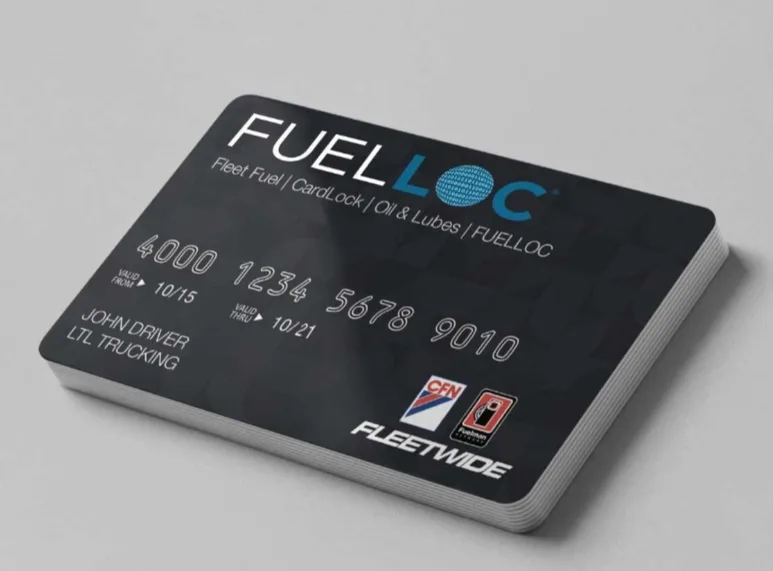
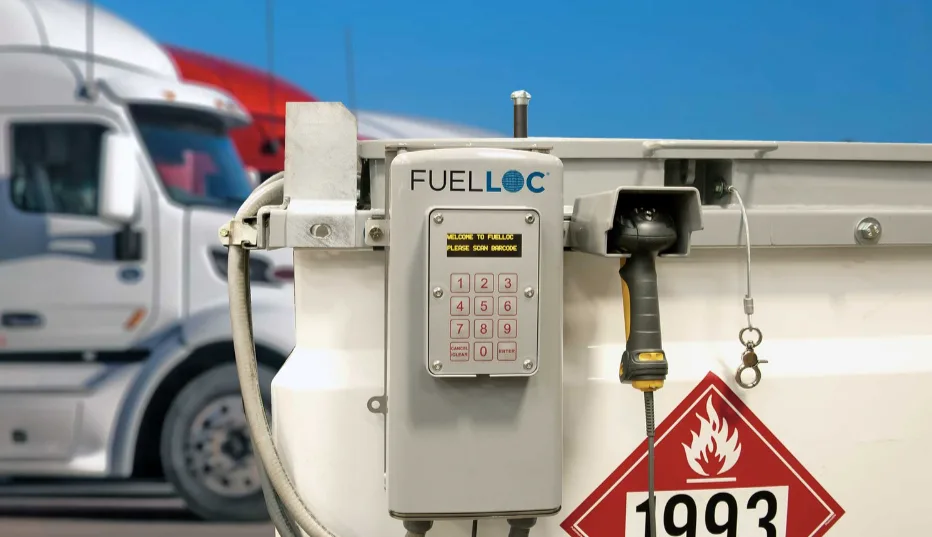
In a mobile fleet fueling software setup like FuelLoc’s, the driver logs in and is authorized on the handheld before fuel moves, and a barcode scan identifies the asset receiving it. Meter integration supplies the gallon count directly. Every ticket includes the asset, gallons, and fuel type alongside the time and site, which closely matches the elements an auditor checks.
Retrieval matters as much as capture. FUELLOC's fueling management system lets you filter by time, site, and fuel type to produce tickets, invoices, detailed asset history, and IFTA reports, with full query capability and exports available around the clock. A request for every withdrawal from one tank in one quarter becomes a filter instead of a week in the binders.
Expense reviews: tracing a dollar back to a dispense
Internal expense reviews benefit from the same structure. The strongest review technique is tracing: pick an invoice line and follow it backward to the ticket, then to the metered dispense, then to an authorized driver and a recognized asset. If every link holds, the charge is real. If one breaks, you have found something worth a conversation.
On paper, tracing is so slow that most reviews sample a handful of transactions and hope they are representative. With digital fuel records, you can trace hundreds in the time it used to take to trace ten, or simply query for transactions with a missing link. The review stops being a spot check and starts approaching full coverage.
Spotting unusual spending
Organized records also make anomalies visible without anyone hunting for them. A few patterns deserve a place in any regular review:
- A single fill larger than the asset’s tank capacity. Few innocent explanations exist, and the pattern becomes visible only when you record gallons and the asset together.
- Fueling at hours or sites that don’t match the asset’s assignment.
- Consumption that drifts upward month over month with no change in duty.
- Rising volume at one site while the others hold steady.
FuelLoc’s Fuel Intelligence portal tracks consumption trends with visual graphs and keeps detailed asset history, so drift that would take a year to notice on paper can show up within a reporting cycle or two.
The manual ticket is the weakest record in the file
Every fueling operation needs a way to handle exceptions, such as a handheld that died mid-route or a scanner that would not read a damaged tag. FuelLoc’s operations portal includes exception management for changing a ticket or entering one manually, and any serious fleet fuel management software needs something similar.
From an audit standpoint, though, a manually entered or edited ticket is the only record the equipment didn't create. That doesn’t make it wrong. It does make it the first place a reviewer should look. Three questions are worth settling in any system you run: who has permission to create or edit tickets, whether those changes are logged with a user and timestamp, and what share of last month’s tickets were manual. A manual rate that creeps upward is often the first sign that a process, or a person, is working around the controls.
From compliance to better decisions
Audit readiness is the defensive reason to keep clean digital fuel records. The more valuable reason is that the same data answers the questions that drive budgets: which sites cost the most per gallon delivered, which assets consume more than their peers, and how fuel spend splits by customer or department. Fleets that can only reconstruct those answers under audit pressure end up budgeting on estimates Fleets with organized records budget on evidence. The practical test takes five minutes. Pick a random asset and ask for every gallon it received last quarter, by date, site, and driver. If you get the answer in minutes, you are in good shape. If it takes a week, the audit has already found its first issue.