A beauty advisor can start the day on time, visit a busy retail counter and submit an end-of-day report, yet a few important things may still go unnoticed. Another outlet may have missed its scheduled visit. A tester may be unavailable. A promotional display may not have been set up correctly.
For cosmetics brands working across beauty stores, salons, pharmacies and modern-trade outlets, these small gaps can make field operations difficult to manage consistently.
The challenge is not simply keeping track of where beauty advisors are. It is understanding what happens at each counter and whether the planned work is actually getting done.
This is where beauty advisor management software can help cosmetics brands bring attendance, outlet coverage, counter activities and performance reporting into a more organised workflow.
Why Managing Beauty Advisors Requires More Than Attendance Records
Beauty advisors represent a brand at the point where customers discover products, explore shades and make purchasing decisions. Their work involves more than arriving at a store and completing a shift.
Depending on the brand and outlet, their responsibilities may include maintaining product displays, checking tester availability, communicating promotions and recording orders or other retail activities.
When teams are spread across multiple locations, managers cannot personally check every counter each day. They often depend on messages, spreadsheets, calls and reports submitted by individual advisors.
That approach may work for a small team. As the number of advisors and outlets grows, however, comparing updates becomes harder.
Three common challenges tend to emerge:
- Unclear outlet coverage: Managers may know an advisor attended work without knowing whether every assigned counter was visited.
- Limited visibility into counter execution: Reports may not consistently show shelf conditions, tester status or promotional activity.
- Fragmented performance information: Attendance, visit records and order data may sit in separate systems, making it harder to understand the full picture.
Addressing these gaps starts with recording the right information at the right level.
1. Track Attendance and Outlet Visits Separately
Attendance answers one question: did the advisor start work? Outlet visit tracking answers another: did the advisor reach the assigned location?
The distinction matters when one person is responsible for several counters in a day.
For example, an advisor may record attendance in the morning but visit only two of three planned outlets. Without a clear record of completed visits, the missed counter might not come to the manager’s attention until a later review.
Beauty advisor management software can help teams maintain attendance records, assign outlets and compare planned visits with reported activity. Depending on the platform and configuration, location-based verification can provide an additional check on visit records.
The aim is not simply to monitor employees more closely. It is to identify missed coverage early enough for managers to respond.
2. Make Counter Productivity Easier to Review
In cosmetics retail, a counter’s condition can influence how customers experience a brand. Product displays, tester availability and promotional materials all contribute to the in-store experience.
However, these activities should not be confused with sales results.
A counter may follow display standards and still record weak sales because of low footfall or limited stock. Another may generate strong orders despite having gaps in its display setup.
A useful field reporting process records counter activity separately from sales performance. Photo records, tester status and visit notes can help managers understand what was observed during a visit, while sales and order reports show the commercial activity recorded by the system.
Reviewing both views together gives managers a more useful starting point for investigating problems instead of assuming that one explains the other.
3. Connect Outlet Coverage With Sales Information
When managers review outlet performance, the quality of the available data matters as much as the dashboard itself.
Beauty advisor management software may bring visit records, outlet assignments and recorded orders into a shared reporting workflow. Where retailer or distributor systems are integrated, additional sales or stock information may also be available.
This helps managers ask more specific questions.
Was a high-priority outlet visited as planned? Were orders recorded during the visit? Is a popular shade available through the relevant distribution channel? Is a promotion being recorded consistently across comparable outlets?
Not every answer will come from one report, and not every platform captures every data point. The important step is understanding which information is recorded directly, which requires integration and which still needs manual verification.
4. Choose Software Around Your Actual Retail Workflow
Before choosing beauty advisor tracking software, cosmetics brands should map how their teams work today.
Start with the number and type of outlets, the frequency of visits, the information advisors need to record and the reports managers use to review performance.
During a product demonstration, ask the vendor to show a realistic scenario: one advisor, three outlets and one missed visit.
Check how the system records attendance, displays assigned outlets, identifies incomplete coverage and presents the resulting report. Then ask how counter photos, tester records and order information are captured.
It is also worth checking mobile usability, offline functionality, reporting permissions, integrations and configuration requirements. Confirm which capabilities are included as standard and which depend on additional setup.
A practical demonstration using your own workflow is more useful than choosing software based on a long feature list.
How BizzField Fits Into Beauty Advisor Management
Press enter or click to view image in full size

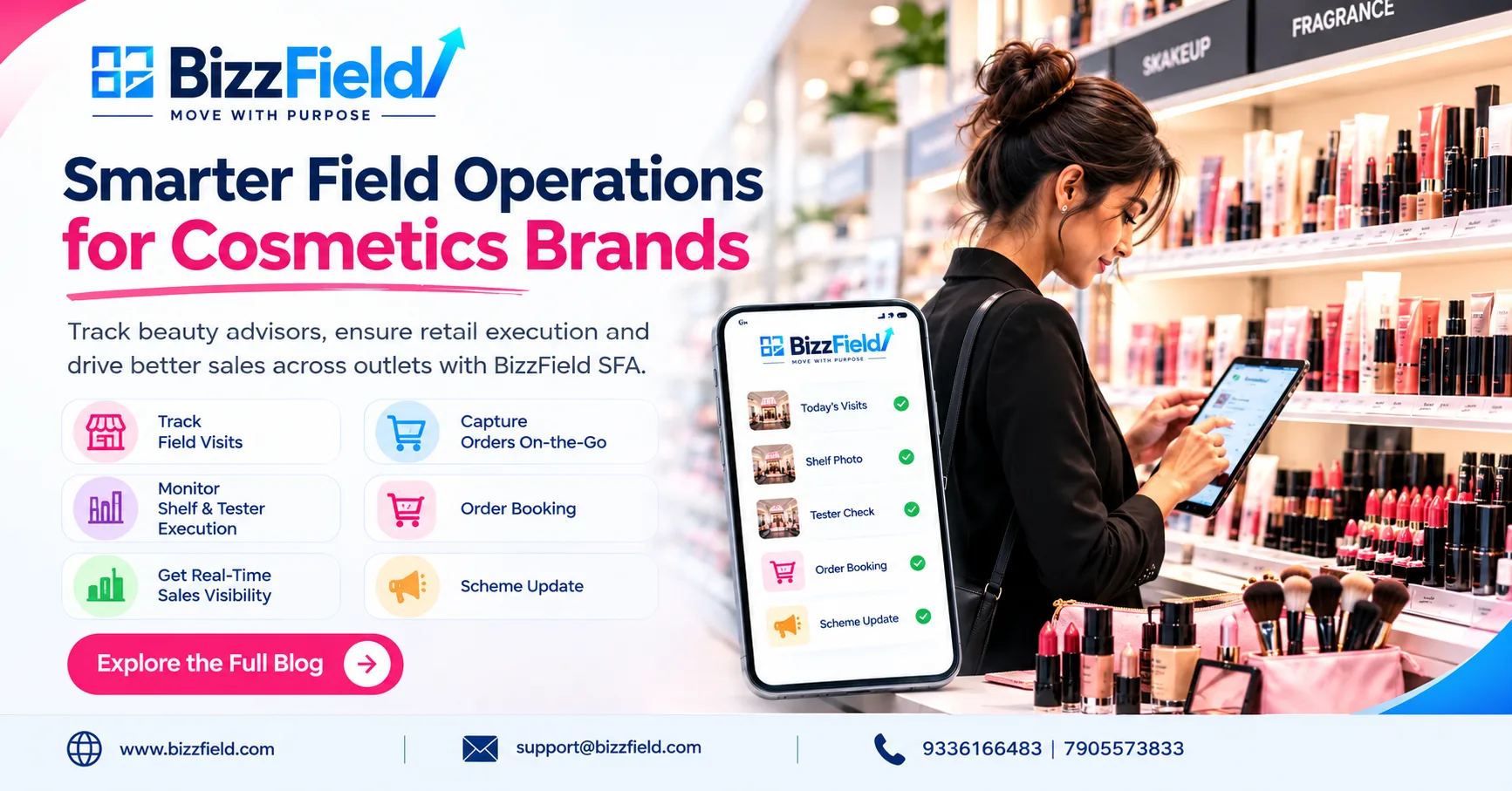
BizzField’s Cosmetics Sales Force Automation software supports field workflows for cosmetics brands, including beauty advisor route management, outlet visit tracking, shelf visibility, tester management and order booking.
These capabilities are relevant to brands that need a clearer view of field activity across beauty stores, salon counters, pharmacies and modern trade.
The best way to assess whether a platform fits your operation is to review the workflows that matter most to your team and confirm how each capability works in your intended configuration.
For a deeper look at the features, evaluation criteria and operational considerations, read the full guide:
Beauty Advisor Management Software for Cosmetics Brands
Final Thoughts
Managing beauty advisors effectively requires more than attendance records or end-of-day summaries. Cosmetics brands need a practical way to review outlet coverage, understand counter activity and interpret sales information without treating these as interchangeable measures.
A structured workflow can help managers identify gaps earlier, ask better questions and make decisions using more consistent records.
The starting point is simple: understand what needs to happen at each counter, decide what evidence should be recorded and choose software that supports that process.
For cosmetics brands looking to improve field visibility, that is a more useful first step than adopting technology simply because the team has outgrown spreadsheets.