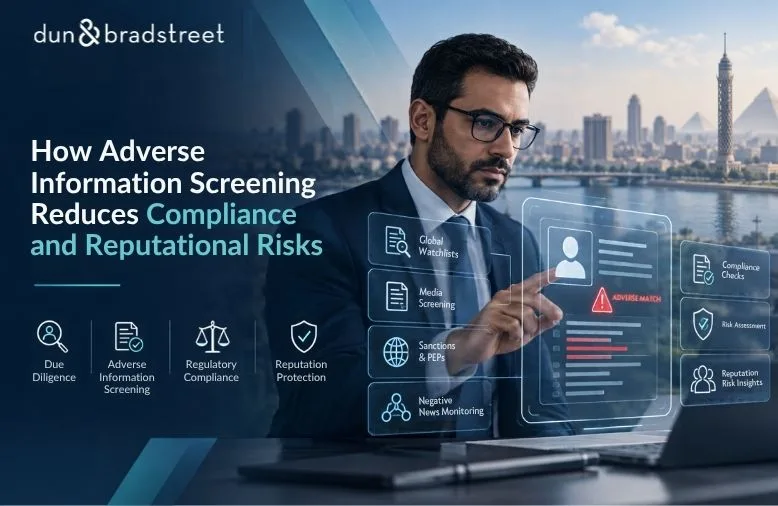
Businesses today operate in an environment where a single overlooked red flag can turn into a regulatory penalty or a damaged reputation overnight. Whether onboarding a new supplier, evaluating a customer, or reviewing an existing business relationship, organizations need a reliable way to identify hidden risks before they escalate. This is where adverse information screening becomes essential.
Adverse information refers to any negative data associated with an individual or entity that could indicate financial instability, legal trouble, regulatory violations, fraud, or involvement in illicit activities. Screening for this information allows businesses to make informed decisions and avoid entering into relationships that could expose them to compliance failures or reputational harm.
What Does Adverse Information Screening Actually Involve
Adverse information screening is the process of checking individuals and organizations against a wide range of data sources to uncover negative or risk-relevant information. This can include litigation history, regulatory sanctions, insolvency records, adverse media coverage, and involvement in financial crime.
Unlike a one-time background check, adverse information screening is typically an ongoing process. Risk profiles change over time, so businesses that screen only at the onboarding stage may miss developments that occur later in the relationship. Continuous monitoring ensures that new adverse events are flagged as soon as they surface, allowing compliance teams to respond quickly.
Why Compliance Teams Rely on Adverse Information Screening
Regulatory bodies across industries expect businesses to demonstrate due diligence when onboarding customers, vendors, and partners. Financial institutions, in particular, face strict obligations under anti-money laundering and counter terrorist financing frameworks. Failing to identify adverse information about a customer or counterparty can result in significant fines, license revocations, or criminal liability for company executives.
Adverse information screening supports compliance in several ways. It helps organizations meet know your customer and know your business requirements by ensuring that decision-makers have a complete picture of who they are dealing with. It also creates an audit trail that demonstrates the organization took reasonable steps to identify risk, which can be critical during regulatory examinations or investigations.
Beyond financial services, industries such as manufacturing, logistics, healthcare, and technology are increasingly adopting adverse information screening as part of broader third-party risk management programs. Supply chains are global and complex, and a single non-compliant supplier can create liability that extends far beyond the immediate transaction.
How Reputational Risk Ties Into Compliance Risk
Compliance risk and reputational risk are closely linked, and adverse information screening addresses both simultaneously. A company that unknowingly partners with an entity involved in fraud, corruption, or environmental violations may not only face regulatory consequences but also public backlash. News of such associations spreads quickly, and stakeholders, including customers, investors, and employees, often judge a company by the company it keeps.
Adverse media screening, a core component of adverse information screening, specifically targets this risk by monitoring news sources, court records, and public databases for negative coverage. This allows organizations to catch reputational red flags that might not yet have resulted in formal legal action but still pose a threat to brand trust.
Proactively identifying these risks allows businesses to make deliberate choices rather than reactive ones. Instead of discovering a problematic relationship after damage has occurred, organizations can decline the relationship, request additional documentation, or apply enhanced due diligence measures from the outset.
Building Adverse Information Screening Into Everyday Operations
For adverse information screening to be effective, it needs to be embedded into standard business processes rather than treated as an occasional exercise. This means integrating screening checkpoints into vendor onboarding, customer acquisition, mergers and acquisitions due diligence, and periodic portfolio reviews.
Automation plays an important role here. Manually searching through disparate sources for negative information is time consuming and prone to gaps. Businesses that use structured data and technology driven screening tools are better positioned to scale their due diligence efforts across large customer or supplier bases without sacrificing accuracy.
It is also important that screening results are reviewed with context. Not every adverse hit indicates wrongdoing, and false positives are common, particularly with common names or generic business terms. A well designed screening process includes a verification step where flagged results are assessed against additional identifying details before any decision is made.
Strengthening Risk Management Through Better Data
The reliability of adverse information screening depends heavily on the quality and breadth of the data being used. Screening built on fragmented or outdated sources can miss critical risk indicators, while screening built on comprehensive, regularly updated data gives compliance teams far greater confidence in their decisions.
Organizations looking to strengthen their risk management framework should evaluate how their current screening processes source and refresh adverse information, how well they cover global jurisdictions, and how easily flagged results can be investigated further. These factors determine whether screening functions as a genuine risk control or simply a compliance checkbox.
Adverse information screening is no longer optional for businesses that want to operate responsibly in a global economy. It reduces the likelihood of regulatory penalties, protects brand reputation, and supports sound decision making across the customer and vendor lifecycle. Organizations that invest in structured, ongoing screening processes position themselves to identify risk early and respond with confidence rather than facing costly surprises down the line.