Every apparel collection begins with a pile of fabric swatches. Designers touch them, merchandisers compare them, and sourcing teams shortlist them. But somewhere between the sample room and the bulk order, a surprising number of problems start with one small detail: the label on the swatch.
In the textile industry, this labelling process is called stickering. It sounds minor, yet it plays a major role in how quickly brands decide and how accurately mills deliver.
What Is Stickering?
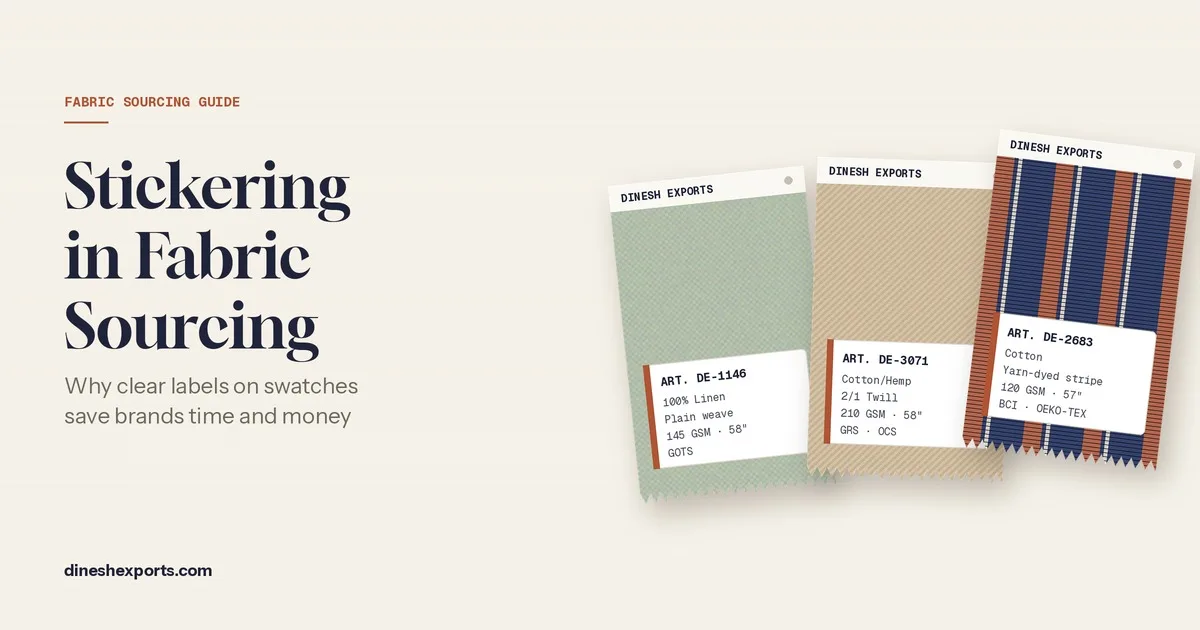
Stickering is attaching an identification label to fabric samples, swatch cards, sample hangers, headers, or rolls. The sticker acts as the fabric’s ID card, giving buyers all the technical information they need without having to call or email the supplier for every detail.
For a fabric mill, stickering is also an internal control tool. It links each sample to a specific article number in production, so when a buyer approves a swatch, the mill knows exactly which construction, yarn, and finish to reproduce.
What Should a Good Fabric Sticker Include?
A sticker with just a code number isn’t very helpful. Effective stickering usually covers:
- Article or quality number so the fabric can be reordered accurately
- Fibre composition, such as 100% cotton, linen-cotton, hemp blends, or Lyocell
- Weave structure, like plain, twill, satin, dobby, or jacquard
- Weight (GSM) and usable width, which affect costing and pattern layout
- Type or finish, for example yarn-dyed, printed, seersucker, or Lurex
- Certification details where applicable, such as GOTS, GRS, OCS, BCI, or OEKO-TEX
The more complete the sticker, the less back-and-forth is needed before a purchase order is placed.
Why Stickering Matters to Brands
1. Faster selection. A design team reviewing fifty swatches can filter by composition, weight, and weave at a glance. Without clear stickering, every shortlist becomes a list of follow-up questions.
2. Fewer bulk-order errors. Mix-ups between similar-looking fabrics are common, especially in neutral shades or plain weaves. A precise article number on the sticker is the simplest safeguard against receiving the wrong quality in bulk.
3. Easier compliance for sustainable collections. Brands making eco claims need to document where their materials come from. When certification details appear right on the sample sticker, sourcing teams can separate certified sustainable fabrics from conventional ones early in the process.
4. Better costing. GSM and width directly affect how much fabric a garment consumes. Having these figures on the sticker lets merchandisers estimate costs before requesting a formal quote.
5. A signal of supplier discipline. Neat, consistent stickering often reflects how organised a mill is overall. Buyers frequently judge a supplier’s reliability by the quality of its sample presentation.
Common Stickering Mistakes to Watch For
Even experienced suppliers sometimes slip up. Watch out for stickers that list only a code with no specifications, handwritten labels that fade or smudge, missing width or GSM, certification claims without a reference, and stickers placed on the wrong side of the fabric. If you notice these issues, ask the supplier for a complete specification sheet before approving anything.
How Dinesh Exports Approaches Stickering
Dinesh Exports, a woven fabric manufacturer and exporter based in Tamil Nadu since 1994, treats stickering as part of quality control rather than an afterthought. Every sample sent to buyers carries the technical details needed for quick decision-making.
The company’s range includes cotton, linen, hemp, Lyocell, and blended fabrics across plain, twill, satin, dobby, and jacquard weaves, along with yarn-dyed, printed, seersucker, and Lurex qualities. Because Dinesh Exports holds GOTS, GRS, OCS, BCI, OEKO-TEX, and Fair Trade certifications, its stickering helps sustainable fashion brands identify certified fabrics without extra paperwork at the sampling stage.
A Simple Checklist for Buyers
Before your next sampling round, ask suppliers these questions:
- Does each swatch carry a unique article number?
- Are composition, GSM, width, and weave listed?
- Are certifications shown, and can they be verified?
- Will the bulk order match the stickered article exactly?
If the answer to all four is yes, you’re working with a supplier that takes sourcing seriously.
Conclusion
Stickering may be one of the smallest steps in the fabric supply chain, but it has an outsized impact on speed, accuracy, and trust. For brands, insisting on complete stickering means fewer surprises in bulk production. For mills, it is a quiet but powerful way to show professionalism.
To explore stickered woven fabric samples for your next collection, browse the Dinesh Exports fabric catalogue.