A strategic command centre receives notification of a hazardous airborne release following an accident at a nearby chemical processing complex. Within seconds, the facility switches to protected ventilation mode, isolating the building from the outside atmosphere while maintaining clean, breathable air for personnel inside. This rapid transition is possible because of carefully engineered air filtration technology designed to protect against nuclear, biological, and chemical contaminants. Understanding the science behind these systems helps explain why they are essential for modern defence and industrial infrastructure.
A CBRN Filtration System combines advanced filtration media, controlled airflow, and environmental monitoring to protect occupants during contamination events. Whether installed in military shelters, industrial plants, nuclear facilities, or emergency operation centres, these systems are designed to remove hazardous particles and gases while maintaining a safe indoor environment. Their effectiveness is rooted in engineering principles rather than a single filtration component.
The Engineering Principles Behind a CBRN Filtration System
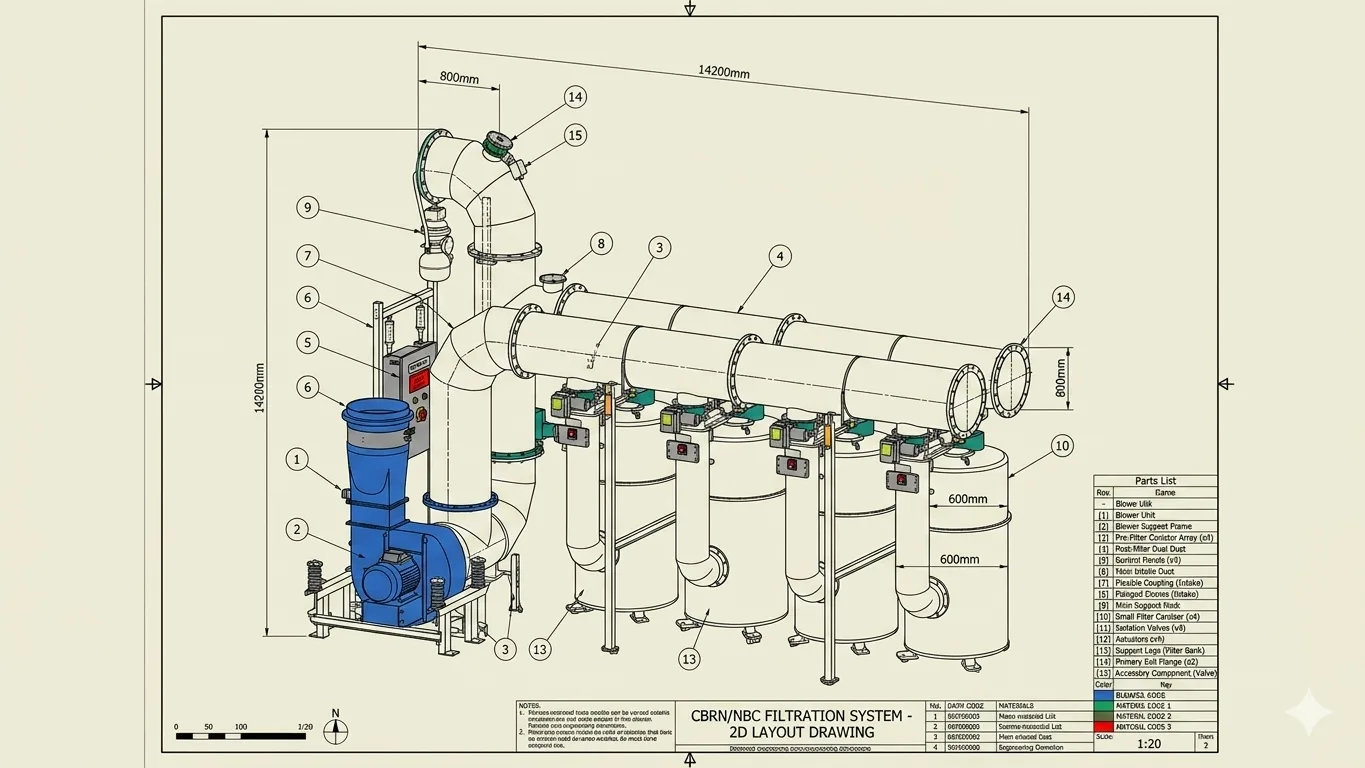
A CBRN Filtration System works by combining multiple air treatment technologies into one integrated protection solution. Instead of relying on a single filter, it removes different types of airborne hazards through a carefully engineered sequence of filtration and airflow management.
Radioactive particles, biological aerosols, toxic industrial chemicals, and chemical warfare agents behave differently in the atmosphere. Because of these differences, no single filtration medium can effectively remove every contaminant. Modern CBRN systems therefore use multiple filtration stages supported by pressure control and environmental monitoring.
For engineers and facility planners interested in the technical design of modern systems, this overview of CBRN Filtration System provides additional insight into integrated contamination control technologies.
How Multi-Stage Filtration Removes Airborne Contaminants
The filtration process typically follows several sequential stages.
Incoming air first passes through pre-filters that remove larger dust particles and debris, protecting downstream filtration components.
HEPA filters then capture microscopic airborne contaminants, including radioactive particles and biological aerosols. These filters achieve extremely high particulate removal efficiency through a combination of interception, impaction, and diffusion mechanisms.
Finally, activated carbon filters adsorb toxic gases and chemical vapours. Their highly porous structure provides an extensive surface area where hazardous molecules become trapped through physical and chemical adsorption processes.
Together, these stages create comprehensive protection against a wide range of airborne threats.
Why Positive Pressure Is Essential
Filtration alone cannot protect a facility if contaminated air can enter through structural gaps.
High-performance systems maintain positive internal air pressure by supplying filtered air at a slightly higher pressure than the surrounding environment. This pressure differential forces air outward through small openings rather than allowing contaminated outside air to infiltrate the protected space.
Positive pressurization is particularly important in underground shelters, military bunkers, command centres, and emergency operation facilities where occupant safety depends on complete environmental isolation.
Part 2 (Remaining Content)
Features That Support Reliable Protection
Modern CBRN systems combine filtration with several engineering features that improve long-term operational performance.
These commonly include:
- High-efficiency HEPA filtration
- Activated carbon filtration
- Toxic gas adsorption capability
- Biological contaminant protection
- Radioactive particle filtration
- Positive pressure operation
- Corrosion-resistant construction
- Continuous air monitoring compatibility
- Low maintenance design
- Long operational service life
- Energy-efficient airflow management
- Modular system architecture
- Reliable emergency operating modes
Each feature contributes to maintaining stable indoor air quality during both routine operation and emergency response.
Applications Across Critical Infrastructure
Because airborne contamination can disrupt essential services, CBRN filtration technology is widely deployed across high-security environments.
Typical applications include:
- Military shelters
- Defence installations
- Command and control centres
- Underground bunkers
- Ammunition storage facilities
- Nuclear power plants
- Chemical processing plants
- Petrochemical facilities
- Government security buildings
- Emergency shelters
- Strategic infrastructure
- Data centres
- Critical industrial facilities
Although operating conditions differ, each application relies on dependable contamination control to protect personnel and maintain continuity of operations.
Engineering Factors That Influence Performance
A well-designed system begins with careful engineering rather than equipment
selection alone.
Important considerations include:
- Threat assessment requirements
- Airflow capacity calculations
- Filtration efficiency standards
- Required contaminant protection levels
- Shelter occupancy requirements
- Facility size and ventilation design
- Environmental operating conditions
- Regulatory compliance
- Installation complexity
- Monitoring and control systems
- Preventive maintenance planning
- Lifecycle operating costs
While buyers often compare NBC air filtration system price or Nbc filtration system in Faridabad price, engineering performance should remain the primary basis for investment decisions.
Selecting the Right Manufacturer
System reliability depends significantly on manufacturing quality and engineering expertise.
When evaluating the Top CBRN filtration system manufacturers in India or the Top NBC filtration system manufacturers in India, buyers should assess more than product specifications.
Key evaluation criteria include:
- Experience in defence and industrial engineering
- Manufacturing capabilities
- Product testing and validation
- Compliance certifications
- Product customization options
- Technical documentation
- Installation assistance
- Preventive maintenance support
- Availability of spare components
- Long-term operational reliability
An experienced manufacturer is better positioned to design systems that meet both operational requirements and regulatory expectations.
Common Mistakes to Avoid
Several common errors reduce overall system effectiveness.
These include:
- Selecting an NBC filter system without conducting a detailed threat assessment
- Ignoring airflow calculations
- Underestimating filtration requirements
- Choosing equipment solely on purchase cost
- Neglecting maintenance planning
- Overlooking compliance standards
- Ignoring shelter pressurization requirements
- Failing to plan for future facility expansion
- Delaying filter replacement
Skipping commissioning and system performance testing
Avoiding these mistakes helps preserve system performance throughout its operational life.
Conclusion
The science behind a CBRN Filtration System is based on the integration of multi-stage filtration, activated carbon adsorption, HEPA technology, positive pressure operation, and engineered airflow management. Together, these technologies provide reliable protection against nuclear, biological, and chemical airborne hazards while supporting safe occupancy of critical facilities.
Whether protecting an NBC filter for bunker, a defence installation, a chemical processing plant, or a nuclear power facility, effective contamination control depends on sound engineering, validated performance, regulatory compliance, and disciplined maintenance. By prioritizing technical excellence and long-term operational reliability, organizations can strengthen infrastructure resilience, improve emergency preparedness, and ensure dependable protection for personnel facing evolving CBRN threats.