
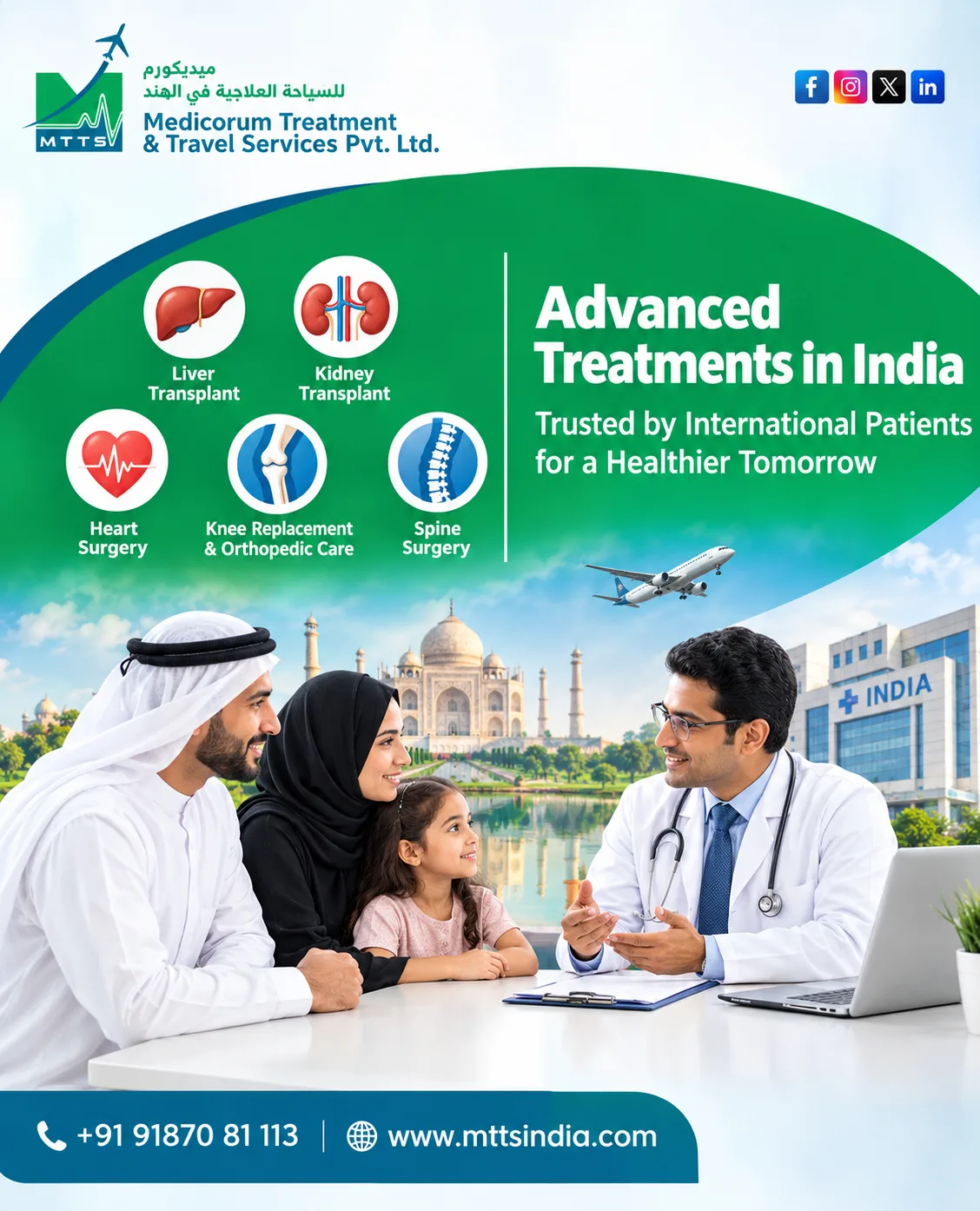
Health Care Tourism in India: A Guide to Liver Transplant, Dental Implants, IVF and Spine Surgery
Health care tourism in India is an option for international patients seeking information about specialist consultations, surgical procedures, fertility treatment, and other healthcare services. Patients from Saudi Arabia, the United Arab Emirates, Qatar, Kuwait, Oman, Bahrain, Jordan, Iraq, Egypt, Algeria, Morocco, Tunisia, Lebanon, Libya, Sudan, Syria, Yemen, Palestine, Somalia, Djibouti, Comoros, and Mauritania may consider India when exploring medical treatment abroad.
However, travelling to another country for healthcare involves more than choosing a hospital. Patients need to understand their treatment options, verify hospital credentials, review estimated expenses, arrange travel, and plan for recovery and follow-up care.
This guide explains important considerations for international patients researching liver transplantation, dental implants, IVF treatment, and spine surgery in India.
Why Do International Patients Consider Health Care Tourism in India?
India offers healthcare services across several specialties, including organ transplantation, dentistry, reproductive medicine, orthopedics, and neurosurgery. International patients can research different hospitals and specialist teams according to their medical needs.
The suitability of a particular treatment depends on the patient's diagnosis, medical history, overall health, and the recommendations of qualified healthcare professionals.
When comparing healthcare destinations, patients should consider:
- Availability of the required medical specialty.
- Relevant qualifications and experience of the treating team.
- Hospital facilities and appropriate accreditation.
- Expected treatment expenses and possible additional charges.
- Travel requirements and the anticipated length of stay.
- Recovery arrangements and follow-up care after returning home.
For patients travelling from Arab countries, organising these details in advance can help them make informed decisions about their healthcare journey.
1. Liver Transplant in India: What Should International Patients Know?
A liver transplant is a major surgical procedure that may be recommended for selected patients with advanced liver disease or certain other serious conditions.
Before considering transplantation, patients need a detailed assessment by a qualified transplant team. The evaluation may involve reviewing medical records, assessing liver function, checking other health conditions, and determining whether transplantation is an appropriate option.
International patients researching liver transplant in India should obtain information about the evaluation process and the hospital's relevant transplant services.
Important Questions Before a Liver Transplant
Patients and their families should ask:
- What medical investigations are required before the transplant assessment?
- What are the eligibility requirements?
- What donor-related and legal requirements apply?
- What expenses are included in the treatment estimate?
- How long might the evaluation, hospital stay, and recovery take?
- What follow-up care and medication will be required after transplantation?
The total expense depends on individual medical circumstances, the hospital, the procedure, and whether complications or additional treatment arise. Patients should request an individual written estimate rather than relying on a general online price.
Transplantation also requires careful consideration of applicable Indian laws and donor eligibility requirements. Patients should confirm these matters with the treating hospital before making travel arrangements.
2. Dental Implants in India: Treatment Planning and Cost Factors
Dental implants may be an option for replacing missing teeth in suitable patients. The treatment plan depends on oral health, jawbone condition, gum health, and the number of teeth requiring replacement.
Patients researching dental implants in India should arrange an assessment with a qualified dental professional before deciding whether to travel.
What Determines Dental Implant Costs?
Dental implant expenses vary according to the patient's condition and the proposed treatment plan.
Factors may include:
- Number of implants required.
- Type and brand of implant system.
- Diagnostic investigations and dental imaging.
- Need for bone grafting or other additional procedures.
- Type of crown or final restoration.
- Follow-up appointments and maintenance requirements.
An advertised starting price may not include every stage of treatment. Patients should request a written estimate specifying the implant components, surgical procedure, restoration, and any additional services.
Can Dental Implant Treatment Be Completed During One Visit?
Not every dental implant case can be completed during a single visit. Some patients may require several appointments, a healing period, or additional procedures before the final restoration is fitted.
International patients should ask their dentist whether the proposed treatment can be completed safely within their available travel period. They should also clarify how follow-up appointments will be managed after returning home.
3. IVF Treatment in India: What Couples Should Consider
In vitro fertilisation (IVF) is an assisted reproductive technology that may help some individuals and couples experiencing infertility.
The recommended treatment approach depends on several factors, including age, reproductive health, medical history, previous treatment, and the results of fertility investigations.
Patients exploring IVF treatment in India should consult a qualified fertility specialist to understand their options and the likely treatment process.
What Should Patients Ask Before Starting IVF?
Before travelling, patients should clarify:
- Which fertility investigations are required?
- What treatment approach may be suitable?
- How long might the initial treatment cycle take?
- Which consultations and procedures require an in-person visit?
- What services are included in the estimated cost?
- What additional expenses could arise?
- What follow-up arrangements are available?
The cost of IVF varies according to the treatment protocol, medication requirements, laboratory procedures, and whether additional services are needed.
Patients should also understand that IVF outcomes vary and cannot be guaranteed. A specialist can explain the factors affecting the individual's prospects and discuss the potential risks and alternatives.
Planning International Travel for Fertility Treatment
Some fertility treatments require multiple appointments over a period of time. Patients travelling from Saudi Arabia, the UAE, Qatar, Kuwait, Oman, Bahrain, and other countries should establish a proposed schedule with the fertility clinic before booking flights.
Where both partners are involved in treatment, they should confirm which appointments require both partners to attend and what medical documents they need to bring.
Clear communication about timing, treatment stages, estimated costs, and follow-up arrangements can make planning easier.
4. Spine Surgery in India: Understanding Treatment Options
Spine conditions can affect mobility, comfort, and daily activities. Depending on the diagnosis, treatment may involve medication, physiotherapy, pain management, or surgery.
Spine surgery may be considered when clinically appropriate, but not every spinal condition requires an operation.
Patients researching spine surgery in India should obtain a specialist assessment based on their symptoms, medical history, diagnostic imaging, and previous treatments.
Questions to Ask a Spine Specialist
Before deciding on surgery, patients should discuss:
- What is the exact diagnosis?
- Are non-surgical treatments appropriate?
- What procedure, if any, is recommended and why?
- What are the potential benefits and risks?
- How long might hospitalisation and rehabilitation take?
- When could the patient travel safely after treatment?
- What follow-up care will be needed after returning home?
Recovery depends on the procedure, the patient's overall health, and individual healing progress. Patients should not assume they can return home immediately after surgery.
A suitable recovery plan should include mobility support, rehabilitation where needed, medical supervision, and clear instructions about when to seek urgent care.
How to Choose the Right Hospital for Treatment in India
Choosing a hospital is an important step for international patients. A hospital that is appropriate for one procedure may not necessarily be the best choice for another.
Patients should compare hospitals based on their specific medical requirements rather than relying only on promotional material or general rankings.
Before making a decision, consider the following checklist:
1. Verify hospital credentials
Check the hospital's relevant licences, accreditations, facilities, and experience with the proposed procedure.
2. Review the treating specialist's qualifications
Ask about the specialist's training, relevant experience, and approach to the patient's condition.
3. Obtain a written treatment plan
Request an explanation of the proposed procedure, possible alternatives, anticipated recovery, and necessary follow-up.
4. Understand the estimated costs
Ask what the quotation includes and whether consultations, medication, investigations, accommodation, or additional procedures are excluded.
5. Establish a follow-up plan
Determine how post-treatment appointments will be arranged and which healthcare professional will manage ongoing care.
6. Ask about communication and language support
Patients should understand the treatment plan, consent process, medication instructions, and discharge guidance. Ask the hospital whether appropriate interpretation services are available if required.
What Should Patients from Arab Countries Prepare Before Travelling?
Patients travelling from Arab countries to India should organise their medical and travel arrangements before departure.
Useful preparations include:
- Collecting medical reports, diagnostic images, prescriptions, and previous treatment records.
- Obtaining a preliminary opinion from the relevant specialist.
- Confirming the hospital appointment and proposed treatment schedule.
- Checking current Indian medical visa requirements and any applicable attendant visa arrangements through official channels.
- Arranging accommodation and local transportation.
- Preparing for the expected recovery period.
- Confirming payment arrangements and the treatment estimate.
- Obtaining written instructions for follow-up care after returning home.
Patients considering major surgery or transplantation should discuss travel timing with the treating team. The medical team should determine when travel is appropriate based on the patient's condition and recovery.
Understanding the Role of Medical Tourism Coordination
Planning treatment in another country can involve communication with hospitals, organising documents, arranging appointments, and coordinating travel-related requirements.
Medical tourism coordination services can help patients navigate these practical steps. However, the services provided vary between organisations.
Patients should understand the difference between medical coordination and clinical care. Diagnoses, treatment recommendations, prescriptions, and decisions about medical suitability must come from qualified healthcare professionals.
MTTS India supports international patients by helping coordinate practical aspects of their healthcare journey in India. Patients can discuss their requirements and clarify the available coordination support before making arrangements.
Conclusion: Plan Your Healthcare Journey with Confidence
Health care tourism in India offers international patients an opportunity to explore treatment options across several medical specialties. Liver transplantation, dental implants, IVF, and spine surgery each involve different clinical requirements, costs, timelines, and recovery considerations.
For patients from the 22 Arab countries and other international destinations, the most important steps are to obtain qualified medical advice, verify hospital credentials, request a clear treatment estimate, and plan for recovery and continued care.
With appropriate preparation and transparent communication, patients can make more informed decisions about whether treatment in India is suitable for their individual needs.
For information about healthcare coordination services, contact MTTS India.
Website: https://mttsindia.com/index.php
About MTTS India
Medicorum Treatment Travel Services Pvt. Ltd. (MTTS India) supports international patients seeking healthcare in India by helping coordinate the practical aspects of their medical journey.
Phone: 9187081113
Email: [email protected]
Address: 139/19, Sarvabumanagara Building, Pilikhahalli Village, Begur Hubli, Bengaluru, Bengaluru (Metropolitan) District, Karnataka – 560076
Location: Bengaluru, Karnataka
Website: https://mttsindia.com/index.php
Follow MTTS India on Social Media
- Facebook: https://www.facebook.com/people/Medicorum-Treatment-Travel-Services-Pvt-Ltd-MTTS-India/
- Instagram: https://www.instagram.com/mttsindiablr_/
- LinkedIn: https://www.linkedin.com/company/medicorum-treatment-travel-services/?viewAsMember=true
- X: https://x.com/MTTSIndiaBlr