Do you often feel tired, weak, or short of breath even after getting enough sleep? Sometimes, these symptoms are not just the result of a busy schedule. They may be linked to iron deficiency anemia.
Iron is needed to make hemoglobin, a protein in red blood cells that carries oxygen throughout your body. When your body lacks enough iron, it cannot produce enough healthy red blood cells to meet your needs. As a result, you may feel exhausted, struggle to concentrate, or find everyday activities more tiring than usual.
The good news is that iron deficiency anemia can often be treated once you identify the cause. Your diet plays a role, but food alone may not be enough for everyone.
In this guide, we will look at five practical ways to improve iron deficiency anemia, foods that help your body absorb iron, common mistakes to avoid, and when to consult a hematologist.
What Is Iron Deficiency Anemia?
Iron deficiency anemia occurs when your body lacks enough iron to make adequate hemoglobin. Without sufficient hemoglobin, your blood cannot carry oxygen as effectively as it should.
Iron deficiency can develop gradually. You might not notice symptoms at first, but they may become more obvious as your iron levels fall.
Common symptoms include:
- Persistent tiredness and weakness
- Pale skin
- Dizziness or light-headedness
- Shortness of breath during activity
- Headaches
- Difficulty concentrating
- Cold hands and feet
- Brittle nails or hair loss
Some people also develop unusual cravings for non-food substances such as ice, a condition known as pica.
These symptoms can occur with other health conditions, too. A blood test is needed to check whether iron deficiency anemia is the cause.
What Causes Iron Deficiency Anemia?
Before deciding how to improve your iron levels, it helps to understand why they are low.
Common causes include:
- Insufficient dietary iron: Your meals may not provide enough iron, particularly if your diet has limited iron-rich foods.
- Heavy menstrual bleeding: Women with heavy periods may lose more iron than their bodies can replace.
- Pregnancy: Your body needs more iron during pregnancy to support your own blood supply and your baby's development.
- Blood loss: Gastrointestinal bleeding, ulcers, or other sources of blood loss can cause iron deficiency.
- Poor iron absorption: Conditions such as coeliac disease or certain digestive disorders can make it harder for your body to absorb iron.
- Increased iron requirements: Children, teenagers, and pregnant women may need more iron during periods of growth or increased demand.
Finding the cause matters. If you keep losing blood or cannot absorb iron properly, dietary changes alone may not solve the problem.
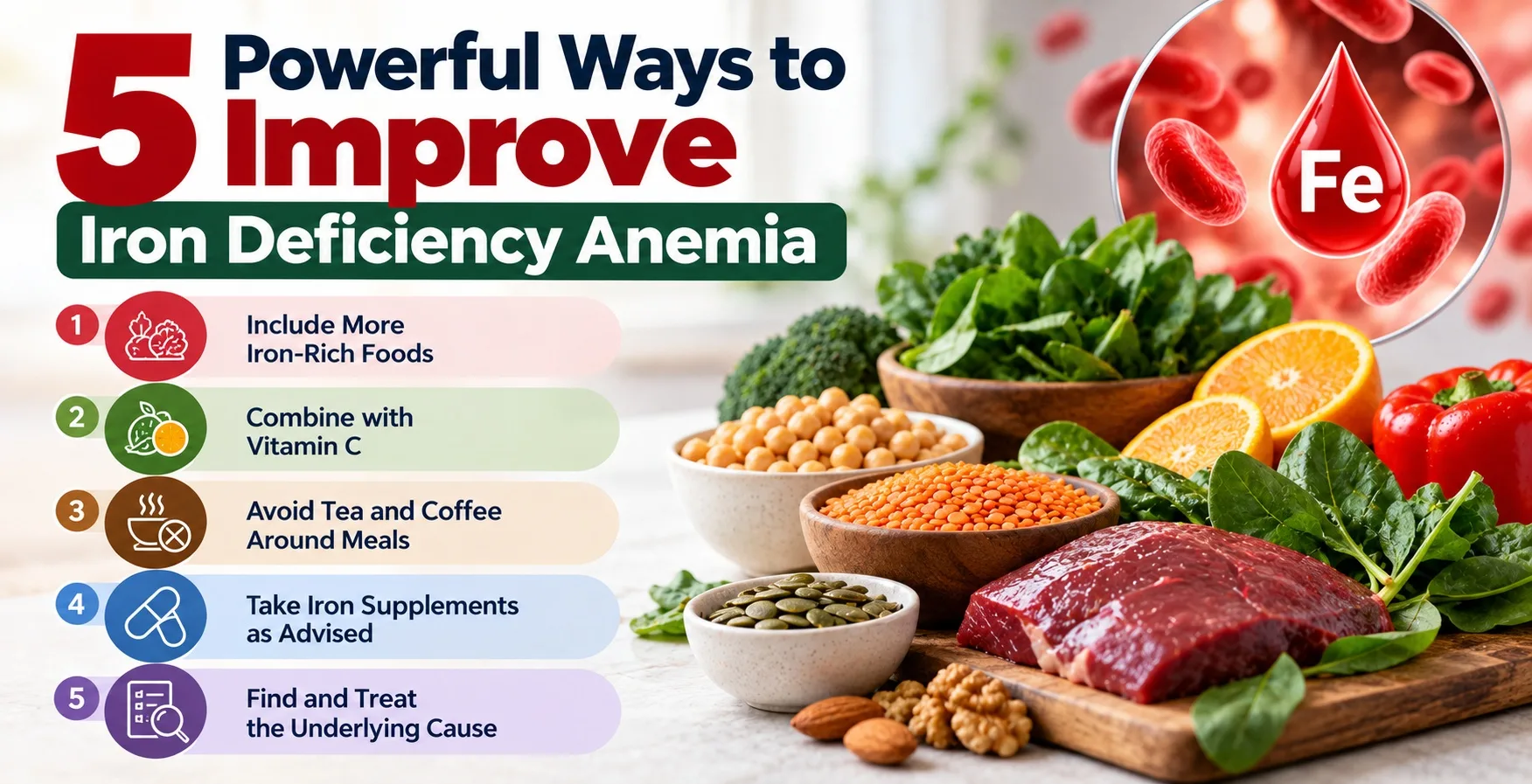
5 Powerful Ways to Improve Iron Deficiency Anemia
1. Include More Iron-Rich Foods in Your Daily Diet
One of the first steps is to add more iron-rich foods to your meals. You do not need to change your entire diet overnight. Start with a few practical changes you can maintain.
Iron comes in two main forms.
- Heme iron: Found in animal foods such as meat, poultry, and seafood. The body generally absorbs this form more easily.
- Non-heme iron: Found in plant foods such as lentils, beans, leafy greens, seeds, and fortified cereals.
If you follow a vegetarian diet, you can still get iron from a range of everyday foods.
Good sources include:
- Lentils and chickpeas
- Rajma and other beans
- Soybeans and tofu
- Pumpkin and sesame seeds
- Iron-fortified cereals
- Green leafy vegetables
- Nuts and dried fruits
For example, you could have dal with lunch, add chickpeas to a salad, or include tofu in your evening meal.
A varied diet is more useful than relying on one so-called superfood. Also, plant foods contain compounds that can affect iron absorption, so the way you combine foods matters.
2. Combine Iron-Rich Foods With Vitamin C
Eating iron-rich foods is a good start. Helping your body absorb that iron is the next step.
Vitamin C improves the absorption of non-heme iron from plant foods. This makes it particularly useful for people who get most of their iron from vegetarian meals.
Try these simple combinations:
- Dal with lemon juice
- Chickpea salad with tomatoes and capsicum
- Spinach and lentils with a vitamin C-rich vegetable side
- Iron-fortified cereal with strawberries or another vitamin C-rich fruit
- Beans with fresh lemon dressing
You do not need complicated recipes. Even a small change to an existing meal can help.
For instance, if you usually eat dal and rice, adding a side of tomatoes or squeezing lemon over your dal is an easy option.
Vitamin C supports iron absorption, but it does not replace medical treatment when anemia is significant. If your blood tests show low hemoglobin, ask your doctor whether you need iron supplements as well.
3. Avoid Tea and Coffee Around Iron-Rich Meals
Many people enjoy tea or coffee after lunch. There is nothing wrong with enjoying these drinks, but timing can matter when you have an iron deficiency.
Tea and coffee contain compounds called polyphenols that can reduce the absorption of non-heme iron when consumed with a meal.
If you are trying to improve your iron levels, consider the following habits:
- Avoid drinking tea or coffee with your main iron-rich meals.
- Leave around one to two hours between an iron-rich meal and these drinks.
- Pair meals with water or another suitable drink instead.
- Follow your doctor's instructions if you take an iron supplement.
Calcium supplements and some calcium-rich foods may also interfere with iron absorption when taken at the same time, depending on the amount and circumstances.
You do not necessarily need to stop drinking tea or coffee. Simply changing the timing may help you get more benefit from the iron in your food.
4. Take Iron Supplements When Your Doctor Recommends Them
Dietary changes may help prevent iron deficiency and support recovery. But if you already have iron deficiency anemia, food alone may not restore your iron levels quickly enough.
Your doctor may recommend oral iron supplements based on your hemoglobin, ferritin, symptoms, medical history, and the cause of the deficiency.
Iron supplements can help your body rebuild its iron stores. Some people notice an improvement in energy within a few weeks, although recovery varies. Replenishing iron stores can take several months.
Keep these points in mind:
- Take the supplement according to your doctor's instructions.
- Do not increase the dose to speed up recovery.
- Tell your doctor if you experience nausea, constipation, abdominal discomfort, or other side effects.
- Keep iron supplements away from children, as an overdose can be dangerous.
- Attend follow-up appointments and blood tests to check your response.
Some people cannot tolerate oral iron or do not absorb enough of it. In selected cases, a doctor may recommend intravenous iron.
Do not start high-dose iron supplements just because you feel tired. Too much iron can be harmful, and not all anemia is caused by iron deficiency.
5. Find and Treat the Underlying Cause
This step is easy to overlook. You might improve your diet and take iron supplements, yet your iron levels may remain low if the underlying cause is not addressed.
For example, someone with heavy menstrual bleeding may continue losing iron every month. Another person may have an undiagnosed digestive condition that affects iron absorption.
Your doctor may recommend tests or further evaluation to identify the cause.
Depending on your symptoms and medical history, this may involve:
- A complete blood count (CBC) to assess hemoglobin and blood cell measurements
- A serum ferritin test to assess stored iron
- Other iron studies when needed
- Assessment of heavy menstrual bleeding
- Evaluation for gastrointestinal blood loss when appropriate
- Tests for conditions that affect iron absorption
Men and postmenopausal women with newly diagnosed iron deficiency anemia often need assessment for possible gastrointestinal blood loss. Other adults may also need further investigation, depending on their age, symptoms, risk factors, and medical history.
Treating the cause is just as important as replacing the missing iron. Otherwise, the problem may return.
How Long Does It Take to Improve Iron Deficiency Anemia?
Recovery depends on how low your iron levels are, whether you receive the right treatment, and whether the underlying cause has been addressed.
With effective treatment, hemoglobin often begins to rise within a few weeks. Many people need several months of iron treatment to restore their iron stores fully.
Your doctor may repeat blood tests to monitor progress. Do not stop prescribed iron supplements as soon as you feel better. Your symptoms may improve before your body's iron stores have recovered.
If your hemoglobin does not improve as expected, your doctor may review your treatment, check whether you are taking the supplement correctly, or investigate ongoing blood loss or poor absorption.
When Should You Consult a Hematologist in Nagpur?
A hematologist specialises in blood disorders, including anemia and conditions that affect blood cell production.
Consider consulting a Hematologist in Nagpur if:
- Your blood tests show persistent or unexplained anemia.
- Your hemoglobin remains low despite treatment.
- You cannot tolerate prescribed iron supplements.
- Your doctor suspects an underlying blood disorder.
- You have recurrent iron deficiency without a clear explanation.
A specialist can review your blood reports, assess possible causes, and recommend further tests or treatment when needed.
Seek urgent medical care if you experience severe shortness of breath at rest, chest pain, fainting, or heavy ongoing bleeding.
Frequently Asked Questions
1. What is the fastest way to improve iron deficiency anemia?
The most effective approach depends on the severity of the deficiency. Iron-rich foods, vitamin C-rich food combinations, and prescribed iron supplements can help. Your doctor should also identify and treat the underlying cause.
2. Which foods are best for iron deficiency anemia?
Lentils, beans, chickpeas, tofu, seeds, fortified cereals, meat, and seafood can provide iron. Pair plant-based sources with vitamin C-rich foods to improve absorption.
3. Can iron deficiency anemia be treated without supplements?
Some people with mild iron deficiency may improve through dietary changes, but confirmed anemia often requires iron supplements. Your doctor can recommend the right treatment based on your blood results and medical history.
4. Does lemon water increase iron levels?
Lemon juice provides vitamin C, which can improve the absorption of non-heme iron from plant foods. It does not directly treat anemia or replace iron supplements when they are needed.
5. Can tea cause iron deficiency anemia?
Tea does not automatically cause anemia, but drinking it with meals can reduce the absorption of non-heme iron. If your iron levels are low, leaving a gap between tea and iron-rich meals may help.
Final Thoughts
Improving iron deficiency anemia takes more than adding spinach or taking an iron tablet for a few days. You need to understand why your iron levels are low and follow a treatment plan that addresses the cause.
Start with practical changes to your meals. Include iron-rich foods, pair plant sources with vitamin C, and pay attention to when you drink tea or coffee.
If blood tests confirm anemia, speak with your doctor about whether supplements or further investigations are needed. With the right treatment and follow-up, many people can restore their iron levels and feel better over time.
If you are looking for a Hematologist in Nagpur, a specialist assessment can help you understand your blood reports and choose the next steps based on your needs.