
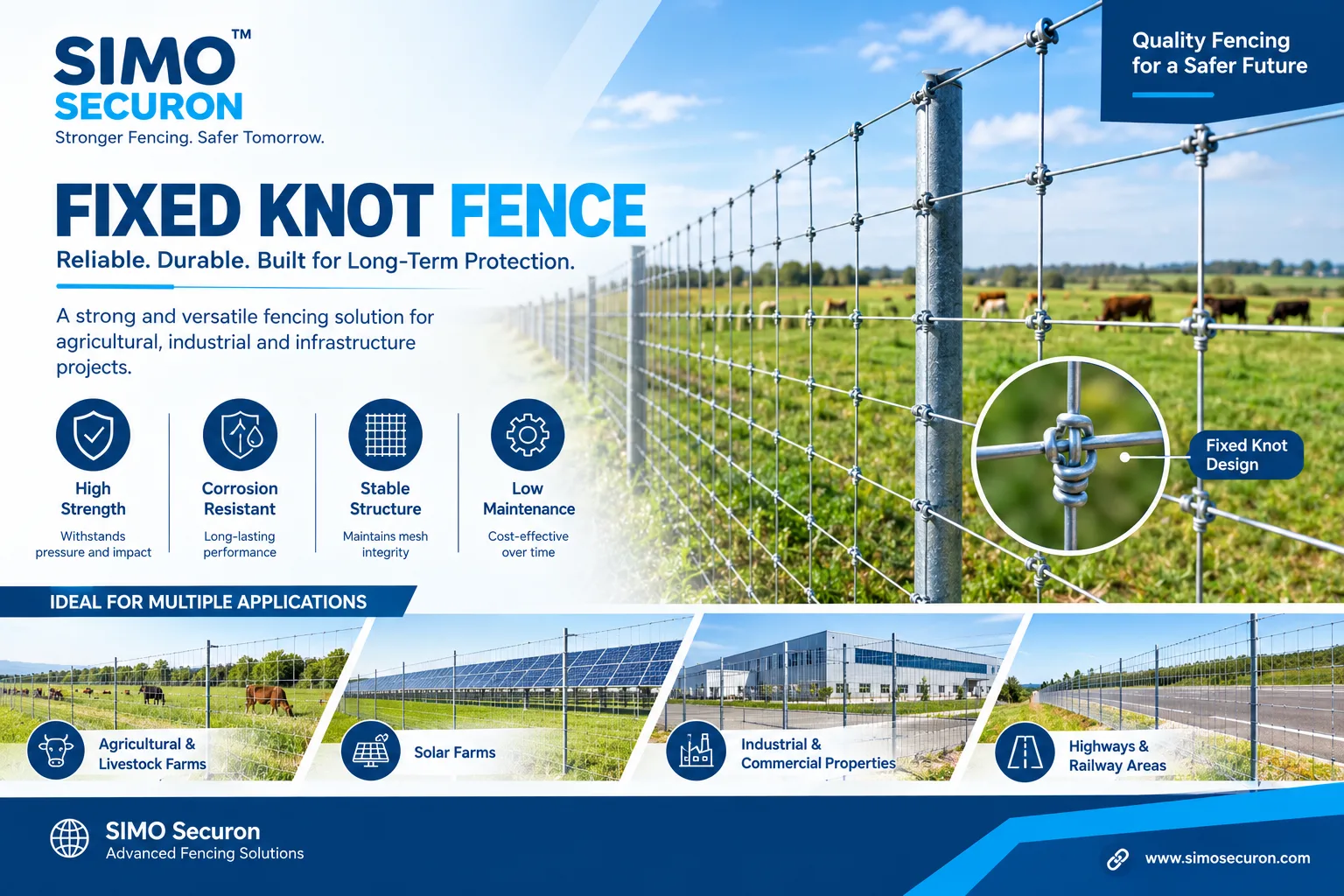
A Fixed Knot Fence is a type of fencing used to establish robust, neat, and dependable boundaries across agricultural land, livestock ranches, infrastructure, and industrial projects. The unique knot design of such an erection holds intersecting wires tight, aiding in preserving the fence's integrity when installed and used within proper settings. This article offers property owners insight on this type of fencing system, from construction to application.
Fencing requirements differ from one project to another. A farm may need to manage livestock and mark field boundaries, while an industrial facility may focus on perimeter separation and controlled access. Selecting the right fencing system starts with understanding these needs.
What Is a Fixed Knot Fence?
How do you make a fixed knot fence? A fixed knot fence is constructed of horizontal and vertical wires made up of a fixed knot at the crossing points and ensuring the wires are held together at each crossing point and creating a stable netting system. Its performance is ultimately dependent on the wire strength, knot construction, coating quality, post spacing, ground condition and install.
Fixed knot fencing has a unique construction when compared to fencing that features various types of joints. For this reason, it may be a consideration worth considering for fence use on farms or for infrastructure purposes. It is important to always remember that it is always wise to check the specifications of the product before making any comparison.
Key Benefits of Fixed Knot Fencing
Stability is one aspect of concern in the installation. The stiff knot installation keeps the relationship of the crossing wires, but with proper tension and support posts, the installation can be maintained.
Another factor is its durability. In outdoor environments, fencing will be subject to the elements including rain moisture soil, sunlight, and variations in temperature. The corrosion protection of the chosen wire will determine its in service lifespan based on the climate and user maintenance.
For other applications that require uniform spacing of the meshes, and specifying the boundary fixed knot fencing could be advantageous. Regardless of the application or type of stock keep the correct wire specifications and mesh configurations in mind given the property and conditions.
Where do you use Fixed Knot fencing?
Agriculture and Livestock Properties
Owners of farms can use fixed knot fences in outlining their boundaries, dividing the grazing land, and organizing their herd. The height of the fence, wire spacings and strength will depend on the type of animals and the land configuration. Consideration should also be given to fencing gates and for vehicle access.
Solar Farms and Infrastructure
Perimeters must be defined for large solar array and infrastructure locations. Fixed knot fencing should be considered where the project criteria is appropriate. The land survey should take into consideration the topography, access, and drainage, and any other security considerations.
Industrial & Commercial Properties
There may be need for fencing around the industrial or warehouse premises or commercial properties to provide the boundaries for carrying out business and also marking personal property boundaries. The fencing material will depend on the risks in the surrounding area, among other factors.
Highways and Railway Areas
Where fencing is used to outline restricted areas and or to meet the safety requirements of a particular site, additional fencing may be needed. Fence, which is erected next to a highway or railway corridor must comply with the applicable project standards and regulations.
Selecting your Fixed Knot Fence.
Following is what needs to be considered before purchasing a fence.
Wire specifications: Look at the diameter, tensile strength, mesh size, and the manufacturer’s technical sheet.
Protection from corrosion: Consider what type of coating it has and whether it is suitable for the environment since not all coatings resist corrosion equally.
Site and installation: Inclined land, uneven soil, drainage, and corner locations may impact on post spacing and/or installation requirements. Use professional planning to prevent maintenance on your farm.
Application requirements (Livestock control /property boundaries /industrial perimeter protection) may dictate different specifications. Select the configuration best suited to the real application.
Input from the supplier: is the product easily explained, are installation instructions and warranty terms included, are there knowledgeable technical support available? Make sure to select solutions based on specifications in documentation rather than the lowest price.
Exploring Fixed Knot Fencing from SIMO Securon
Fixed Knot Fencing SIMO Securon gives fixed knot fencing options for industrial, infrastructure, and perimeter fencing as well as agricultural fencing. Customers can browse by product specification, wire specification, product type, and applications to assist with product selection.
For more information on the design and technology of these fencing systems, go to the SIMO Securon fixed knot fence technology page. If you want to see the technical specifications of these options then they can be used as part of a comparison process for project designers.
The top option should always be determined by the requirements, an aim for the project, an installation plan, and financial means. This is where the proper analysis gives property owners a far better idea of what fencing choice to go for.
Conclusion
A Fixed Knot Fence may be a preferred solution on farms, at a livestock operation, for infrastructure projects and some industrial uses. The finished fence is marked by the fixed knot construction, the appropriate materials and installation quality.
Before selecting a product, evaluate the site, benchmark technical specifications, and verify the fencing system is suitable for the project. When installed correctly, a fencing system that has been thoughtfully selected will allow for reliable border management.