Planning for pregnancy is an exciting journey, but for some women, understanding their reproductive health before trying to conceive can provide valuable insights. If you've been wondering whether fertility testing is necessary, knowing what these tests involve can help you make informed decisions about your reproductive health.
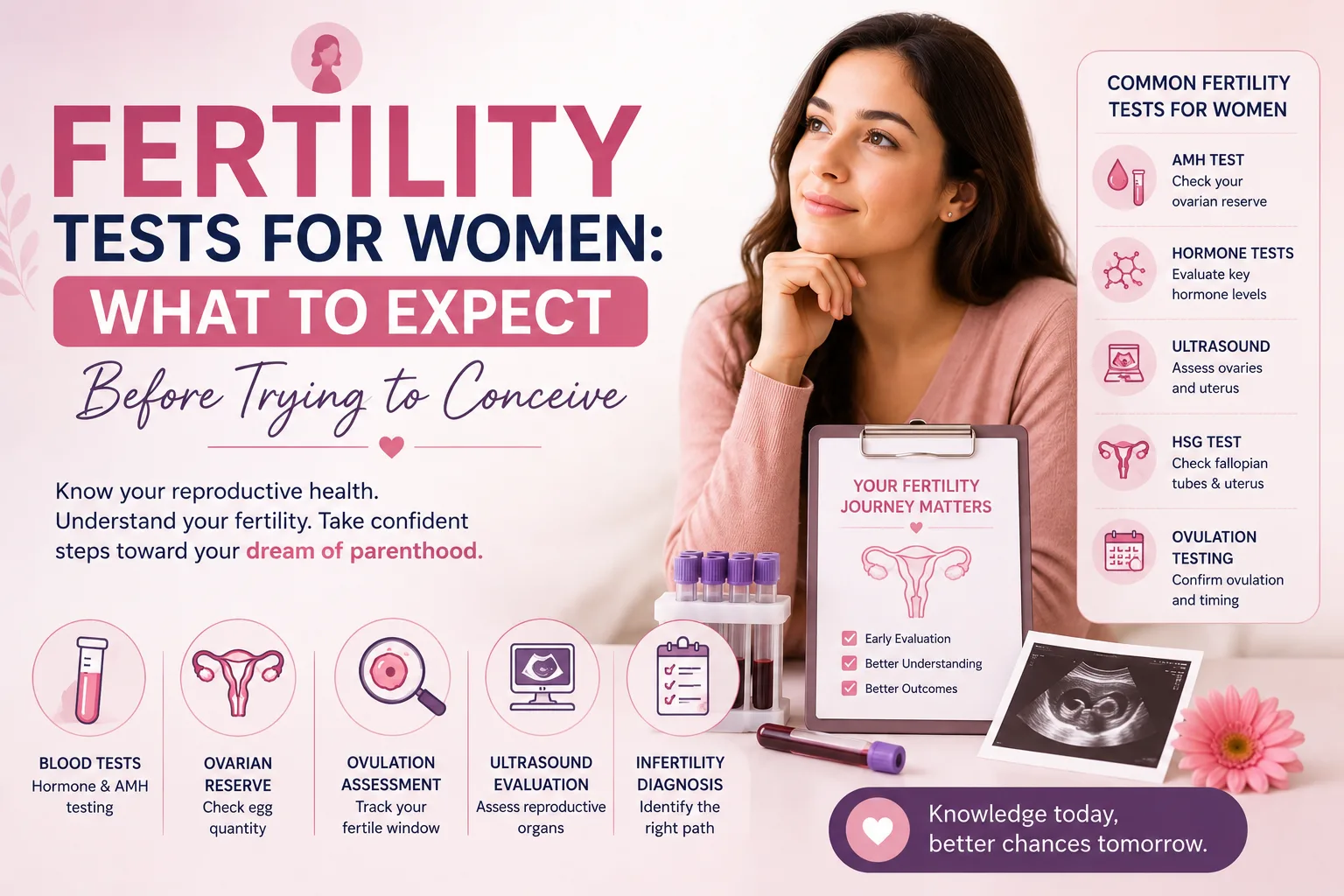
Fertility tests for women are designed to evaluate ovulation, hormone levels, ovarian reserve, and the overall health of the reproductive system. While many couples conceive naturally without testing, fertility evaluations may be recommended if you've been trying to become pregnant without success, have irregular menstrual cycles, or have certain medical conditions that may affect fertility.
One of the most commonly discussed fertility tests is the AMH test, which measures ovarian reserve. Along with other diagnostic evaluations, it can provide useful information during an infertility diagnosis.
In this guide, we'll explain the most common fertility tests, when they're recommended, what to expect during the evaluation process, and how the results may help guide your next steps.
What Are Fertility Tests?
Fertility tests are medical evaluations that help healthcare providers understand how well your reproductive system is functioning.
Depending on your medical history and symptoms, testing may evaluate:
- Ovulation
- Hormone levels
- Ovarian reserve
- Uterine health
- Fallopian tube function
- Overall reproductive anatomy
The purpose of testing is not only to identify fertility challenges but also to determine the most appropriate treatment or pregnancy planning approach if needed.
When Should Women Consider Fertility Testing?
You may consider discussing fertility testing with your healthcare provider if:
- You're under 35 and have been trying to conceive for 12 months without success.
- You're 35 or older and have been trying for six months.
- Your menstrual cycles are irregular or absent.
- You have been diagnosed with conditions such as PCOS or endometriosis.
- You have experienced recurrent pregnancy loss.
- You have a history of pelvic infections or reproductive surgery.
- You are planning pregnancy later in life and want to understand your fertility status.
Early evaluation can help identify potential issues before they become more challenging to manage.
Common Fertility Tests for Women
Several tests may be recommended based on your individual health history.
1. AMH Test (Anti-Müllerian Hormone Test)
The AMH test is one of the most commonly performed fertility tests.
AMH is a hormone produced by small follicles in the ovaries.
The test helps estimate your ovarian reserve, which refers to the number of eggs remaining in your ovaries.
A blood sample is taken, and unlike some hormone tests, the AMH test can usually be performed on any day of the menstrual cycle.
It's important to remember that the AMH test estimates egg quantity—not egg quality or your ability to become pregnant.
2. Hormone Blood Tests
Hormone testing provides information about reproductive function.
Your healthcare provider may evaluate hormones such as:
- Follicle-Stimulating Hormone (FSH)
- Luteinizing Hormone (LH)
- Estradiol
- Progesterone
- Thyroid hormones
- Prolactin
These hormones help regulate ovulation and menstrual cycles.
Abnormal levels may indicate hormonal imbalances affecting fertility.
3. Ovulation Testing
Because regular ovulation is essential for pregnancy, confirming ovulation is often part of fertility evaluation.
Methods include:
- Blood progesterone testing
- Ovulation predictor kits
- Basal body temperature tracking
- Menstrual cycle monitoring
These methods help determine whether ovulation is occurring consistently.
4. Pelvic Ultrasound
A pelvic ultrasound allows healthcare providers to examine:
- Ovaries
- Uterus
- Endometrial lining
- Ovarian follicles
Ultrasound may also identify conditions such as ovarian cysts, fibroids, or polycystic ovaries.
5. Hysterosalpingography (HSG)
An HSG is an imaging procedure used to check whether the fallopian tubes are open and whether the uterus has a normal shape.
During the procedure:
- A contrast dye is placed into the uterus.
- X-ray images are taken.
- The dye helps visualize the uterus and fallopian tubes.
Blocked fallopian tubes can prevent sperm and egg from meeting.
6. Hysteroscopy
In certain situations, a healthcare provider may recommend hysteroscopy.
A thin camera is inserted through the cervix to examine the inside of the uterus.
This procedure helps identify:
- Polyps
- Fibroids
- Scar tissue
- Uterine abnormalities
7. Genetic Testing
Some couples may benefit from genetic carrier screening, particularly if there is a family history of inherited conditions.
Genetic testing does not assess fertility directly but can provide valuable information for pregnancy planning.
Understanding the AMH Test Results
Many women are particularly interested in their AMH test results.
Generally:
- Higher AMH levels may indicate a larger ovarian reserve.
- Lower AMH levels may suggest fewer remaining eggs.
However, AMH alone cannot predict whether you will become pregnant naturally.
Age, egg quality, ovulation, sperm health, and overall reproductive health all influence fertility.
For this reason, AMH results should always be interpreted alongside other fertility tests.
Does Fertility Testing Hurt?
Most fertility tests involve minimal discomfort.
For example:
- Blood tests involve a simple blood draw.
- Ultrasound examinations are generally painless.
- HSG may cause temporary cramping during the procedure.
- Hysteroscopy discomfort varies depending on the type of procedure performed.
Your healthcare provider will explain each test beforehand and discuss ways to improve comfort.
Preparing for Fertility Testing
Before your appointment:
- Track your menstrual cycle.
- Prepare a list of medications and supplements.
- Gather previous medical records if available.
- Record your menstrual history.
- Discuss any family history of fertility-related conditions.
Providing accurate information helps guide appropriate testing.
Factors That Can Affect Fertility
Several factors influence fertility beyond test results.
These include:
- Age
- Lifestyle habits
- Smoking
- Alcohol consumption
- Weight
- Nutrition
- Chronic health conditions
- Hormonal disorders
- Stress
- Reproductive disorders
A comprehensive fertility evaluation considers all of these factors together.
Can Lifestyle Changes Improve Fertility?
Healthy habits support reproductive health, regardless of fertility test results.
Helpful lifestyle practices include:
- Eating a balanced diet
- Exercising regularly
- Maintaining a healthy weight
- Sleeping adequately
- Managing stress
- Avoiding smoking
- Limiting alcohol intake
While lifestyle changes cannot correct every fertility problem, they contribute to overall reproductive wellness.
Frequently Asked Questions
What is the AMH test?
The AMH test measures Anti-Müllerian Hormone levels to estimate ovarian reserve and is commonly used during fertility evaluations.
Can the AMH test predict pregnancy?
No. The AMH test estimates ovarian reserve but does not predict whether you can become pregnant naturally.
When should fertility testing begin?
Women under 35 are generally advised to seek evaluation after 12 months of trying to conceive without success, while women aged 35 or older may benefit from evaluation after six months.
Are fertility tests painful?
Most fertility tests involve little or no pain. Some procedures, such as HSG, may cause temporary discomfort or cramping.
Do all women need fertility testing before pregnancy?
No. Many women conceive naturally without testing. Fertility testing is typically recommended when pregnancy is delayed or specific risk factors are present.
Final Thoughts
Understanding fertility tests for women can make the journey toward pregnancy less overwhelming. Evaluations such as the AMH test, hormone analysis, ultrasound, and other diagnostic procedures provide valuable information about reproductive health and can help identify possible causes of infertility.
It's important to remember that fertility is influenced by many factors, and no single test can fully predict your ability to conceive. If you're concerned about your fertility or have been trying to become pregnant without success, consulting a qualified healthcare professional can help you determine which tests are appropriate for your situation.
Early evaluation, healthy lifestyle choices, and personalized medical guidance can provide the best foundation for informed pregnancy planning and reproductive health.