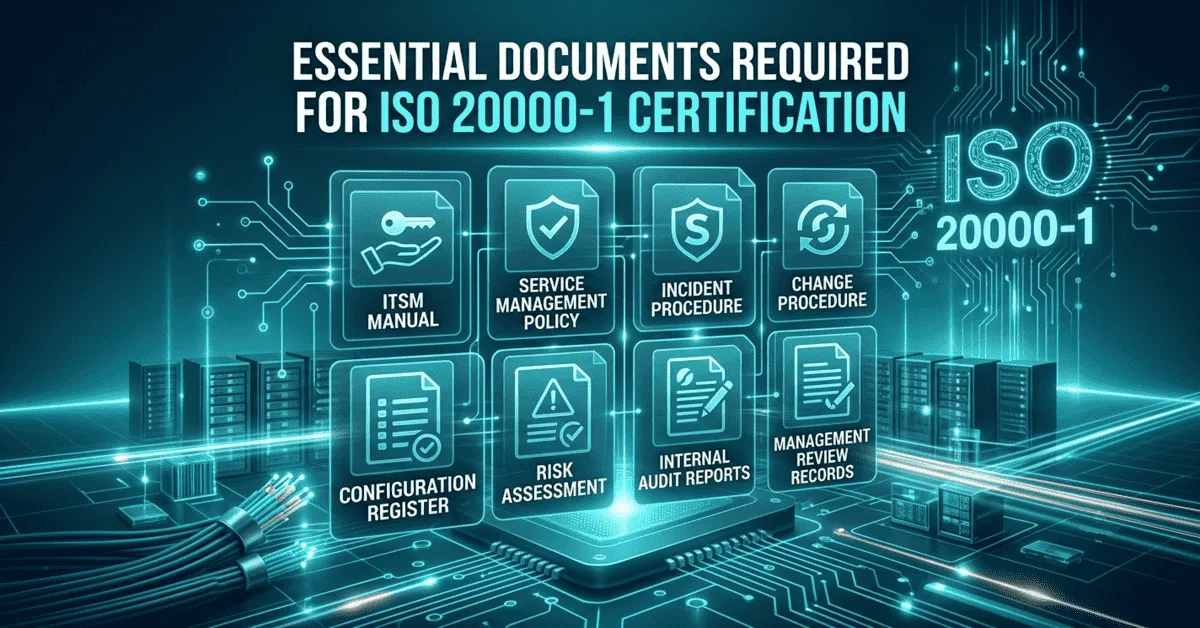
ISO 20000-1 certification requires organizations to establish an effective IT Service Management System (ITSMS) for consistent service delivery, customer satisfaction, and continual improvement. Proper documentation defines responsibilities, standardizes processes, and demonstrates compliance with the standard. Effective ISO 20000 implementation therefore depends on maintaining appropriate documents and records as evidence of system performance.
1. IT Service Management System Manual
An IT Service Management System manual provides an overall framework for implementing and maintaining an ITSMS. It explains the organization's service management approach, scope, policies, responsibilities, and relationships between different IT service processes.
The ISO 20000 manual should address the organization's context, interested parties, service management objectives, leadership responsibilities, and overall system structure. It should also explain how the organization manages its IT services to meet customer and business requirements.
2. ISO 20000 Policies and Procedures
Policies and procedures establish consistent methods for managing IT services and controlling operational activities. They help employees understand their responsibilities and follow approved processes.
Important ITSMS documents include:
- Service management policy
- Information security policy
- Service level management procedure
- Incident management procedure
- Problem management procedure
- Change management procedure
- Configuration management procedure
- Release and deployment management procedure
- Service continuity management procedure
- Supplier management procedure
These documented processes help organizations maintain service quality, manage disruptions, control changes, and improve IT service performance. Using structured ISO 20000 documents can help organizations prepare essential policies, procedures, and supporting documentation for effective ITSMS implementation.
3. Standard Operating Procedures and Work Instructions
Standard Operating Procedures (SOPs) provide practical instructions for performing specific IT service management activities. They help ensure that routine operations are performed consistently across departments and service teams.
Organizations may prepare SOPs for service requests, incident handling, system monitoring, backup activities, access management, service restoration, and IT infrastructure maintenance. Clear work instructions reduce operational confusion and support consistent service delivery.
4. ISO 20000 Forms and Records
Forms and records provide evidence that IT service management activities are implemented and monitored effectively. They also help organizations track performance, identify recurring problems, and support internal and external audits.
Common ISO 20000 forms include:
- Incident and service request records
- Change request forms
- Problem management reports
- Service level monitoring records
- IT asset and configuration registers
- Risk assessment records
- Internal audit reports
- Corrective action reports
- Customer feedback and satisfaction records
- Management review records
Editable forms and registers help organizations maintain consistent documentation and track IT service management activities. For additional guidance, read how to manage ITSMS forms and records to understand how to maintain appropriate evidence of service management activities.
5. ITSMS Risk Assessment and Service Management Records
Organizations must identify risks and opportunities that could affect IT service management performance. Documented risk assessments help evaluate potential service interruptions, cybersecurity threats, resource limitations, supplier dependencies, and other operational challenges.
Supporting documentation may include risk registers, service continuity plans, service management objectives, performance monitoring records, and improvement action plans. These documents help management make informed decisions and strengthen service reliability.
6. Internal Audit and ISO 20000 Certification Documents
Internal audits help determine whether the ITSMS meets ISO 20000-1 requirements and whether implemented processes are operating effectively. Organizations should maintain an internal audit procedure, audit schedule, audit checklists, audit reports, and corrective action records.
A compliance matrix can also help map applicable standard requirements against documented procedures and available evidence. Reviewing these ISO 20000 certification documents before the certification audit helps identify gaps and improve implementation readiness.
Conclusion
Well-organized ISO 20000 documentation helps organizations establish consistent IT service management practices and demonstrate effective implementation. Documents should reflect actual business activities rather than simply satisfy certification requirements. Regularly reviewing procedures, updating records, monitoring service performance, and addressing identified gaps supports successful ISO 20000-1 certification while improving service reliability, operational efficiency, and customer satisfaction.