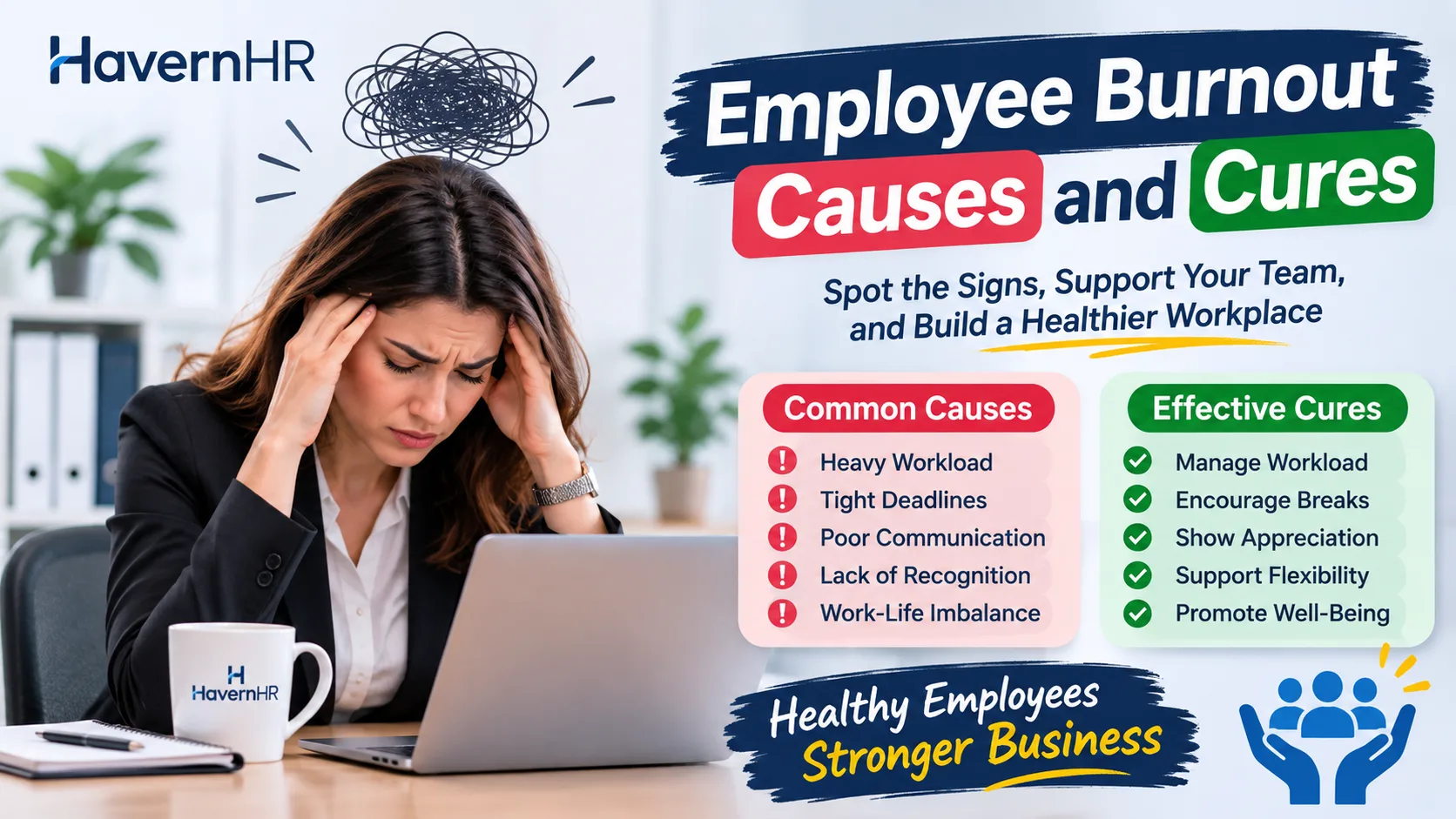
Employee burnout is becoming a major challenge for modern workplaces. Heavy workloads, unrealistic deadlines, poor communication, and a lack of support can gradually affect employees' motivation, performance, and overall well-being. When workplace stress continues without proper management, employees may experience emotional exhaustion and lose interest in responsibilities they once handled confidently.
Understanding employee burnout causes and cures helps employers identify workplace problems early and take practical steps to create a healthier and more supportive working environment.
What Is Employee Burnout?
Employee burnout is a condition associated with chronic workplace stress that has not been successfully managed. It can affect how employees feel, think, and perform at work.
Burnout generally involves three major dimensions:
- Emotional exhaustion: Employees feel mentally and physically drained.
- Mental distance: Employees become disconnected, negative, or less interested in their work.
- Reduced professional effectiveness: Employees feel less confident about their performance and struggle to complete tasks effectively.
Burnout is more than temporary tiredness. It can develop over time when workplace problems remain unresolved.
Common Causes of Employee Burnout
Burnout can result from several workplace conditions. Identifying these causes is the first step toward prevention.
1. Excessive Workload
When employees regularly receive more tasks than they can reasonably complete, pressure begins to build. Continuous overtime and unrealistic expectations can leave little time for rest and recovery.
2. Unrealistic Deadlines
Constantly changing deadlines and urgent assignments can create unnecessary stress. Employees may feel that they must work faster without receiving the resources or support needed to complete their responsibilities.
3. Poor Management and Communication
Employees need clear instructions, constructive feedback, and guidance from their managers. Poor communication can create confusion, frustration, and a feeling of being unsupported.
4. Lack of Recognition
When employees' efforts are consistently overlooked, they may feel that their contributions do not matter. Recognition and appreciation help employees understand that their work is valued.
5. Unclear Job Responsibilities
Employees can become overwhelmed when they do not understand their responsibilities or priorities. Clear job descriptions and expectations help reduce confusion and improve accountability.
6. Poor Work-Life Balance
Regularly working beyond scheduled hours, responding to messages after work, and missing personal commitments can affect employees' ability to recover from workplace pressure.
Warning Signs of Employee Burnout
Managers and HR professionals should pay attention to changes in employee behavior and performance. Common warning signs include:
- Constant tiredness and low energy.
- Reduced motivation and enthusiasm.
- Difficulty concentrating on daily tasks.
- Increased mistakes and missed deadlines.
- Withdrawal from colleagues and team activities.
- Irritability or frustration.
- Frequent absence from work.
- Declining work quality and productivity.
One sign alone does not necessarily mean an employee is experiencing burnout. However, several ongoing changes may indicate that a supportive conversation is needed.
Effective Ways to Prevent Employee Burnout
Preventing burnout requires more than encouraging employees to take breaks. Businesses should review workplace practices and address the conditions creating unnecessary pressure.
1. Maintain Realistic Workloads
Managers should distribute responsibilities according to team capacity. When employees have too many tasks, priorities should be reviewed and unnecessary work reduced.
2. Encourage Regular Breaks
Short breaks during the workday help employees step away from demanding tasks. Businesses should also encourage employees to use their approved leave.
3. Improve Workplace Communication
Managers should communicate expectations clearly and create opportunities for employees to discuss concerns. Regular one-to-one meetings can help identify problems before they become serious.
4. Recognize Employee Contributions
Appreciating employees for their effort and achievements can strengthen workplace relationships. Recognition does not always require financial rewards; sincere feedback and acknowledgment can also make a difference.
5. Support Flexible Working Arrangements
Where business operations allow, flexible schedules and remote work options can help employees manage professional and personal responsibilities.
6. Provide Access to Support
Organizations can offer employee assistance programs, counseling resources, and guidance from HR teams. Employees experiencing persistent or severe symptoms may also benefit from professional support.
How Can Employees Recover From Burnout?
Recovery depends on the causes and severity of burnout. Employees and employers should work together to address workplace conditions rather than expecting individuals to manage every problem alone.
Some practical steps include:
- Identify the source of stress: Understand which tasks, expectations, or workplace situations are creating pressure.
- Discuss workload concerns: Speak with a manager or HR representative about responsibilities that need adjustment.
- Set healthy boundaries: Establish reasonable working hours and avoid unnecessary after-hours tasks.
- Make time for recovery: Prioritize rest, sleep, personal activities, and approved time off.
- Seek professional guidance: Consider speaking with a qualified healthcare or mental health professional when symptoms persist.
The Role of HR in Preventing Employee Burnout
Human Resources teams play an important role in creating workplace policies that support employee well-being. HR professionals can review workloads, monitor attendance patterns, collect employee feedback, and help managers address concerns.
They can also support better workforce planning by maintaining accurate employee records and ensuring responsibilities are distributed appropriately.
Modern HR technology can make these processes easier. Platforms such as HavernHR help businesses organize employee information and streamline everyday HR operations. Better-organized HR processes allow managers to focus more effectively on workforce needs and employee support.
Conclusion
Employee burnout can affect individual well-being, workplace relationships, productivity, and employee retention. Its causes often include excessive workloads, unrealistic deadlines, poor communication, limited recognition, and a lack of work-life balance.
Businesses can reduce burnout risks by creating realistic schedules, supporting managers, recognizing employee contributions, and encouraging open communication. A healthy workplace requires consistent attention to employee needs and the working conditions that influence their performance.
By making employee well-being part of everyday HR practices, organizations can build more supportive teams and create a sustainable working environment.