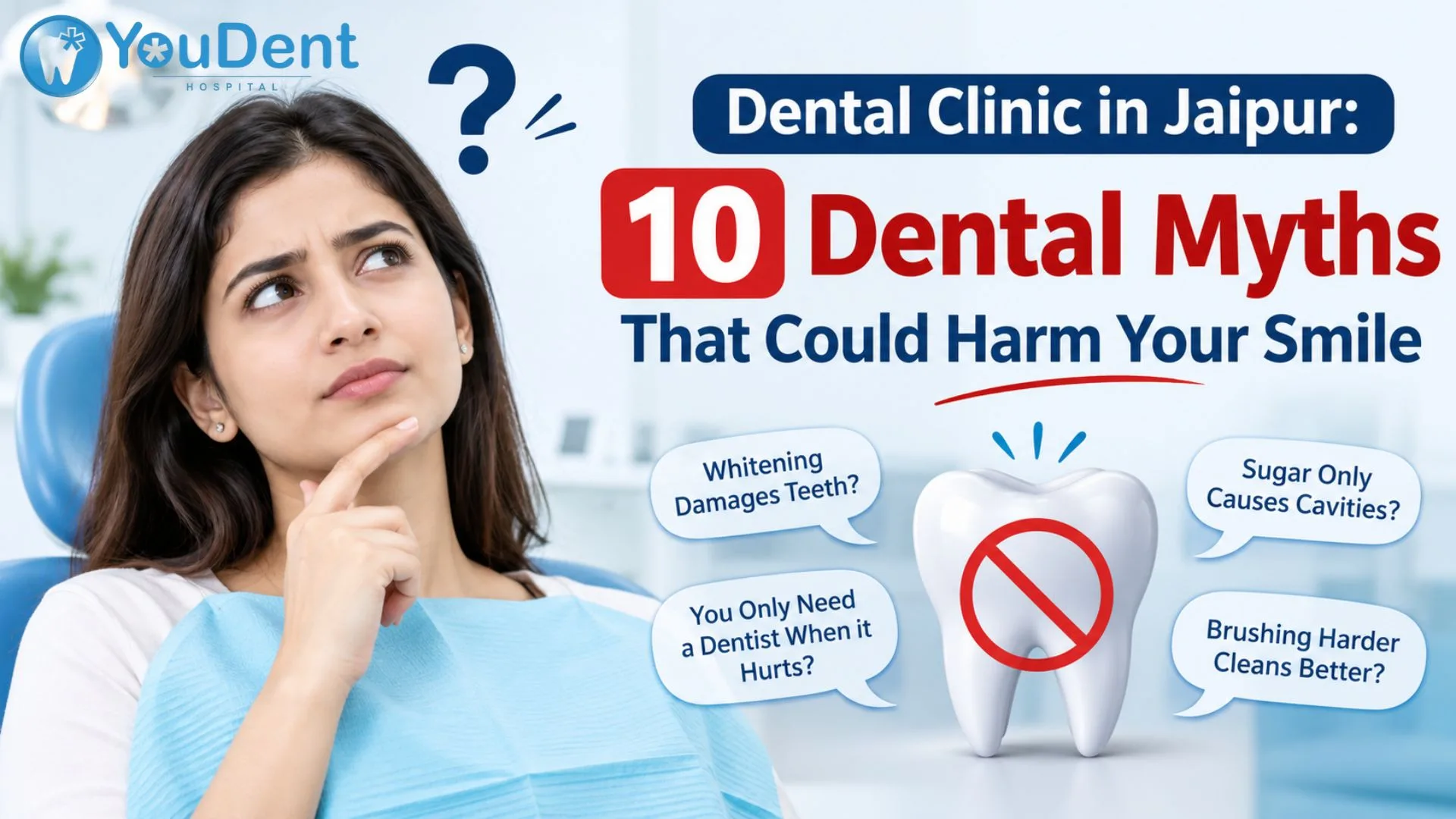
We all grow up hearing dental advice from parents, neighbors, and friends. Some of it is useful, but a lot of it is outdated or simply wrong. Many people avoid checkups for years because of things they heard from someone else, and by the time they visit a dental clinic in Jaipur, a small problem has already turned into a painful and expensive one. Believing the wrong thing about your teeth can be just as harmful as ignoring them. In this blog, we clear up ten of the most common dental myths in plain, simple words, so you can take better care of your smile.
Myths About Brushing and Cleaning
Daily cleaning is the base of good oral health, yet this is where confusion is strongest. Let us start here.
Myth 1: The Harder You Brush, the Cleaner Your Teeth Get
This is probably the most common mistake. Many people scrub their teeth like they are cleaning a dirty floor, thinking more force means more cleaning. In reality, plaque is soft and comes off easily with gentle brushing.
Brushing too hard can wear down the protective enamel and push your gums back, which leaves the roots of your teeth exposed. That is one big reason behind sensitive teeth. Use a soft-bristled brush, hold it at a slight angle toward the gum line, and make small, gentle circles for two minutes.
Myth 2: If Your Gums Bleed, You Should Stop Brushing
Bleeding gums scare people, so they avoid that area completely. This only makes things worse. Gums usually bleed because plaque has built up along the gum line and caused inflammation.
Staying gentle but consistent with brushing and flossing normally improves the problem within a week or two. If the bleeding continues, it could be an early sign of gum disease, and it is time to get it checked.
Myth 3: Mouthwash Can Replace Brushing
Mouthwash gives fresh breath and can reduce some germs, but it cannot remove the sticky plaque that clings to your teeth. Think of it like perfume. It may smell nice, but it does not replace a bath.
Mouthwash works best as an extra step after brushing and flossing, not as a shortcut.
Myths About Food and Daily Habits
What we eat and how we live clearly affects our teeth, but not always in the way people believe.
Myth 4: Only Sugar Causes Cavities
Sugar is a big villain, but it is not the only one. Cavities happen when bacteria in your mouth feed on sugars and starches and produce acid that attacks enamel. Foods like white bread, chips, and biscuits break down into sugar quickly and can stick to teeth.
How often you eat matters too. Sipping sweet tea or snacking all day keeps your teeth under constant acid attack. Eating sweets with a meal, and rinsing with water afterward, is far better than nibbling through the day.
Myth 5: Home Remedies Can Cure a Cavity
Clove oil and warm salt water can offer short-term comfort when a tooth hurts, and they are fine for that purpose. But they do not repair a hole in the tooth. Once enamel has broken down into a cavity, the body cannot rebuild it.
Delaying treatment because the pain went away is risky. The decay keeps spreading quietly and may reach the nerve, which means a bigger treatment later. Use home remedies for temporary relief and see a dentist soon.
Myth 6: Baby Teeth Do Not Matter Because They Fall Out Anyway
Some parents ignore cavities in milk teeth, assuming the tooth will be replaced soon. But baby teeth guide the permanent teeth into their correct positions. If a baby tooth is lost too early or becomes infected, the new tooth may come in crooked or damaged.
Healthy baby teeth also help children chew food well, speak clearly, and feel comfortable smiling. Start good habits early and take kids for regular checkups.
Myths About Dental Treatments
Fear of treatment keeps many people away from the dentist. Most of that fear comes from myths rather than facts.
Myth 7: A Root Canal Is Extremely Painful
Thanks to local anesthesia and modern techniques, a root canal today feels much like getting a regular filling. The pain people associate with it actually comes from the infection, not the treatment.
The procedure removes the infected tissue inside the tooth, cleans the space, and seals it. Most patients feel relief afterward, and the tooth can often last for many years with a proper crown.
Myth 8: Teeth Whitening Ruins Your Enamel
When done by a dentist, whitening is considered safe. The dentist checks your teeth first, picks the right strength, and protects your gums during the procedure. Some people feel mild sensitivity for a day or two, which usually settles quickly.
The real risk comes from random online hacks, such as scrubbing with lemon, baking soda, or charcoal powder. These can scratch and weaken enamel over time.
Myth 9: Dental X-Rays Are Dangerous
X-rays help dentists see problems hidden between teeth, under the gums, or inside the bone. Modern digital X-rays use very small amounts of radiation, far less than older film machines. Protective aprons add another layer of safety.
Skipping an X-ray can mean missing a cavity or infection that is silently growing. The benefit of catching problems early is much greater than the tiny risk.
Myth 10: If Nothing Hurts, Your Teeth Are Fine
This might be the most dangerous myth of all. Early cavities and gum disease are often painless. By the time you feel pain, the damage is usually deeper and treatment is more complex.
Regular checkups every six months allow the dentist to spot trouble before it becomes serious. Visiting only when something hurts almost always costs more time, money, and discomfort.
When You Should Not Wait to See a Dentist
Some signs should never be ignored, no matter how busy you are. Booking a visit early can save you from a much bigger problem.
Signs That Need Quick Attention
Pain that lasts more than a day or two, swelling on the face or gums, a bad taste that keeps returning, and loose teeth in adults are all red flags. So are sores in the mouth that do not heal within two weeks.
Signs That Are Easy to Miss
Mild sensitivity to hot or cold, small dark spots on teeth, and gums that look red or puffy may seem minor. These are often the early warnings of cavities or gum disease, when treatment is simple, quick, and affordable.
How to Choose a Reliable Dental Clinic
Now that you know the facts, the next step is finding a clinic you can trust. Keep these simple points in mind.
Check the Dentist's Qualifications
Look for a BDS or MDS degree and proper registration with a dental council. Do not hesitate to ask about the doctor's experience with your specific treatment.
Observe Cleanliness and Comfort
A good clinic uses sterilized instruments, fresh gloves for each patient, and keeps the treatment area neat. The staff should also be polite and willing to explain things.
Expect Honest Advice and Clear Pricing
A reliable dentist explains why a treatment is needed, lists the options, and gives a clear cost estimate before starting. If you feel pushed into something, take a second opinion.
A Simple Daily Routine for Healthy Teeth
You do not need a complicated routine. Just stay consistent with these basics:
- Brush twice a day for two minutes with fluoride toothpaste.
- Clean between your teeth with floss once a day.
- Drink water after meals and cut down on sticky or sugary snacks.
- Replace your toothbrush every three months.
- Avoid tobacco in any form.
- Visit your dentist every six months.
Frequently Asked Questions
1. How often should I replace my toothbrush?
Every three months, or sooner if the bristles look bent or frayed. A worn brush cleans poorly.
2. Is it safe to visit the dentist during pregnancy?
Yes, routine care is generally safe and important, since pregnancy can make gums more sensitive. Always tell your dentist that you are pregnant so they can plan treatment accordingly.
3. Do electric toothbrushes clean better than normal ones?
They can help, especially for people who brush too hard or too fast. But a regular brush works well too when used with the right technique.
4. Why do my teeth feel sensitive to cold drinks?
Sensitivity often comes from worn enamel, exposed roots, or small cavities. A dentist can find the exact cause and suggest the right treatment or toothpaste.
5. Can bad breath be cured by brushing alone?
Not always. Bad breath may come from the tongue, gum disease, cavities, or even dry mouth. Cleaning your tongue and getting regular checkups often fixes it.
6. When should children start using toothpaste?
As soon as their first tooth appears, using only a tiny rice-grain-sized smear of fluoride toothpaste, as advised by a dentist.
Conclusion
Dental myths may sound harmless, but they can lead to delayed treatment, wrong habits, and avoidable pain. The best approach is simple: brush gently, clean between your teeth, eat sensibly, and see your dentist regularly, even when nothing hurts. When in doubt, ask a professional instead of relying on guesswork. If you are looking for friendly, honest, and professional dental care, YouDent Hospital is here to answer your questions and help you keep a healthy, confident smile.