In today's digital business environment, customers expect quick responses, personalized communication, and a seamless experience across every channel. Whether they contact a business through WhatsApp, SMS, email, voice calls, or social media, they expect consistent and timely support. Managing these interactions manually can be challenging, especially for businesses handling hundreds or thousands of customer conversations every day. This is where a Customer Engagement System (CES) becomes an essential business solution.
A Customer Engagement System helps businesses manage customer interactions from multiple communication channels through a single platform. It enables organizations to automate conversations, improve response times, track customer journeys, and build stronger relationships with customers. By bringing every communication channel together, businesses can deliver a better customer experience while increasing productivity and operational efficiency.
What is a Customer Engagement System?
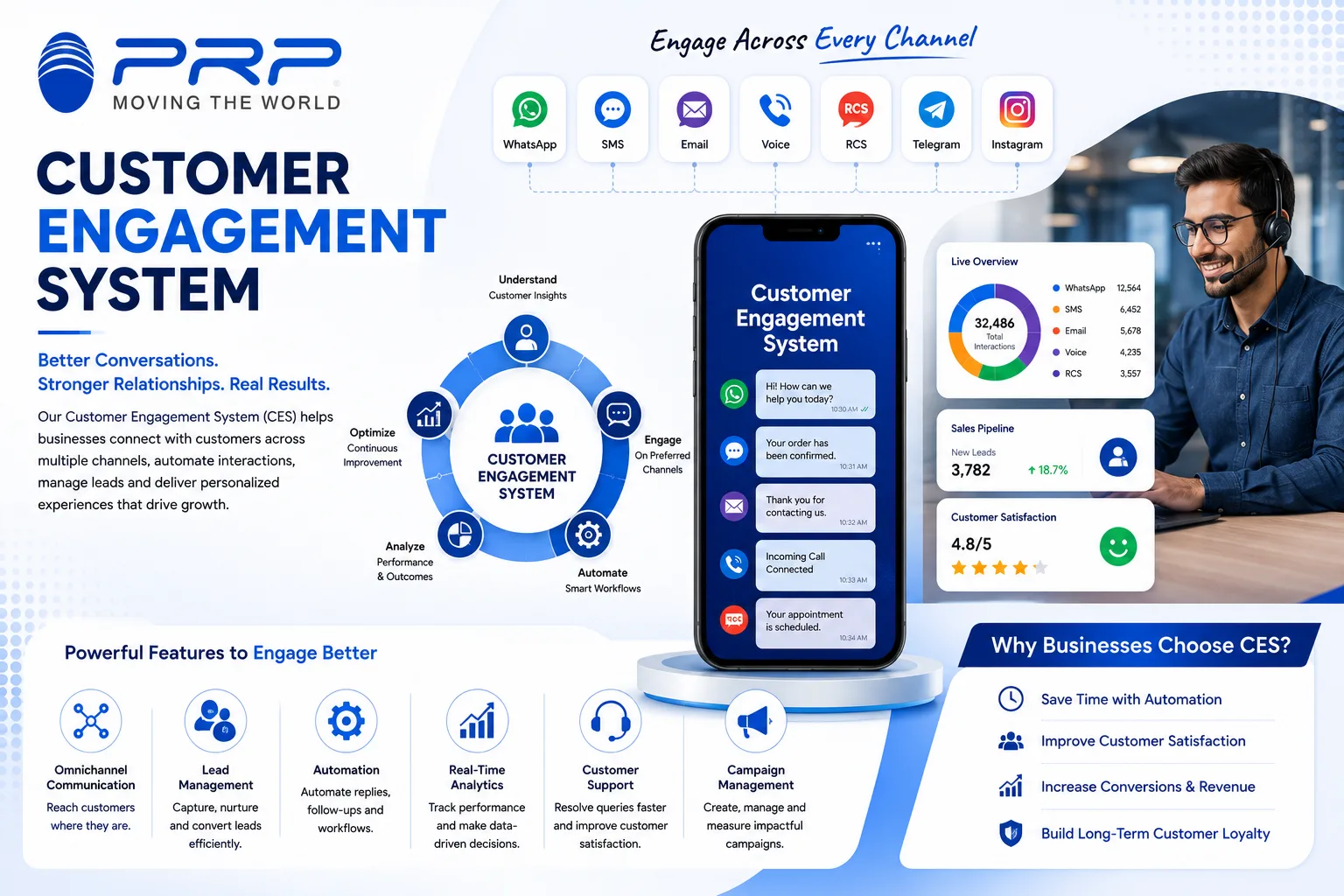
A Customer Engagement System (CES) is an advanced communication platform that allows businesses to manage customer conversations across multiple channels from one centralized dashboard. Instead of switching between different applications, businesses can handle WhatsApp messages, SMS, emails, voice calls, RCS messages, and other customer interactions from a single interface.
A CES platform also integrates with CRM software, marketing automation tools, and customer support systems, making it easier to manage customer data, automate workflows, and provide personalized communication throughout the customer journey.
Why Businesses Need a Customer Engagement System
Customers today communicate through multiple platforms. Some prefer WhatsApp, while others choose email, SMS, voice calls, or social media. Managing all these channels separately often results in delayed responses, inconsistent communication, and missed business opportunities.
A Customer Engagement System eliminates these challenges by providing a unified communication platform. It ensures every customer interaction is tracked, organized, and managed efficiently, allowing businesses to deliver a consistent experience regardless of the communication channel.
With increasing customer expectations, businesses that adopt a modern engagement platform can improve customer satisfaction, strengthen loyalty, and increase conversion rates.
Key Benefits of Customer Engagement System
Omnichannel Communication
A Customer Engagement System combines multiple communication channels such as WhatsApp, SMS, Email, Voice Calls, RCS Messaging, and social platforms into one dashboard. This allows businesses to communicate with customers through their preferred channels without switching between multiple applications.
Better Customer Experience
Customers receive faster responses and consistent communication across every touchpoint. This improves satisfaction and builds stronger relationships with the brand.
Smart Automation
Businesses can automate repetitive tasks such as welcome messages, follow-ups, appointment reminders, lead nurturing, order notifications, and customer support workflows. Automation reduces manual work while improving response time.
Lead Management
A CES platform helps businesses capture, organize, and track leads from different marketing channels. Sales teams can monitor lead status, schedule follow-ups, and convert prospects more efficiently.
Real-Time Analytics
Comprehensive dashboards provide valuable insights into customer interactions, campaign performance, response times, and communication trends. These insights help businesses make informed decisions and improve customer engagement strategies.
Increased Team Productivity
Since all communication is managed from one platform, employees spend less time switching between applications and more time assisting customers. This improves collaboration and overall operational efficiency.
Key Features of Customer Engagement System
Omnichannel communication
Customer conversation management
WhatsApp Business integration
SMS and Email campaigns
Voice call integration
RCS Messaging support
Workflow automation
Lead management
CRM integration
Customer support management
Campaign management
Real-time dashboards
Analytics and reporting
Team collaboration
Customer history tracking
How a Customer Engagement System Works
A Customer Engagement System collects customer interactions from multiple communication channels and displays them in one centralized dashboard.
When a customer contacts a business through WhatsApp, SMS, email, voice, or another supported channel, the conversation is automatically recorded. The system can route the conversation to the appropriate team member or trigger automated workflows based on predefined rules.
Businesses can also integrate CRM systems to access complete customer history, purchase records, and previous conversations, allowing teams to provide faster and more personalized support.
This centralized approach simplifies communication, improves efficiency, and ensures no customer inquiry is missed.
Industries Using Customer Engagement Systems
E-commerce
Online businesses use CES platforms for customer support, order tracking, promotional campaigns, abandoned cart reminders, and post-purchase communication.
Healthcare
Hospitals and clinics manage appointment reminders, patient communication, test reports, follow-ups, and customer support through centralized communication.
Banking and Financial Services
Banks use Customer Engagement Systems to send transaction alerts, payment reminders, account updates, and customer notifications securely.
Education
Educational institutions communicate admission updates, fee reminders, event notifications, student engagement, and support through multiple communication channels.
Travel and Hospitality
Travel agencies and hotels use CES platforms for booking confirmations, travel updates, customer assistance, and promotional offers.
Best Practices for Using a Customer Engagement System
Businesses should ensure customer communication remains personalized, relevant, and timely. Automation should improve customer experience rather than replace meaningful interactions. Customer data should be updated regularly, and communication performance should be monitored using analytics to continuously optimize engagement strategies.
Integrating the Customer Engagement System with CRM software and marketing tools can further improve efficiency and provide a complete view of the customer journey.
Conclusion
A Customer Engagement System has become an essential solution for businesses looking to improve communication, increase customer satisfaction, and streamline operations. By bringing multiple communication channels into one platform, businesses can manage conversations more efficiently, automate repetitive tasks, and deliver a consistent customer experience.
As customer expectations continue to evolve, investing in a Customer Engagement System helps organizations stay connected with their audience, improve engagement, and build long-term customer relationships. Whether for sales, marketing, or customer support, a modern CES platform provides the tools businesses need to communicate smarter, respond faster, and grow more effectively.