
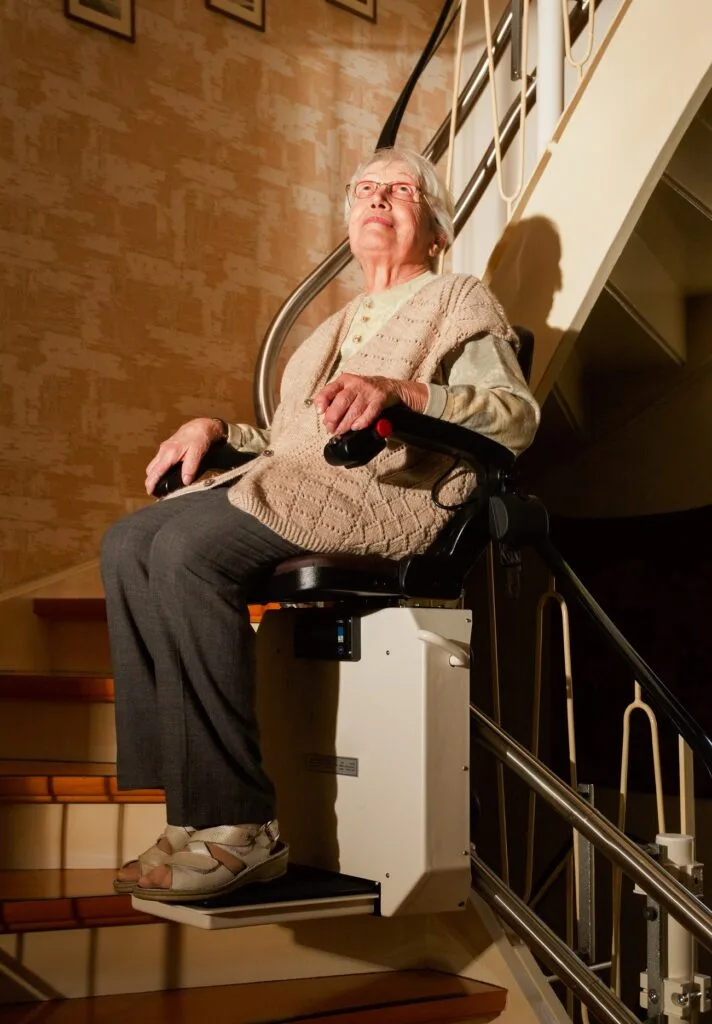
For many homeowners, stairs become a bigger consideration as mobility needs change. A stair lift can provide a practical way to move between floors without requiring major changes to the home. However, choosing the right type depends on the staircase layout, available space, and the user's specific needs.
Two of the most common options are straight and curved stair lifts. Understanding how they differ can make it easier to determine which solution fits a particular home.
Understanding Straight Stair Lifts
Straight stair lifts are designed for staircases that run in a single, uninterrupted direction without curves, bends, or intermediate landings that require the rail to change direction. They are generally a straightforward option for homes with conventional staircases.
Homeowners researching straight stair lifts for sale should look beyond the initial price. Important considerations include the dimensions of the staircase, seat design, weight capacity, controls, safety features, and installation requirements.
A professional assessment can help determine whether a straight model is appropriate and whether the available staircase provides enough room for comfortable use.
When a Curved Stair Lift May Be Better
Not every staircase has a simple layout. Some homes feature turns, multiple flights, curved sections, or intermediate landings. In these situations, a curved stair lift may be a more suitable option because its rail can be designed around the specific staircase configuration.
Homeowners comparing curved indoor stair lifts denver options should consider the entire staircase rather than focusing only on the lift itself. The rail needs to follow the staircase accurately while allowing the user to enter and exit the chair safely.
Curved systems can require more customized planning than straight models, particularly when the staircase has unusual dimensions or multiple changes in direction.
Comparing Curved and Straight Options
The main difference between the two types is the staircase they are designed to accommodate.
A straight stair lift typically follows one continuous line, while a curved system can be customized to follow bends and turns. This distinction can influence installation requirements, cost, and the amount of planning involved.
People looking at curved residential chair lifts may benefit from evaluating whether their staircase genuinely requires a curved system. Choosing a more complex option when a straight lift would work may unnecessarily increase the project scope.
On the other hand, attempting to use a straight system on a staircase with significant turns may not provide a practical solution.
Key Factors to Consider Before Installation
Before purchasing a stair lift, homeowners should evaluate several factors.
Staircase Configuration
The shape and dimensions of the staircase are among the most important considerations. Measure the available space and identify any turns, landings, narrow sections, or doorways that could affect installation or use.
Available Space
A stair lift should allow other household members to use the staircase when practical. The folded seat and rail should be considered when evaluating the usable width of the stairs.
User Comfort
Seat height, cushioning, armrest design, footrest dimensions, and control placement can affect everyday usability. A lift should be comfortable enough for regular trips between floors.
Safety Features
Look for features designed to support safe operation, such as seat belts, obstruction sensors, swivel seats, and appropriate controls. Features vary between models, so homeowners should understand what each option provides before making a decision.
Why Professional Assessment Matters
Online research can help homeowners understand different stair lift categories, but it cannot replace an assessment of the actual staircase. A professional can evaluate the configuration, identify installation challenges, and determine which type of system is appropriate.
For homeowners exploring stair lifts colorado options, local conditions and the home's individual layout should be considered rather than selecting a system based solely on a generic product description.
This is particularly important for curved installations because every staircase can have different dimensions and requirements.
Choosing a Stair Lift for a Denver Home
Denver homes can have a wide variety of architectural layouts, from modern properties with simple staircases to older homes with more complex designs. That means there is no single stair lift solution that works for every property.
When evaluating curved indoor stair lifts denver, homeowners should compare the staircase configuration, installation requirements, user comfort, and long-term practicality.
For those with conventional staircases, straight stair lifts for sale may offer a simpler approach. For homes with curves or multiple levels of direction changes, curved residential chair lifts may provide a better fit.
A reputable accessibility provider can assess the staircase and explain the available options without assuming that the most expensive solution is automatically the best one.
Working With an Accessibility Specialist
Companies such as Independent Living Solutions Inc. can help homeowners explore accessibility solutions based on their individual circumstances. Rather than choosing a stair lift from a product list alone, homeowners can discuss the staircase and determine which type of system makes sense for the property.
When comparing stair lifts colorado providers, consider their experience, installation process, service availability, and ability to assess the home's specific configuration.
Making the Right Decision
The right stair lift is ultimately determined by the staircase and the person using it. Straight systems can be practical for simple staircases, while curved systems can accommodate more complicated layouts.
Homeowners should compare their options carefully, consider installation requirements, and seek professional guidance before making a purchase. For anyone researching accessibility solutions, understanding these differences is an important first step toward creating safer and more convenient movement between floors.