In today's highly competitive business environment, building strong customer relationships is more important than ever. Customers expect personalized communication, faster responses, and seamless service throughout their journey. Managing customer information manually through spreadsheets, emails, or multiple applications often leads to missed opportunities and inefficient workflows. This is where Customer Relationship Management (CRM) software becomes an essential business solution.
CRM software helps businesses organize customer information, manage leads, automate sales processes, and improve customer service from a single platform. Whether you're a startup, small business, or large enterprise, CRM enables you to strengthen customer relationships, improve productivity, and drive sustainable business growth.
What is CRM Software?
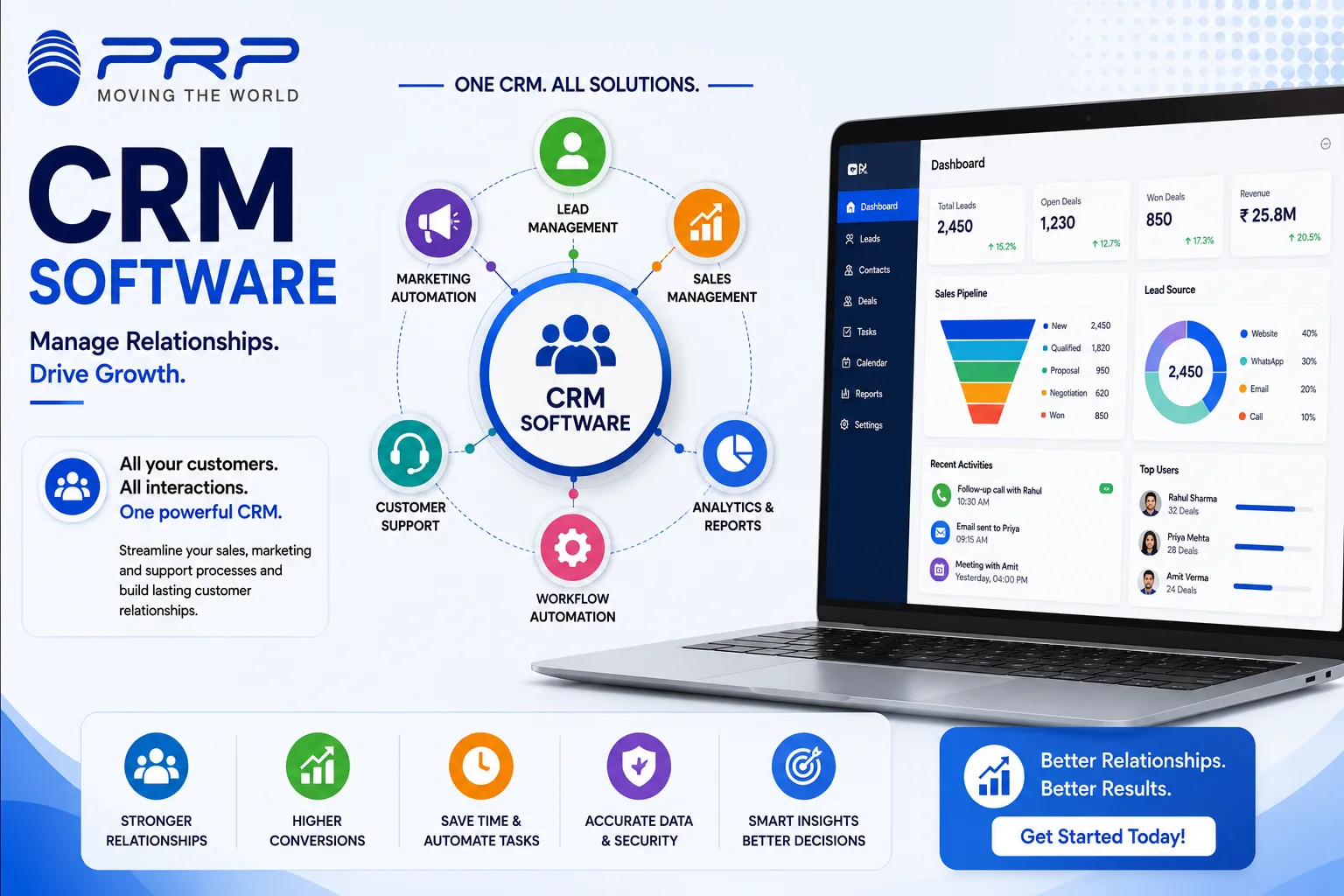
Customer Relationship Management (CRM) software is a technology platform that helps businesses manage customer interactions, sales activities, marketing campaigns, and customer support in one centralized system.
A CRM stores customer details, communication history, purchase records, follow-up activities, support requests, and sales opportunities in a secure database. This allows teams across sales, marketing, and customer support to access accurate information and deliver a consistent customer experience.
Modern CRM solutions also integrate with communication channels such as email, WhatsApp, SMS, voice calling, websites, and social media, making customer management more efficient than ever.
Why Businesses Need CRM Software
As a business grows, managing customer information manually becomes increasingly difficult. Sales teams may miss follow-ups, customer service representatives may lack complete customer history, and marketing campaigns may fail to reach the right audience.
CRM software eliminates these challenges by creating a centralized platform where every customer interaction is recorded and easily accessible. This helps businesses improve communication, streamline operations, and build stronger customer relationships.
Instead of spending time searching for customer information, employees can focus on delivering better service and closing more business opportunities.
Benefits of CRM Software
Centralized Customer Database
Store all customer information in one secure location, making it easy for authorized team members to access complete customer records whenever needed.
Better Lead Management
Capture leads from websites, social media, advertising campaigns, emails, and phone calls. Organize and track every lead throughout the sales journey until conversion.
Improved Sales Performance
CRM software gives sales teams complete visibility into their sales pipeline, helping them prioritize opportunities, schedule follow-ups, and close deals faster.
Enhanced Customer Experience
With complete customer history available, businesses can provide personalized communication and faster support, improving customer satisfaction and loyalty.
Workflow Automation
Automate repetitive tasks such as lead assignment, follow-up reminders, email notifications, appointment scheduling, and sales workflows to save time and improve efficiency.
Better Team Collaboration
Sales, marketing, and customer support teams can work together using the same customer information, reducing communication gaps and improving collaboration.
Data-Driven Decision Making
CRM dashboards and reports provide valuable insights into sales performance, customer behavior, marketing campaigns, and team productivity, enabling businesses to make informed decisions.
Key Features of CRM Software
Contact Management
Lead Management
Sales Pipeline Tracking
Opportunity Management
Customer Activity Timeline
Task and Follow-up Management
Email Integration
WhatsApp Integration
SMS Integration
Voice Call Integration
Marketing Automation
Customer Support Management
Ticket Management
Workflow Automation
Analytics and Reporting
Dashboard and Performance Monitoring
Multi-User Access
Role-Based Permissions
Mobile Accessibility
Third-Party Integrations
How CRM Software Works
CRM software collects customer information from various communication channels, including websites, contact forms, phone calls, emails, WhatsApp conversations, and marketing campaigns.
When a new inquiry is received, the CRM automatically creates a lead profile and assigns it to the appropriate sales representative. Every interaction—including calls, emails, meetings, and messages—is recorded within the customer's profile.
Sales teams can monitor deal progress through each stage of the sales pipeline, while customer support teams can instantly access previous interactions to provide faster assistance. Managers can monitor team performance through dashboards, reports, and real-time analytics.
This centralized workflow improves efficiency, reduces manual work, and ensures no customer opportunity is missed.
Industries Using CRM Software
Healthcare
Hospitals, clinics, and healthcare providers use CRM software to manage patient inquiries, appointment scheduling, follow-ups, and communication.
Education
Schools, colleges, universities, and training institutes use CRM platforms for admissions, student engagement, inquiry management, and communication.
Real Estate
Real estate companies manage property inquiries, buyer interactions, site visits, and sales opportunities through CRM systems.
Banking and Financial Services
Banks, insurance companies, and financial institutions use CRM software to improve customer relationship management, sales tracking, and service delivery.
Retail and E-commerce
Retail businesses use CRM platforms to manage customer profiles, purchase history, loyalty programs, personalized marketing campaigns, and customer support.
Travel and Hospitality
Travel agencies and hotels use CRM software to manage bookings, customer inquiries, travel packages, and post-booking support.
Best Practices for CRM Implementation
Businesses should begin by defining clear goals before implementing CRM software. Proper employee training is essential to ensure successful adoption and effective use of the system.
Maintaining accurate customer information, automating repetitive tasks, regularly reviewing reports, and integrating CRM with existing business tools can significantly improve productivity and customer satisfaction.
Continuous monitoring and optimization help businesses maximize the return on their CRM investment.
Conclusion
CRM software has become an essential tool for businesses that want to improve customer relationships, streamline operations, and increase sales. By centralizing customer information, automating workflows, and providing valuable business insights, CRM enables organizations to deliver exceptional customer experiences while improving internal efficiency.
As businesses continue to focus on customer-centric growth, implementing the right CRM solution can help strengthen customer relationships, increase team productivity, improve sales performance, and support long-term business success. Whether managing leads, tracking opportunities, or delivering excellent customer service, CRM software provides the foundation for smarter business management and sustainable growth.