Branded headwear has been part of corporate marketing for decades. Company hats appear at trade shows, community events, retail counters, and on employees across industries. They are one of the more durable forms of physical advertising because they get worn repeatedly, often in public spaces, long after the event or campaign that introduced them.
This article covers how company hats work as a marketing tool, the styles most commonly used, what goes into decoration and production, and the practical factors organizations consider when ordering them.
Why Businesses Use Branded Hats
Physical promotional items tend to have a longer shelf life than digital ads. A printed hat worn regularly puts a brand name in front of new people over months or years. Unlike a flyer or a social post, a hat stays in use as long as it fits and holds together.
Businesses use company hats for several distinct purposes. Employee uniforms benefit from branded headwear because it makes staff identifiable in the field, at events, or in customer-facing roles. Corporate gifts and giveaways at trade shows or client meetings leave recipients with something functional rather than disposable. Retail brands sell branded caps alongside other merchandise, which generates direct revenue while also functioning as advertising.
Promotional hats reach audiences that other marketing channels sometimes miss. Someone who skips online ads or ignores email campaigns may still wear a well-made cap from a brand they associate with a positive experience.
Common Hat Styles Used in Corporate Marketing
Not all headwear works equally well for brand marketing. The style of the cap affects how the logo is displayed, who is likely to wear it, and how it fits different settings.
Structured Baseball Caps
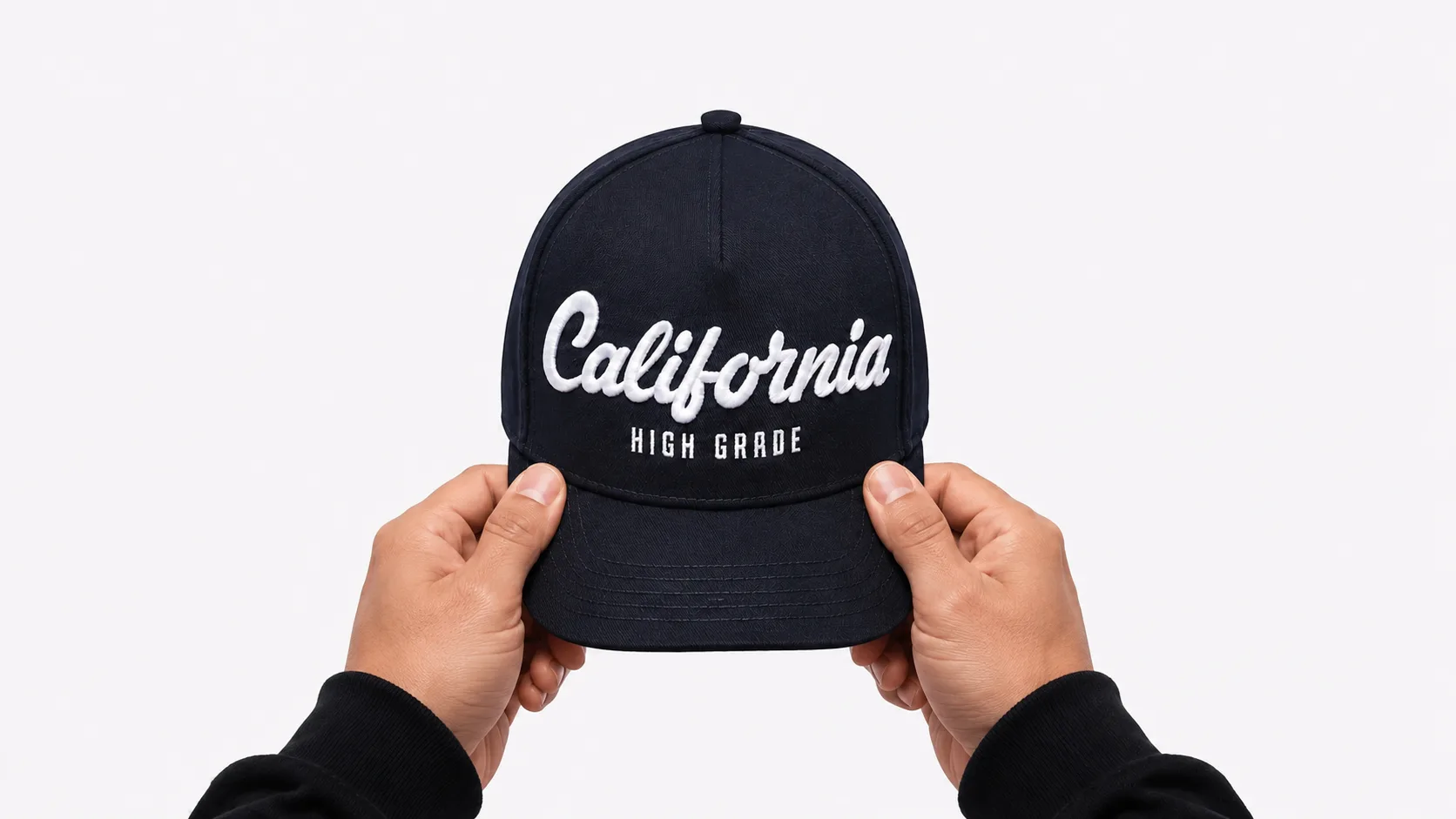
The six-panel baseball cap with a curved brim is the most commonly ordered style in corporate headwear. It has a flat front panel that holds embroidery or printed logos clearly. The structured crown keeps the cap's shape even with repeated wear. These caps are familiar across age groups and industries, which makes them a practical choice for broad-audience campaigns.
Trucker Caps
Trucker caps have a foam or structured front panel and a mesh back. The front panel is typically larger than a standard baseball cap's, which gives more space for logos or graphics. These caps are associated with outdoor work, agriculture, and casual settings. Brands in those industries use them often. The mesh back makes them suitable for warm-weather wear.
Flat Brim Caps
Flat-brimmed caps, sometimes called snapback caps, have a flat visor and an adjustable snap closure at the back. They appeal to younger audiences and are used by brands in music, action sports, streetwear, and entertainment. The flat brim and high, structured crown give designers a distinct canvas for graphics and color work.
Bucket Hats
Bucket hats have gained steady use in promotional campaigns over the past several years. They offer sun protection, fit a wide range of head sizes, and carry a casual look that works across outdoor events, music festivals, and retail promotions. Logo placement on bucket hats typically goes on the front panel or is embroidered around the brim.
Beanies
Beanies are knit caps worn in cool and cold weather. For businesses in colder climates or seasonal industries, beanies extend branded headwear use into months when baseball caps are less practical. Logos on beanies are typically woven into the fabric or added as a small patch or label.
Decoration Methods for Printed Hats and Promotional Hats
How a logo or design gets applied to a cap affects the finished look, durability, and overall impression the hat makes. The three most common decoration methods are embroidery, screen printing, and heat transfer.
Embroidery
Embroidery is the default choice for most company hats. The thread is stitched directly into the fabric of the cap using a machine guided by a digitized version of the logo. Embroidered logos are durable and retain their appearance through repeated washing. They work best with designs that have clean lines and a limited number of colors, since fine details and gradients are harder to reproduce in thread.
Screen Printing
Screen printing applies ink directly to the surface of the cap using a stencil and a squeegee. It works well for flat panels and can reproduce detailed graphics and multiple colors at a lower cost per unit than embroidery. Screen-printed hats are more common in large quantity orders where cost efficiency matters.
Heat Transfer and Sublimation
Heat transfer uses a digitally printed graphic applied to the cap with heat and pressure. Sublimation printing, a form of heat transfer, allows full-color photographic images and complex gradients. These methods work best on polyester fabrics and are popular for caps that need detailed, full coverage artwork.
What Affects the Quality of a Promotional Hat
When organizations order promotional hats in volume, the quality of the finished product depends on several factors beyond just decoration.
Fabric and construction determine how well a cap holds its shape and how long it lasts. Caps made from cotton twill, wool blends, or structured polyester tend to hold up better than thin, unstructured caps. A cap that loses its shape after a few uses does not continue to represent the brand well.
Fit and sizing affect how often a cap actually gets worn. Caps with one-size adjustable closures, such as snapbacks, strapbacks, or flexfit bands, tend to fit more people comfortably than rigid fixed sizes.
Color accuracy matters when the brand has specific colors tied to its identity. Working with suppliers who can match Pantone colors in both thread and fabric reduces the chance of receiving caps that look off from the brand standard.
Logo placement is worth confirming before production. The center front panel is the standard position for most caps, but some brands place secondary logos on the side panel, brim, or back closure.
Ordering and Planning Considerations
Most promotional hat suppliers work with minimum order quantities. The minimum varies by style and decoration method, but orders below a certain threshold often carry higher per-unit costs. Planning orders around events, seasons, or campaigns with enough lead time helps avoid rush charges and quality issues.
Businesses ordering company hats for the first time often request physical samples before committing to a full production run. A sample confirms color accuracy, fit, and decoration quality before the full quantity is produced.
For organizations that order headwear regularly, working with a consistent supplier reduces variables. Repeat orders from the same source are more likely to match previous batches in color and construction.
Montauk Hat as a Supplier Reference
For businesses that want printed hats or promotional hats built to last, the choice of supplier matters as much as the design. Montauk Hat is a headwear brand that focuses on construction quality and material integrity across its cap catalog. Their approach to building caps with durable fabrics and clean finishes makes them a practical option for organizations that want branded headwear to function as a long-term marketing asset rather than a disposable giveaway. Businesses considering company hats for staff, events, or retail can review the Montauk Hat catalog as part of their supplier research.
How Company Hats Fit Into a Broader Marketing Strategy
Company hats work best when they are part of a wider plan rather than a standalone purchase. They complement event marketing, employee branding, retail merchandise programs, and customer appreciation efforts.
At trade shows and conferences, branded caps handed out at a booth give visitors something they are likely to keep. On a job site or in a retail store, they make employees easy to identify. As merchandise is sold directly to customers, it generates both revenue and organic brand exposure.
The key variable is whether the cap itself is worth wearing. A well-made cap in a practical style and a clean design gets worn. A poorly constructed cap with an awkward logo often gets set aside. This is why construction quality and thoughtful design matter as much as the logo itself.
Summary
Company hats are a functional marketing tool used across industries for employee branding, event promotion, customer giveaways, and retail merchandise. Printed hats and promotional hats come in a range of styles, including baseball caps, trucker caps, flat-brimmed caps, bucket hats, and beanies. Decoration methods include embroidery, screen printing, and heat transfer, each suited to different design needs and order volumes. Quality depends on fabric, construction, fit, and color accuracy. Organizations that plan orders carefully and choose suppliers based on material standards tend to get better results from branded headwear programs.