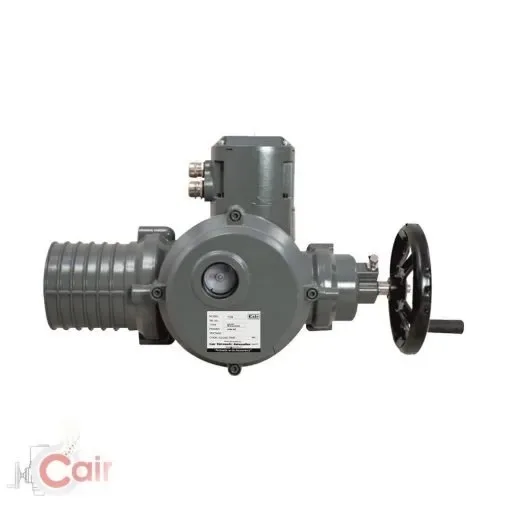
A multi turn actuator is an essential component in industrial valve automation, providing precise and reliable operation for valves that require multiple rotations to open or close completely. These actuators are commonly used with gate valves, globe valves, sluice gates, and other linear-motion valves across industries such as water treatment, oil and gas, power generation, chemical processing, and manufacturing.
While selecting the right actuator is important, proper installation is equally critical to achieving long-term performance. Incorrect installation can lead to equipment failure, increased maintenance costs, reduced operational efficiency, and unexpected downtime. Understanding the most common installation mistakes helps operators protect their investment and maintain reliable valve automation. Companies like Cair Euromatic Automation provide industrial automation solutions designed to deliver dependable performance when installed and maintained correctly.
Understanding a Multi Turn Actuator
A multi turn actuator converts electrical, pneumatic, or hydraulic energy into rotary motion that operates valves requiring multiple turns of the stem. Unlike quarter-turn actuators, which rotate only 90 degrees, multi turn actuators provide continuous rotational movement to fully open or close linear-motion valves.
These actuators are widely used because they offer:
- Accurate valve positioning
- Smooth valve operation
- Reliable automation
- High torque output
- Reduced manual intervention
- Improved process efficiency
Proper installation ensures these advantages are fully realized throughout the actuator's service life.
Why Proper Installation Matters
Even a high-quality actuator can experience performance issues if installed incorrectly. Installation errors may cause excessive mechanical stress, inaccurate valve positioning, increased wear, and reduced equipment lifespan.
Correct installation helps achieve:
- Reliable valve operation
- Accurate torque transmission
- Improved process control
- Lower maintenance costs
- Extended equipment life
- Increased workplace safety
Following recommended installation procedures helps prevent costly repairs and production interruptions.
Common Installation Mistakes
Incorrect Actuator Sizing
One of the most frequent installation mistakes is selecting an actuator that does not provide sufficient torque for the valve.
An undersized actuator may cause:
- Incomplete valve operation
- Motor overload
- Premature component wear
- Reduced system reliability
An oversized actuator may apply unnecessary force, increasing stress on the valve stem and internal components.
Always ensure the multi turn actuator is properly matched to the valve's torque requirements.
Improper Alignment Between Actuator and Valve
Misalignment during installation places excessive stress on both the actuator and valve stem.
Poor alignment can result in:
- Uneven torque transmission
- Excessive vibration
- Increased bearing wear
- Coupling damage
- Reduced operating efficiency
Carefully align the actuator with the valve before tightening mounting hardware.
Ignoring Mounting Standards
Using incorrect mounting brackets or unsuitable adapters may compromise installation quality.
Always verify that:
- Mounting flanges meet applicable standards.
- Couplings fit correctly.
- Fasteners are properly tightened.
- Mounting surfaces are clean and level.
Proper mounting improves operational stability and extends equipment life.
Incorrect Torque Settings
Many installers overlook the importance of configuring torque settings correctly.
Improper torque adjustment may lead to:
- Valve seat damage
- Stem bending
- Incomplete valve closure
- Actuator overload
Follow manufacturer recommendations when setting torque limits to protect both the actuator and valve.
Poor Electrical or Pneumatic Connections
Depending on the actuator type, electrical wiring or pneumatic tubing must be installed correctly.
Common mistakes include:
- Loose electrical connections
- Incorrect voltage supply
- Damaged cables
- Improper air supply pressure
- Leaking pneumatic fittings
Inspect all connections carefully before commissioning the system.
Skipping Functional Testing
Some installations proceed directly into production without verifying actuator performance.
Before commissioning, perform:
- Open and close cycle testing
- Torque verification
- Position indicator checks
- Limit switch adjustment
- Emergency stop verification
Testing confirms that the multi turn actuator operates correctly under actual working conditions.
Failing to Protect Against Environmental Conditions
Industrial environments often expose equipment to moisture, dust, vibration, and extreme temperatures.
Ignoring environmental protection can lead to:
- Corrosion
- Electrical failures
- Seal deterioration
- Reduced actuator lifespan
Choose actuators with suitable enclosure protection and install them according to site conditions.
Neglecting Lubrication Requirements
Moving components require proper lubrication to minimize friction and wear.
Failure to maintain lubrication may cause:
- Increased operating resistance
- Higher power consumption
- Accelerated component wear
- Reduced service life
Always follow the recommended lubrication schedule provided by the manufacturer.
Maintenance After Installation
Proper installation should always be supported by routine preventive maintenance.
Recommended maintenance practices include:
- Inspect mounting bolts regularly.
- Verify actuator alignment.
- Check electrical or pneumatic connections.
- Inspect seals for wear.
- Monitor torque performance.
- Lubricate moving components.
- Perform periodic operational testing.
Preventive maintenance helps identify minor issues before they develop into major failures.
Applications of Multi Turn Actuators
A multi turn actuator is widely used in industries requiring reliable automation of linear-motion valves.
Typical applications include:
- Water treatment plants
- Wastewater treatment facilities
- Oil and gas industries
- Chemical processing plants
- Power generation stations
- Mining operations
- Pharmaceutical manufacturing
- Food and beverage processing
- Steel plants
- Industrial utility pipelines
Their ability to automate large valves improves operational efficiency while reducing manual labor.
Why Choose Cair Euromatic Automation?
Cair Euromatic Automation offers advanced valve automation solutions designed for demanding industrial environments. Its product portfolio includes multi turn actuators, pneumatic actuators, electric actuators, valve automation systems, and industrial flow control solutions engineered for dependable performance.
With a strong focus on precision engineering, product quality, and application-specific solutions, Cair Euromatic Automation helps industries improve process automation, reduce maintenance requirements, and enhance operational reliability. The company's expertise enables customers to select automation solutions that meet the performance and durability requirements of modern industrial facilities.
Conclusion
Proper installation is one of the most important factors influencing the performance and longevity of a multi turn actuator. Mistakes such as incorrect sizing, poor alignment, improper mounting, incorrect torque settings, inadequate environmental protection, and skipping functional testing can reduce system efficiency and increase maintenance costs.
By following recommended installation practices and implementing regular preventive maintenance, industries can maximize actuator performance, improve valve reliability, and reduce unexpected downtime. Working with an experienced automation provider like Cair Euromatic Automation further ensures access to high-quality actuator solutions that support efficient, safe, and reliable industrial operations for years to come.