
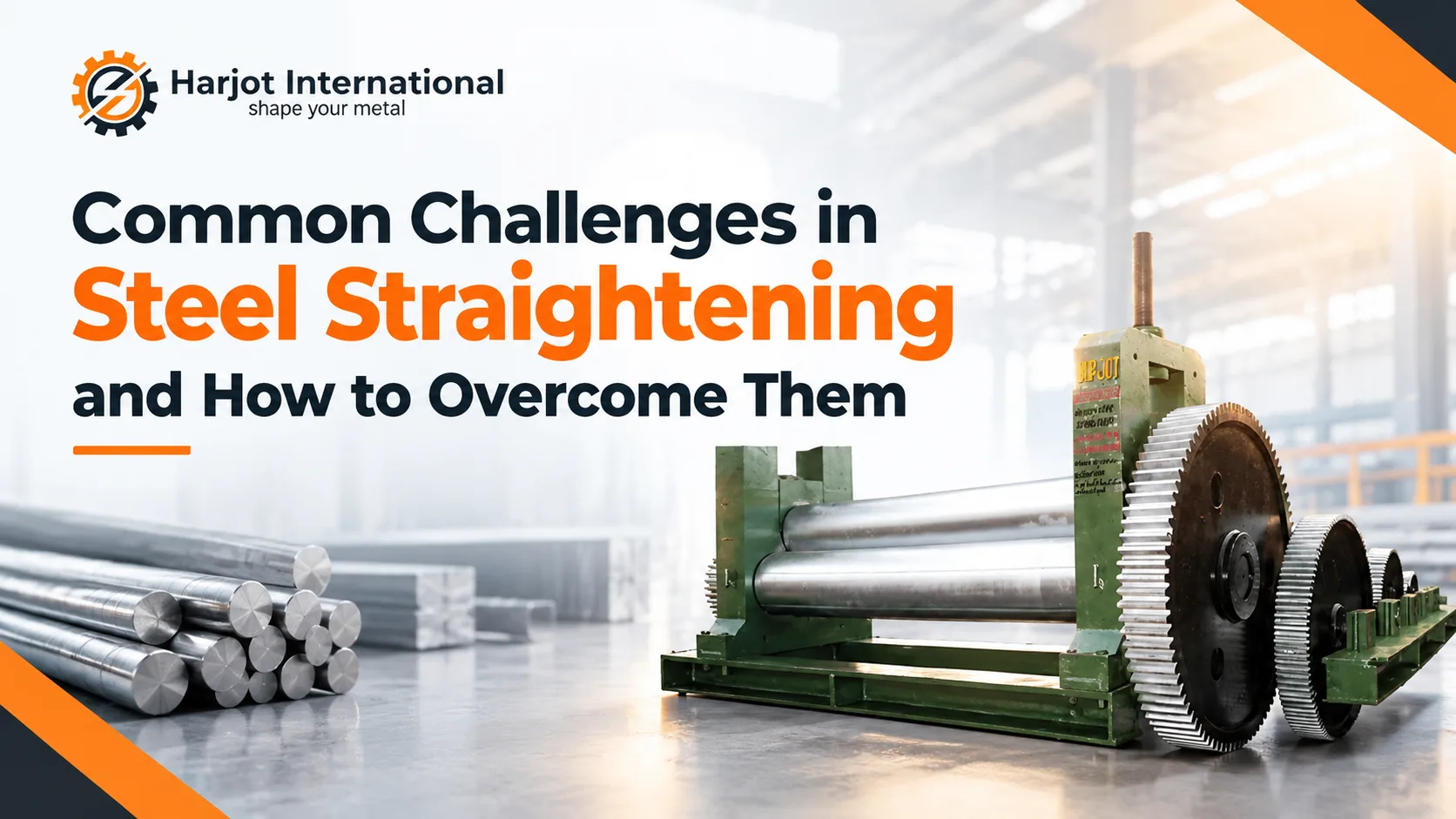
Quick Summary: This article explains why steel bends, twists, and warps, and how a straightening machine corrects those defects. It covers springback, edge waves, camber, and surface marks, then gives a setup checklist, machine selection guidance, maintenance habits, and answers to the questions buyers ask most.
Introduction
Steel rarely leaves the mill, the cutting line, or the heat treatment furnace in perfect shape. Bars bow, plates twist, and coiled sheet carries a memory of the coil that no one asked for. A Straightening Machine is there to fix that. It passes metal through staggered rollers or applies controlled pressure so the material ends up flat, true, and ready for machining, welding, or fabrication. Getting it right takes more than a button. Material grade, thickness, residual stress, and operator setup all affect the outcome as much as the machine does. This article discusses the most common problems buyers and operators face, from springback and edge waves to roller wear and inconsistent feeding. You will also see why each problem happens, what it costs your production line, and the practical steps that resolve it. If you work in fabrication, tube and bar processing, or heavy engineering, the sections ahead will help you get straighter steel with fewer rejects.
Why Steel Doesn't Stay Straight
Steel stores stress the way a spring stores energy. Hot rolling, uneven cooling, laser or plasma cutting, and welding all lock residual stress inside the material. Straightening redistributes the pressure so the part stays flat.
When the redistribution is incomplete, the part looks fine on the machine and warps once you cut, drill, or weld it. That also explains why two plates of the same grade can work differently on the same straightening machine. Their processing history differs, so their internal stress differs too.
Common Straightening Challenges Operators Face
Most complaints about straightening fall into four patterns. Here is what each one looks like and why it happens:
Challenge 1: Springback That Undoes Your Correction
Metal always recovers part of every bend. Higher yield strength means more recovery, so a high-strength plate needs deeper roller penetration than mild steel to reach the same result. Operators often overcorrect, back off, and then chase the target for an hour. Adjust penetration of the straightening machine in small steps and check flatness after each pass on a sample piece.
Challenge 2: Edge Waves and Center Buckle
When the edges of a sheet run longer than the center, you see edge waves. When the center runs longer, it buckles. Uneven stretching during rolling or cooling causes both. A roller leveler with enough rolls and proper backup support works the whole width of the sheet. A machine with too few rolls only flattens the surface and leaves the waves behind.
Challenge 3: Camber and Crossbow in Long Products
A camber is a sideways bow along the length of a strip or plate in the straightening machine. A crossbow is a curve across the width. Slitting and uneven rolling usually cause camber. Operators who treat the two as one defect lose time, because each needs a different correction.
Challenge 4: Surface Marks and Roller Wear
Worn rollers, trapped scale, and weld spatter leave dents and scratches on the steel. Those marks matter on parts that get painted, coated, or inspected by eye. Scale acts like a tiny hammer once it sits between roller and plate. Clean material and regular roller checks prevent most of this damage.
Spot the pattern early and the fix usually takes minutes instead of shifts.
What Crooked Steel Costs Your Production Line Without a Straightening Machine
Poorly straightened steel creates trouble long after the straightening step. Welders fight gaps between parts that should fit flush. Machinists see uneven cuts and chatter because the workpiece is unevenly in the fixture. Assembly teams force parts together, which puts stress back into the structure.
Rework, scrap, and missed delivery dates follow. Each delay traces back to a flatness problem that was cheaper to fix at the start.
A Practical Setup Checklist Before Every Run
A few checks before the first pass of the straightening machine save far more time than they cost:
- Confirm grade, thickness, and yield strength against the machine's rated capacity.
- Remove scale, spatter, and loose debris from the surface.
- Set roller gaps from a thickness reference, not by eye.
- Run a trial piece and measure flatness with a straightedge or feeler gauge.
- Record the settings that worked so the next shift can repeat them.
Treat these steps as routine and your rejects drop quickly. One mistake requires special mention: overloading. Pushing a machine beyond its rated thickness or strength damages rollers and bearings, and it rarely straightens the steel properly.
Matching the Machine to the Material
The right equipment depends on what you straighten, not on which brochure looks best. Three common categories cover most workshops:
- Sheet and coil: A sheet metal straightening machine or coil straightening line uses many small rollers with backup support to handle thin gauges.
- Plate: A plate leveling machine uses heavier rollers and stronger frames to flatten thick material.
- Bars, tubes, and shafts: A bar straightening machine typically uses angled rolls that spin the bar as it moves forward. Heavy sections often go under a press instead.
Before you buy, ask about maximum thickness, material strength rating, roller count, and spare part availability. Also check how quickly operators can change settings, since frequent changeovers eat into production time.
Maintenance That Keeps Accuracy Intact
Accuracy fades slowly, so many plants notice only after rejecting climb. A short routine of the straightening machine prevents that:
- Inspect rollers for wear, pitting, and embedded debris.
- Lubricate bearings on the schedule the manufacturer recommends.
- Check roller alignment and parallelism at regular intervals.
- Verify that gap indicators still match the actual roller position.
Five minutes of checking per shift costs less than one batch of scrapped plates.
Conclusion
Straight steel comes from understanding why it bends in the first place. Residual stress, springback, and worn rollers cause most defects, and each has a practical fix once you know where to look. Choose equipment that matches your material, set it up with care, and maintain it before accuracy slips. Harjot International offers straightening machinery built around these shop floor demands, so if you want to discuss your straightening needs in detail.
FAQs
Q. What does a straightening machine do?
Ans. A straightening machine is used to remove the bends, twists, and waves from steel by passing it through rollers or applying pressure. The result is a flatter, straighter workpiece that is ready for cutting, welding, or machining.
Q. What is the difference between straightening and leveling?
Ans. The terms overlap. Leveling usually refers to flattening sheet and plate, while straightening often refers to correcting curvature in bars, tubes, and profiles.
Q. Can one machine handle different thicknesses?
Ans. Yes, within its rated range, one machine can easily handle different thicknesses. You change the roller settings for each thickness. Very thin and very thick materials usually need separate machines.
Q. Why does my steel warp again after cutting?
Ans. Cutting, especially laser or plasma cutting, releases or adds residual stress. Leveling the plate before cutting, and choosing suitable cutting methods, reduces this problem.
Q. How often should I inspect the rollers?
Ans. Give them a quick visual check every shift and a detailed inspection on a schedule that matches your workload and the manufacturer's guidance.
Q. What should I check before buying a straightening machine?
Ans. Before you buy a straightening machine make sure you check capacity for thickness and strength, roller count, motor power, ease of adjustment, spare part supply, and after-sales support.