
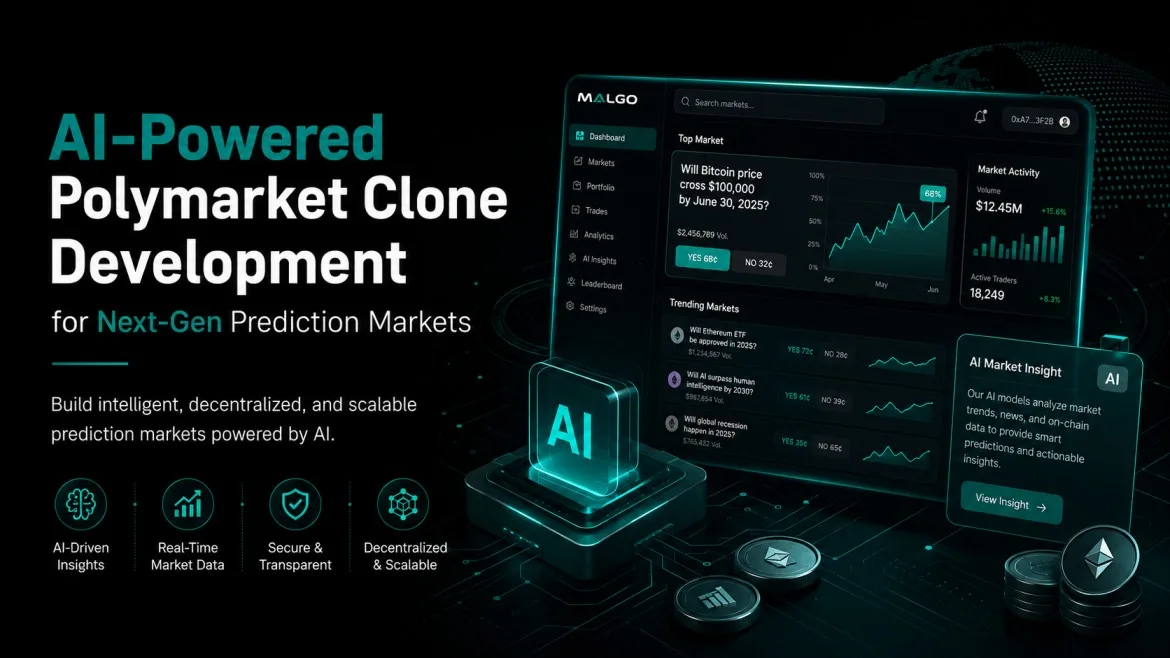
Introduction: Why Prediction Markets Are Becoming the Next Big Startup Opportunity
In a world driven by data, uncertainty, and real-time decision-making, prediction markets are emerging as one of the most innovative technology opportunities for entrepreneurs. Businesses, investors, communities, and individuals are increasingly looking for smarter ways to understand future outcomes, measure public sentiment, and make informed decisions.
Launching a prediction market platform inspired by successful models like Polymarket represents a powerful startup opportunity for founders who want to build a next-generation marketplace where users can forecast events, analyze probabilities, and participate in knowledge-driven markets.
Unlike traditional opinion polls or surveys, prediction markets allow participants to express their expectations through market activity. The collective intelligence of users can provide valuable insights into potential outcomes across industries such as politics, finance, sports, technology, entertainment, and global events.
What Is a Prediction Market Platform?
A prediction market platform is a digital marketplace where users create, trade, and analyze predictions about future events. Participants can forecast whether specific outcomes will happen and use market mechanisms to represent their confidence levels.
For example, users may participate in markets related to:
- Election outcomes
- Cryptocurrency trends
- Sports championships
- Technology launches
- Economic indicators
- Entertainment awards
- Business milestones
- Global events
The platform aggregates thousands of individual opinions into measurable probabilities, creating a real-time view of market expectations.
Why Launch a Prediction Market Platform as a Startup?
1. Growing Demand for Data-Driven Insights
Modern businesses rely heavily on predictive analytics. However, traditional forecasting methods often depend on limited surveys, expert opinions, or historical data.
Prediction markets introduce a different approach by using collective intelligence. A large number of participants can contribute diverse perspectives, creating dynamic forecasts that continuously adapt to new information.
Startups that build platforms around this concept can serve users who want faster, community-powered insights.
2. The Rise of Decentralized and Web3-Based Platforms
Blockchain technology has transformed how online marketplaces operate. Decentralized prediction platforms can offer:
- Transparent market operations
- Verifiable transactions
- Smart contract automation
- Community governance opportunities
- Global accessibility
A Web3 prediction market platform can attract users who value transparency, ownership, and decentralized participation.
3. Multiple Industry Applications
A major advantage of prediction markets is their flexibility. A well-designed platform can support multiple verticals.
Financial Prediction Markets
Users can analyze expectations around:
- Market trends
- Economic developments
- Industry performance
- Financial events
Sports Prediction Markets
Sports communities can engage with:
- Match outcomes
- Tournament winners
- Player performance
- Seasonal predictions
Business Intelligence Markets
Companies can use prediction markets internally for:
- Product launch forecasting
- Customer demand analysis
- Strategic planning
- Risk assessment
Entertainment Prediction Markets
Communities can predict:
- Award winners
- Movie performance
- Popular trends
This wide range of applications creates opportunities for scalable growth.
How Does a Prediction Market Platform Work?
A successful prediction market ecosystem usually includes several core components.
User Account System
Users should have secure profiles where they can:
- Manage activities
- Track predictions
- View performance history
- Build reputation scores
Market Creation Module
The platform should allow authorized users or communities to create prediction events with:
- Clear questions
- Defined outcomes
- Settlement rules
- Expiration timelines
Trading Engine
The trading system is the heart of the platform. It manages:
- User participation
- Market pricing
- Probability changes
- Liquidity management
Smart Contract Integration
For blockchain-based platforms, smart contracts can automate:
- Market settlement
- Reward distribution
- Transaction verification
Analytics Dashboard
Advanced analytics improve user engagement through:
- Market trends
- Historical accuracy
- Probability charts
- Community insights
Essential Features for a Polymarket-Inspired Platform
To compete in the prediction market industry, startups should focus on creating a user-friendly and trustworthy experience.
1. Real-Time Market Updates
Users expect instant changes as new information becomes available. Real-time data visualization improves engagement and decision-making.
2. AI-Powered Prediction Insights
Artificial intelligence can enhance platforms by providing:
- Sentiment analysis
- Historical comparisons
- Trend identification
- Market intelligence reports
AI should support users with information rather than replace human judgment.
3. Transparent Settlement Mechanism
Trust is the foundation of prediction markets. Platforms should clearly define:
- How outcomes are verified
- Who resolves disputes
- What data sources are accepted
4. Mobile-Friendly Experience
Most users interact through smartphones. A responsive mobile application helps increase adoption and retention.
5. Community Features
Strong communities create long-term platform value through:
- Discussions
- Leaderboards
- Expert profiles
- Prediction challenges
Technology Stack for Building a Prediction Market Platform
A modern prediction market solution may include:
Frontend Development
- React.js
- Next.js
- TypeScript
- Mobile-responsive interfaces
Backend Infrastructure
- Node.js
- Python
- Database management systems
- API architecture
Blockchain Layer
- Smart contracts
- Decentralized applications
- Wallet integration
- Blockchain networks
Artificial Intelligence
- Machine learning models
- Natural language processing
- Predictive analytics systems
Cloud Infrastructure
- Scalable hosting
- Security monitoring
- Data processing systems
The right technology combination depends on business goals, target users, and regulatory requirements.
Business Models for Prediction Market Startups
A prediction market platform can explore different revenue opportunities, including:
Platform Service Model
Businesses or communities can use prediction market technology as a forecasting tool.
Premium Analytics
Advanced users may access:
- Market intelligence reports
- Research dashboards
- Advanced prediction tools
Enterprise Solutions
Organizations can use private prediction markets for internal forecasting and decision support.
Partnership Ecosystem
The platform can collaborate with:
- Media organizations
- Research companies
- Data providers
- Online communities
Challenges to Consider Before Building a Prediction Market Platform
Although prediction markets offer strong potential, founders should carefully address important challenges.
Regulatory Compliance
Prediction markets operate in a complex legal environment. Businesses must evaluate regulations based on:
- Target geography
- Market categories
- User activities
- Financial mechanisms
A compliance-first approach helps build long-term sustainability.
Market Liquidity
A successful platform needs active participation. Without enough users, prediction markets may struggle to generate meaningful forecasts.
Strategies such as community building, partnerships, and niche market focus can improve liquidity.
User Trust
Users need confidence in:
- Platform fairness
- Data accuracy
- Security practices
- Outcome verification
Transparency should be a core product principle.
How to Build a Successful Prediction Market Startup Strategy
Start With a Specific Market Segment
Instead of targeting every prediction category immediately, founders can begin with a focused niche:
- Sports communities
- Financial analysts
- Business forecasting
- Technology trends
A specialized audience can help establish early adoption.
Create a Strong User Community
Prediction markets succeed when users actively participate. Community engagement strategies include:
- Expert discussions
- Educational content
- Prediction competitions
- Reputation systems
Focus on User Experience
Complex financial concepts should be simplified through:
- Easy navigation
- Clear explanations
- Interactive dashboards
- Beginner-friendly onboarding
Future of Prediction Market Platforms
The future of prediction markets extends beyond speculation. These platforms can become powerful decision-support systems for individuals, companies, and communities.
With advancements in blockchain, artificial intelligence, and data analytics, prediction markets may evolve into global intelligence networks where collective knowledge helps organizations understand uncertainty.
Entrepreneurs entering this space have the opportunity to build platforms that combine technology, economics, and human intelligence into a new category of digital marketplaces.
Final Thoughts: Why Prediction Market Development Is a Promising Startup Opportunity
Launching a prediction market platform is more than building a trading application. It is about creating an ecosystem where information, probability, and community intelligence come together.
A successful Polymarket-inspired platform requires:
- Strong product strategy
- Secure technology architecture
- Transparent market operations
- Regulatory awareness
- Community-focused growth
For founders exploring innovative startup ideas, prediction market development offers a unique opportunity to build a platform designed for the future of forecasting, decision-making, and digital participation.