
It's 2 a.m. and you've just flipped on the lights to find a small brown bug crawling across your pillowcase. Your stomach drops. You start Googling frantically, and within minutes you're staring at photos that confirm your worst fear: bed bugs.
Then comes the second wave of panic — the money question. Bed bug extermination isn't cheap, and if you're renting, you're probably wondering whether this bill lands on you or your landlord.
I've spent years working alongside licensed pest control technicians and fielding calls from renters in exactly this situation, and I can tell you the answer isn't always simple. It depends on your lease, your state, and how the infestation started. This guide breaks down exactly who's on the hook, what your rights are, and how a professional bed bug exterminator actually solves the problem — because in almost every apartment case, DIY sprays just buy the bugs more time to spread.
Who Is Legally Responsible for Bed Bug Treatment in Apartments?
Short answer: In most states, landlords are legally required to address bed bug infestations once notified, because bed bugs are considered a habitability issue under the "implied warranty of habitability." That said, responsibility for the cost can shift depending on the circumstances.
Here's the general breakdown:
- Landlord's responsibility: Providing a pest-free unit at move-in, responding promptly to infestation reports, and hiring a licensed bed bug exterminator for treatment in most jurisdictions.
- Tenant's responsibility: Reporting bed bugs immediately, cooperating with treatment prep (laundering items, decluttering, allowing access), and in some cases covering costs if it's proven the infestation resulted from bringing in infested furniture or negligence.
A growing number of cities — including New York City, Chicago, and San Francisco — have passed specific bed bug disclosure and treatment ordinances that put the burden squarely on property owners. If you're unsure about your city's rules, a quick call to your local tenant rights organization or housing authority can clarify things fast.
What Your Lease Agreement Actually Says
Before you assume anything, pull out your lease. Many leases include a specific pest control clause, and some newer leases even have a dedicated bed bug addendum that both parties sign at move-in. This document often spells out:
- Who pays for initial treatment
- What happens if bed bugs return
- Tenant obligations during treatment (like removing clutter or bagging clothing)
If your lease is silent on pests entirely, state and local landlord-tenant law typically fills the gap — and in most cases, that favors the tenant, since an infested unit isn't considered "habitable."
When Tenants May Be Held Responsible
There are exceptions. If a landlord can show the infestation started because a tenant brought home infested secondhand furniture, or ignored an early infestation and let it spread through negligence, some states allow the landlord to bill the tenant or pursue costs through small claims court. This is rare and usually requires documented proof, not just suspicion.
Steps to Take the Moment You Spot Bed Bugs
Acting fast changes everything with bed bugs. A single fertilized female can lay hundreds of eggs, and an infestation contained to one mattress can spread to neighboring units through wall outlets and shared plumbing within weeks if ignored.
- Document the evidence. Take clear photos of bugs, shed skins, or rust-colored spots on sheets.
- Notify your landlord in writing. Email or a dated letter creates a paper trail — don't rely on a phone call alone.
- Avoid moving furniture between rooms or units. This is the number one way bed bugs spread within apartment buildings.
- Request professional bed bug extermination. Retail sprays and bug bombs often scatter bed bugs deeper into walls rather than eliminating them.
- Follow the exterminator's prep checklist exactly. Missed steps are the leading cause of treatment failure.
Why DIY Bed Bug Removal Almost Always Fails
I get why the idea is tempting — a $15 can of spray feels a lot better than a several-hundred-dollar service call. But bed bugs are remarkably good at surviving amateur attempts. They hide in seams, baseboards, electrical outlets, and even inside picture frames, and many populations have developed resistance to common over-the-counter pesticides.
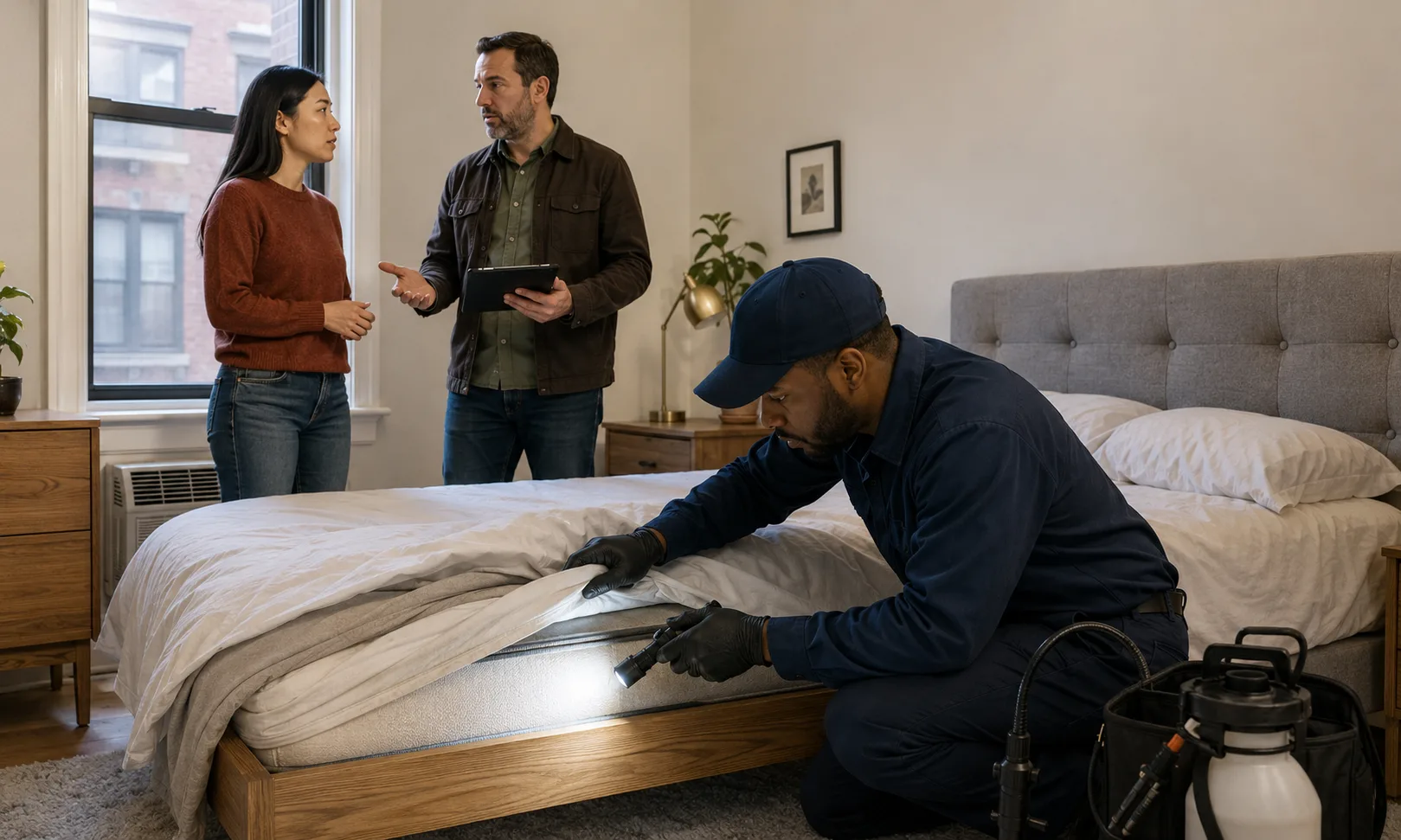
A professional bed bug terminator typically uses a combination approach:
- Heat treatment, which raises room temperature enough to kill bugs and eggs in a single visit
- Targeted chemical application in cracks, crevices, and furniture joints
- Steam treatment for mattresses and upholstery
- Follow-up inspections, usually two to three weeks later, to confirm the infestation is fully gone
This layered approach is why licensed extermination has success rates DIY methods simply can't match.
What Professional Bed Bug Extermination Costs (And Why It's Worth It)
Nationally, professional bed bug removal for a single apartment typically runs between $300 and $1,500, depending on unit size, infestation severity, and treatment method. Heat treatments tend to cost more upfront but often resolve the issue in one visit, while chemical treatments are cheaper per session but usually require two or three follow-ups.
Compare that to the hidden costs of letting an infestation linger: replaced mattresses, damaged furniture, lost sleep, and in shared buildings, the very real risk of bugs migrating to neighboring apartments and reigniting the problem after you've already paid to treat your own unit.
How to Prevent Bed Bugs From Coming Back
Even after successful treatment, a few habits go a long way:
- Use encasements on mattresses and box springs
- Inspect secondhand furniture thoroughly before bringing it inside
- Check luggage and clothing after travel, especially from hotels
- Reduce clutter, which gives bed bugs fewer places to hide
- Schedule a follow-up inspection with your exterminator even if you see no signs of activity
Frequently Asked Questions
Can a landlord evict me for reporting bed bugs?
No. Retaliatory eviction for reporting a habitability issue like bed bugs is illegal in nearly every state. If this happens to you, document everything and contact a tenant rights attorney.
How long does bed bug extermination take to work?
Most professional treatments show significant results within one to two weeks, though full resolution — especially for chemical treatments — can take two to three visits over four to six weeks.
Can I withhold rent until bed bugs are treated? S
ome states allow "repair and deduct" remedies for habitability issues, but rules vary widely and improper withholding can risk eviction. Check your local tenant laws before taking this step.
Do I have to pay for extermination if my neighbor's apartment is infested?
If the infestation spread from a neighboring unit through no fault of your own, this typically remains the landlord's financial responsibility, since it's a building-wide pest issue.
Is one treatment enough to get rid of bed bugs completely?
It depends on the method and severity. Heat treatments sometimes resolve infestations in a single visit, but most chemical treatment plans require at least one follow-up to catch newly hatched eggs.
Get Professional Help Before It Spreads
Bed bugs don't go away on their own, and every week of delay gives them more time to multiply and spread to other units. Whether you're a tenant trying to get your landlord to act or a property owner wanting to protect your building's reputation, the fastest path to a bug-free apartment is a licensed bed bug exterminator who can inspect, treat, and confirm the infestation is completely gone.
If you're dealing with bed bugs right now, don't wait for the problem to get worse — reach out to a local pest control professional today for an inspection and a treatment plan built around your specific situation.