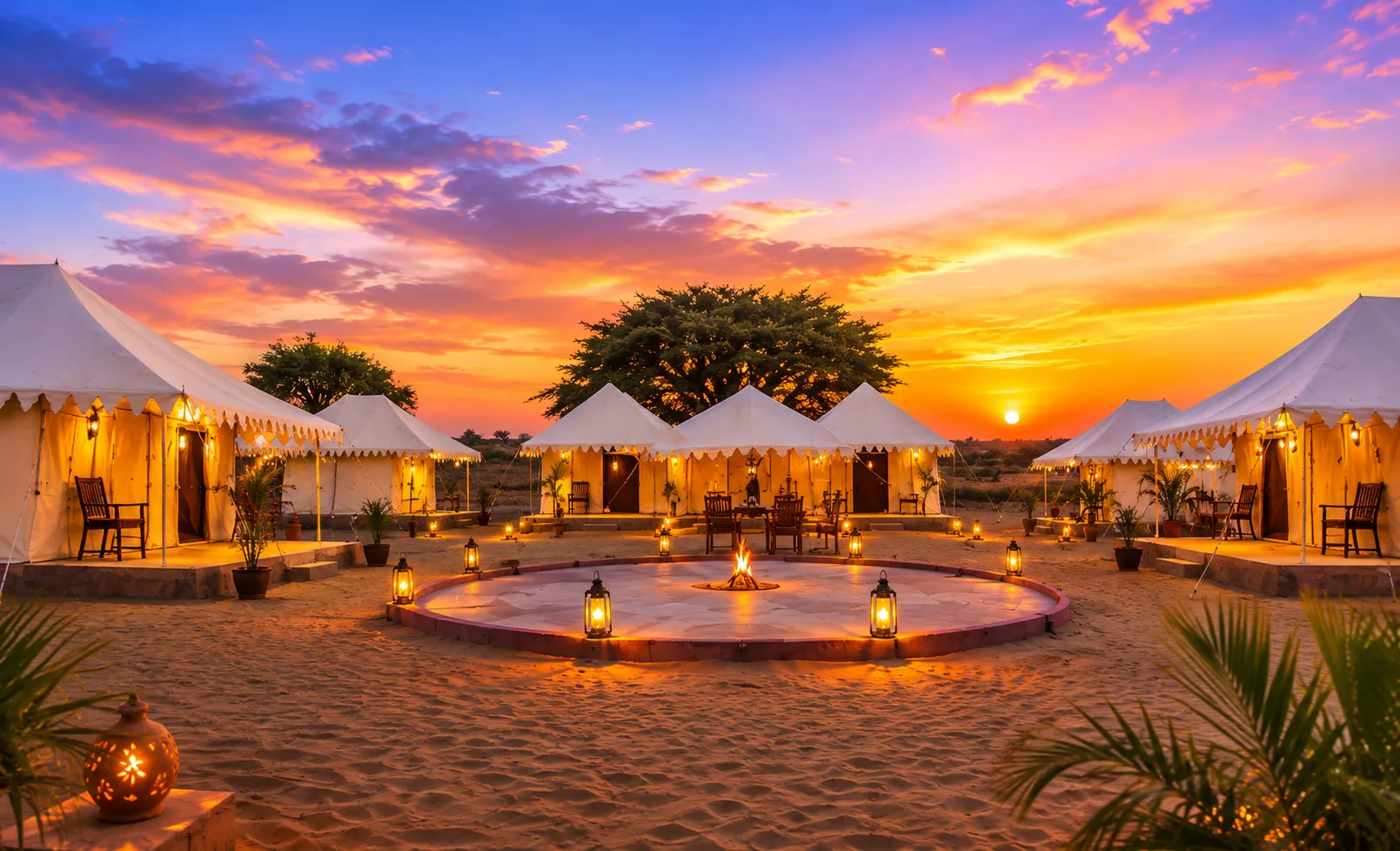
Stargazing in the Jaisalmer desert can give a trip a different kind of highlight: a quiet evening spent looking up rather than travelling between attractions. Lohagarh Desert Resort lists stargazing nights among its desert experiences. The actual view depends on weather, visibility and local conditions, so the best plan is to arrive prepared and keep expectations flexible.
A memorable night sky does not require specialist equipment. It can begin with a comfortable place to sit, a little patience and time away from bright screens. Before your visit, confirm the current timing and arrangements for stargazing with the resort.
Why plan for stargazing in Jaisalmer desert?
A night outdoors can change the pace of a desert trip. Daytime activities often involve movement, conversation and sightseeing; looking at the sky invites a slower kind of attention. You may notice the contrast between the dark horizon and the stars, or simply enjoy being outside after a warm day.
The experience can suit couples, families and solo travellers, although each group may approach it differently. Children may enjoy looking for familiar constellations, while adults might prefer a quiet conversation or a few photographs. There is no need to make the evening into a formal astronomy lesson.
The desert setting is part of the appeal, but weather and visibility matter. Clouds, haze or moonlight can affect how many stars are visible. If the sky is not clear, you can still enjoy the calm of the evening without treating the outing as a disappointment.
Check the timing before you go
Ask the resort when the stargazing experience is scheduled and whether it requires advance reservation. Confirm where it takes place, how long it lasts and what is included. These details can change, so use current information rather than relying on older posts or assumptions.
It may be useful to ask what time the sun sets and when the group should be ready. Arriving late can mean missing the transition from dusk to night, while arriving too early may leave you waiting. A clear schedule helps you pace dinner and any other evening plans.
If you are travelling with children or older guests, check the expected duration and whether seating is available. Ask about the walking route and any accessibility concerns before confirming participation.
Prepare for temperature and comfort
Evenings in the desert can feel cooler than the daytime, depending on the season. Check the forecast and bring a light layer if needed. Comfortable footwear is useful if you will walk between areas, and a small torch may help if the resort recommends one.
Carry personal medication and any essentials you need, but keep your bag light. If you use glasses, bring them; if you rely on a phone for light, dim the screen where possible so it does not affect your night vision or distract other guests.
If you have a mobility concern, tell the resort before the activity. Ask about the surface, distance and seating options. It is better to understand the setting in advance than to discover that the route is unsuitable after the group has started.
Give your eyes time to adjust
Bright light can make it harder to see faint stars. When you arrive, give your eyes a few minutes to adjust to the darkness. Avoid looking directly at bright phone screens, and use the lowest practical brightness if you need to check a message or take a photograph.
Do not point a bright torch at other guests or into the sky. Follow any instructions from the guide or staff, especially if the group is moving through an outdoor area. Quiet, considerate behaviour helps everyone enjoy the experience.
If you are curious about constellations, learn a few names before travelling. A simple star map or astronomy app can help, but check whether phone use is appropriate during the activity. You can also ask the guide what is visible without expecting every constellation to appear.
Stargazing without specialist equipment
Binoculars are optional. Many guests can enjoy the sky with the naked eye, especially if they take time to look carefully. If you bring binoculars, practise using them beforehand so you are not trying to adjust them in the dark.
A telescope is not necessary for a memorable evening. The experience may focus on observation and atmosphere rather than a formal astronomy session. Ask the resort what equipment, if any, is provided, and do not assume that a telescope or expert guide will be available unless confirmed.
For children, keep the activity simple. Invite them to find a bright star, look for familiar patterns or describe what they notice. Short, playful prompts can hold their attention without turning the evening into a test.
Photograph the sky patiently
Night photography can be challenging because cameras need more light than the eye. A phone may capture a few bright stars, but the result will depend on its camera and the conditions. If you use a camera, understand the settings before the evening and carry it securely.
Avoid using flash around other guests. Place the camera on a stable surface if you want a longer exposure, and follow the activity rules. Do not walk away from the group to find a darker spot unless the guide says it is safe and permitted.
Take a few pictures, then put the camera away. Screens and repeated attempts can distract from the experience. Sometimes the memory of the sky is more rewarding than an image that does not reflect what you saw.
Make the evening work for your group
Each person may want something different from the experience. One traveller might hope to take pictures, while another would rather sit quietly. Talk about expectations in advance and leave room for both approaches.
Families can bring a simple conversation prompt: What is the brightest thing you can see? What shape does that group of stars remind you of? Couples may prefer a quiet interval without a planned activity. Friends can use the time to talk after a day of sightseeing.
Keep children supervised and follow the resort’s guidance about safe areas. If anyone becomes tired or uncomfortable, it is reasonable to step away. The evening should feel enjoyable, not like an obligation.
Connect the night sky with the wider desert stay
A stargazing evening can complement other parts of a Jaisalmer trip. You might spend the day on a desert safari, explore local heritage or simply take time to rest before going outside at night. The best combination depends on your schedule and the group’s energy.
If you are considering a desert resort in Jaisalmer for stargazing, check the current activity details and ask what arrangements are available on your dates. The resort also lists cultural evenings, desert safaris and photography among its experiences, so you can decide what fits your trip.
Keep expectations connected to nature
The night sky is not a show that can be scheduled on demand. Visibility depends on natural conditions. A clear evening may offer a striking view; a cloudy one may not. Keeping expectations open allows you to enjoy the setting whatever the sky provides.
Use the experience to slow down, listen and notice the transition from evening to night. Follow local guidance, protect your eyes from bright light and respect the comfort of other guests. These small choices make the outing better for everyone.
A quiet memory from Jaisalmer
Stargazing can become one of the most personal memories of a desert visit because it asks so little: time, attention and a willingness to look up. Confirm the timing and arrangements before you travel, dress for the evening and keep your phone use minimal.
If you want to include a night-sky experience in your stay, review the Lohagarh Desert Resort details and contact the resort to confirm availability. Then give the sky a little time. You may remember the quiet and the feeling of the open night as clearly as the stars themselves.