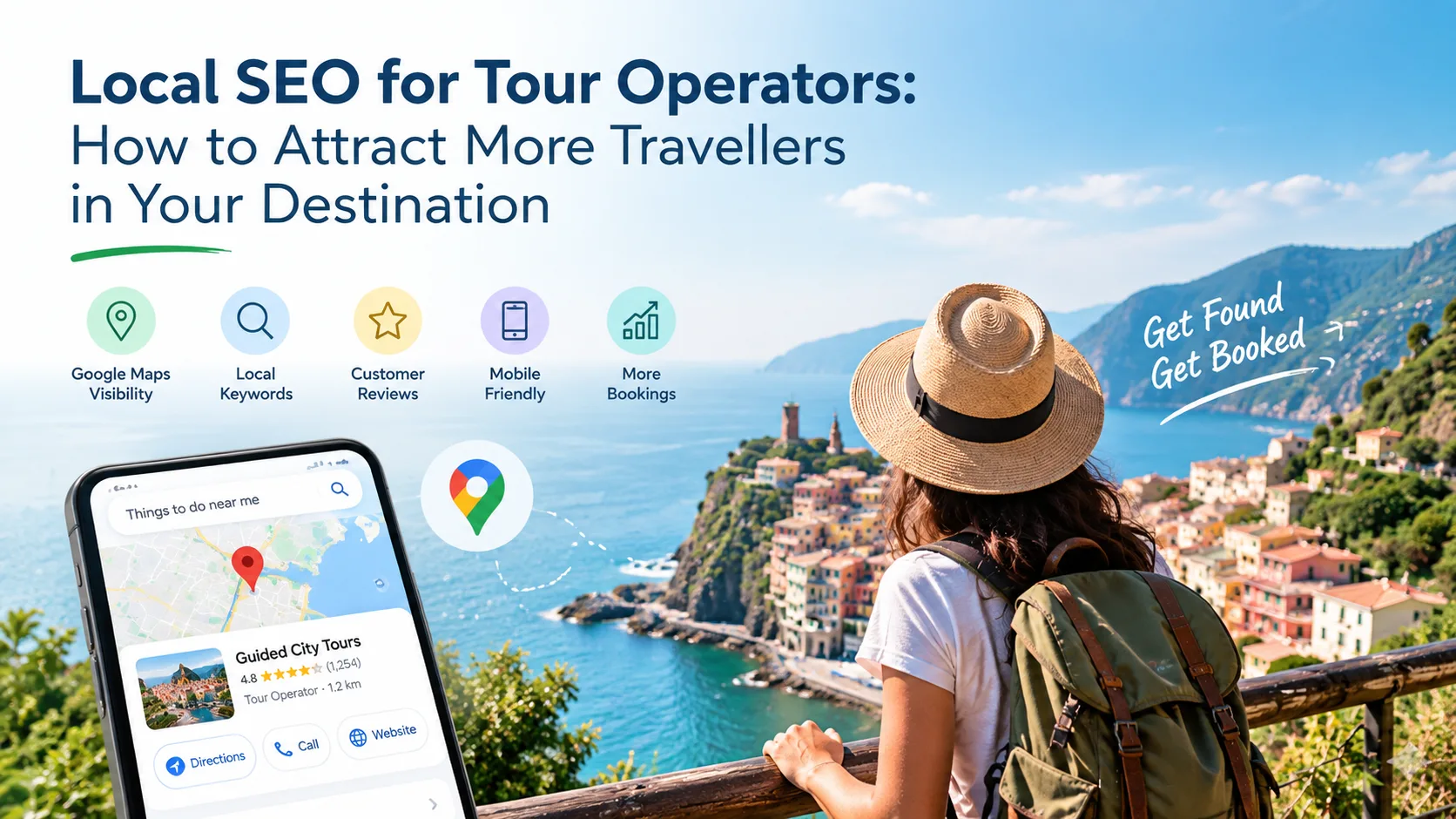
Travel SEO services help tour operators, travel agencies, and tourism businesses improve their online visibility and attract travellers who are actively searching for trips, tours, and local experiences. Working with a reliable tourism SEO company can help businesses reach relevant audiences, improve destination page rankings, and generate more booking enquiries. With effective SEO services for travel, businesses can strengthen their presence across traditional search engines and emerging AI-powered search experiences while building a sustainable source of organic traffic.
Why Local SEO Matters for Tour Operators in 2026
Travellers rarely book a trip without researching their options first. They search for things to do, compare tour packages, read customer reviews, and explore local attractions before deciding which company to trust.
For example, someone planning a trip to Miami might search for private city tours, while a family visiting Orlando may look for activities suitable for children. These searches create opportunities for tour operators to connect with people who are already interested in their services.
Local SEO helps businesses appear for relevant destination-based searches and improve their visibility in Google Search and Google Maps. It can also help travellers discover important information such as service details, meeting points, reviews, and booking options.
In 2026, tourism businesses should consider how travellers use AI-powered tools to research destinations and plan itineraries. Helpful, accurate content can support discoverability across different search experiences, although appearing in AI-generated answers is never guaranteed.
How Travel SEO Services Help Tour Operators Attract More Customers
A tourism website needs more than attractive photographs and a booking form to compete online. Search engines need to understand the destinations a business serves, the experiences it offers, and the questions its content answers.
Professional travel SEO services can help tour operators build a strategy around these requirements.
1. Target Local Keywords With Booking Intent
Keyword research helps identify what potential customers search for when planning a trip. Instead of targeting only broad terms such as "travel company", tour operators should consider keywords related to specific destinations and experiences.
Examples include:
- Guided walking tours in Boston
- Private city tours in San Francisco
- Family-friendly activities in Orlando
- Adventure tours in Colorado
- Food tours in New Orleans
These searches communicate more about what the traveller wants. Some users may be researching options, while others may be ready to make a booking.
Use relevant keywords naturally in page titles, headings, descriptions, and website content. Avoid excessive repetition, and prioritise search terms that accurately reflect the tours you offer.
2. Optimise Your Google Business Profile
For eligible tour operators, a well-maintained Google Business Profile can help improve local discoverability and give potential customers useful information before they book.
Make sure your business details, contact information, operating hours, website, and service descriptions are accurate. Choose an appropriate primary category and add relevant secondary categories where applicable.
Genuine photographs of tours, guides, meeting points, and experiences can help customers understand what you offer. Encourage satisfied customers to leave honest reviews, and respond professionally to feedback.
A complete profile supports customer confidence, but it does not guarantee a particular position in Google Maps. Local rankings also depend on factors such as relevance, distance, and prominence.
3. Create Destination-Specific Landing Pages
If your company operates in multiple destinations, dedicated landing pages can help travellers find the experiences available in each location.
For example, a tour operator serving Los Angeles and San Diego could create separate pages describing the tours, attractions, meeting points, and booking options available in each city.
Each page should provide original information that helps travellers make a decision. Include practical details such as tour duration, group sizes, accessibility, pricing where appropriate, and what customers can expect.
Avoid creating large numbers of pages that differ only by city name. Useful, distinctive content is more valuable than repetitive location pages created solely to target keywords.
4. Improve Your Website's Technical SEO
Even well-written travel content can struggle when a website has technical problems. Slow pages, broken links, duplicate URLs, and indexing issues can make it harder for search engines and visitors to navigate your site.
Effective SEO services for travel should include technical checks covering:
- Website crawling and indexing.
- Mobile usability and page speed.
- Core Web Vitals and overall user experience.
- Internal linking between destinations and tour pages.
- Duplicate content and URL management.
- Relevant structured data implemented correctly.
A clear website structure helps search engines understand the relationship between destinations, tours, and supporting guides. It also makes it easier for potential customers to find the information they need.
5. Build Local Citations and Relevant Travel Listings
Local citations are online mentions of your business details, such as its name, phone number, website, and address where applicable.
Tour operators can look for relevant tourism directories, local business listings, destination websites, and industry associations. Accurate information across these platforms helps travellers find the business and reduces confusion caused by outdated details.
Rather than submitting your website to hundreds of low-quality directories, focus on relevant and trustworthy listings. Check for duplicate profiles, incorrect phone numbers, and outdated URLs, and correct them where possible.
6. Use Customer Reviews to Build Trust
Choosing a tour often involves trusting a company with valuable holiday time and money. Reviews can help travellers understand the quality of an experience before making a decision.
Invite customers to leave honest feedback after their tour. Respond to reviews in a helpful manner, and use recurring comments to improve your services.
For example, if several customers mention difficulty finding the meeting point, add clearer directions to your website and booking confirmation.
Reviews should be genuine. Buying reviews or offering incentives in exchange for positive ratings can undermine trust and violate platform policies.
How a Tourism SEO Company Can Help With AI Search in 2026
Travellers are increasingly exploring AI tools to research destinations, compare activities, and build itineraries. They may ask questions such as "What are the best family activities in San Diego?" or "Which guided tours are suitable for a weekend trip?"
A knowledgeable tourism SEO company can help businesses prepare for these changing search behaviours by improving the quality and structure of their website content.
Useful steps include:
- Publishing original destination guides based on genuine local knowledge.
- Answering common questions about tours, prices, transport, and accessibility.
- Keeping business information and service details accurate.
- Using clear headings and descriptive page titles.
- Implementing relevant structured data where appropriate.
- Building a credible online presence through genuine reviews and relevant mentions.
These practices support search engine understanding and help travellers find reliable information. However, no SEO technique guarantees that a business will appear in ChatGPT, Google's AI-generated answers, or other AI search tools.
Traditional SEO fundamentals, including useful content, crawlability, indexing, and a good user experience, remain important.
Make Your Website Mobile-Friendly and Booking-Ready
Travellers frequently use smartphones to research destinations and book activities. If your website loads slowly or makes it difficult to understand a tour, potential customers may leave before enquiring.
Make sure your important pages work properly on mobile devices. Display tour descriptions, prices, duration, meeting points, availability, and cancellation policies clearly.
Your booking process should be straightforward, with visible calls to action and easy access to contact details.
Review your website analytics to identify where users abandon the booking process. Sometimes, improving the booking experience can be just as important as attracting more organic traffic.
Measure the Results of Your Travel SEO Strategy
SEO success should not be measured by rankings alone. A keyword may attract traffic without generating valuable enquiries, so businesses need to understand how organic visitors behave.
Google Search Console can help you monitor search queries, clicks, impressions, and page performance. Google Analytics 4 can help track engagement and conversions when correctly configured.
Important metrics include:
- Organic traffic to destination and tour pages.
- Visibility for relevant location-based searches.
- Qualified enquiries and phone calls.
- Booking form submissions and completed reservations.
- Conversion rates from organic search traffic.
Review these results regularly to identify which destinations and experiences attract the most valuable visitors. Use the data to improve underperforming pages and focus on opportunities that support business growth.
How to Choose the Right Tourism SEO Company
Choosing an SEO partner is an important decision for a travel business. Look for a company that understands the travel booking journey and can explain how its work supports your business goals.
Before hiring a provider, ask about its approach to keyword research, technical SEO, destination content, local search, and conversion tracking.
A reliable partner should provide transparent reporting, realistic timelines, and a clear explanation of the work being completed. Be cautious of guaranteed rankings, unrealistic traffic promises, and strategies based on large volumes of low-quality backlinks or repetitive content.
The right strategy should be built around your destinations, target customers, competition, and booking objectives.
Grow Your Travel Business With ClickDigix
Improving organic visibility requires a combination of relevant content, technical optimisation, local search strategy, and ongoing performance analysis.
ClickDigix helps businesses strengthen their online presence through SEO strategies tailored to their markets and business objectives. For tourism brands, this may include destination keyword research, website optimisation, content planning, and strategies to attract relevant organic traffic.
If you want to reach more potential travellers and improve your website's search performance, explore ClickDigix Travel SEO Services to learn more.
Frequently Asked Questions
1. What are travel SEO services?
Travel SEO services help travel agencies, tour operators, hotels, and tourism businesses improve their visibility in organic search results. They can include keyword research, technical SEO, destination page optimisation, content development, local SEO, and performance tracking.
2. How can a tourism SEO company help my business?
A tourism SEO company can identify relevant search opportunities, improve your website's structure, and create a strategy to attract travellers searching for your destinations and experiences. The aim is to generate relevant traffic that can lead to enquiries and bookings.
3. What should SEO services for travel businesses include?
SEO services for travel businesses should include keyword research, technical optimisation, useful destination content, mobile usability, internal linking, and conversion tracking. Local SEO and Google Business Profile optimisation may also be important for eligible businesses serving specific destinations.
4. How long does travel SEO take to show results?
Results depend on your website's current condition, competition, content quality, and the scope of work. Some improvements may become visible within a few months, while competitive destinations and keywords can take longer. SEO requires consistent monitoring and optimisation.
5. Can travel SEO services increase direct bookings?
Yes. Travel SEO services can help attract visitors who are researching particular tours, destinations, and activities. Clear service pages, transparent pricing, genuine reviews, and a smooth booking process can help turn organic traffic into direct enquiries and reservations, although results vary.
6. Why is local SEO important for tour operators?
Local SEO helps tour operators reach travellers searching for experiences in specific destinations. Optimising eligible business profiles, creating useful location pages, maintaining accurate listings, and earning genuine reviews can improve discoverability and help customers evaluate the business.
7. Can a tourism SEO company improve AI search visibility?
A tourism SEO company can help improve content quality, website structure, technical SEO, and the accuracy of business information. These practices support discoverability, but no provider can guarantee that an AI platform will mention or recommend a particular business.
8. Are SEO services for travel better than paid advertising?
They serve different purposes. SEO can build organic visibility over time, while paid advertising can provide additional exposure while campaigns are running. Travel businesses can use either approach or combine them depending on their budget, competition, and growth objectives.
Final Thoughts
Tour operators need to be visible when travellers research destinations, compare activities, and decide which experiences to book. A well-planned local and organic SEO strategy can help businesses reach these audiences and build trust before customers make a decision.
By combining relevant keyword targeting, useful destination pages, technical optimisation, local search improvements, and accurate performance tracking, tourism businesses can create a stronger online presence and work towards more qualified enquiries and bookings.