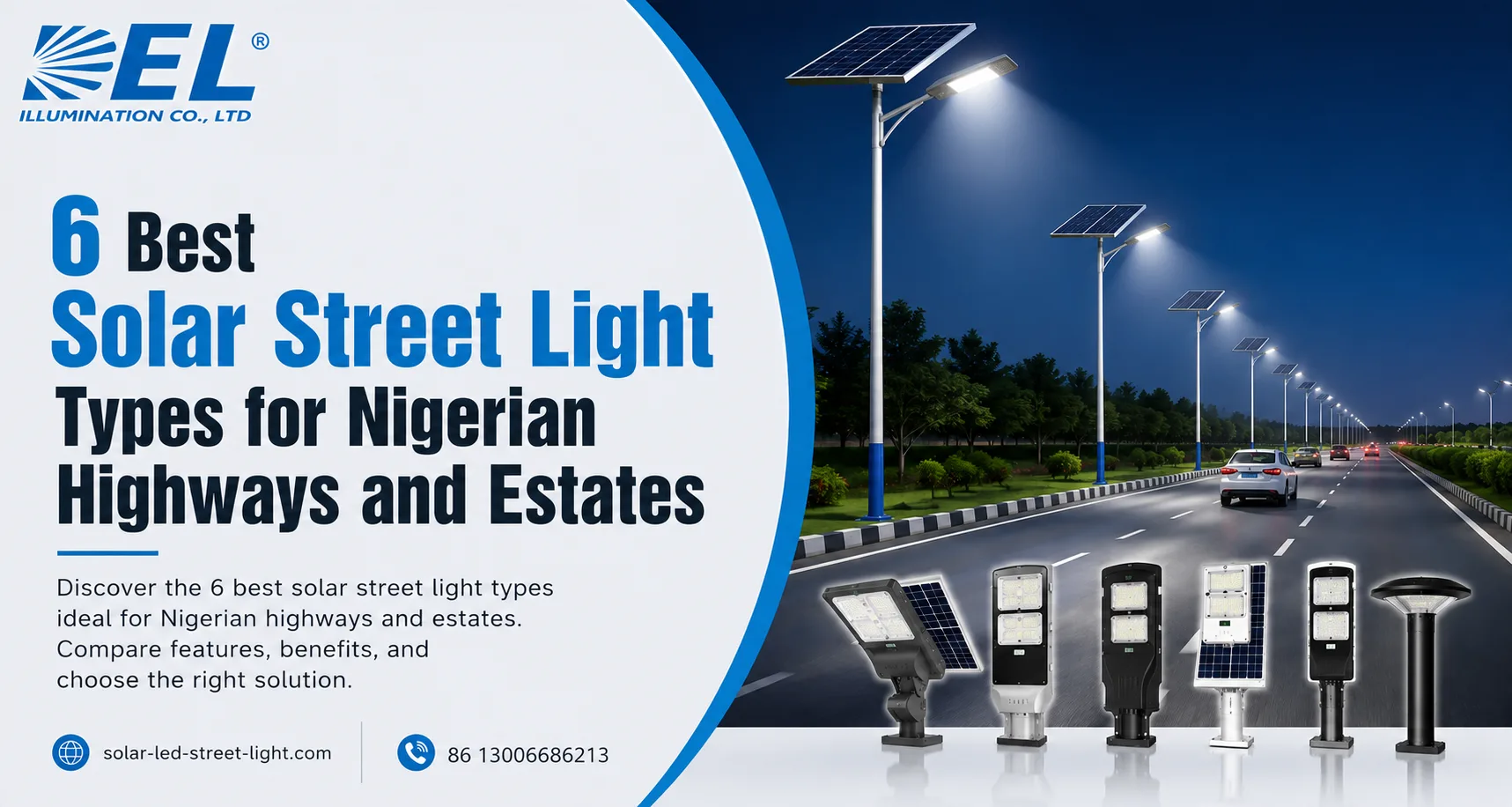
Nigeria's lighting challenge is not a lack of sunlight. It is a lack of reliable grid power and the crushing cost of running generators through the night. For highway authorities, estate developers, and local councils, solar street lighting has moved from a nice-to-have to a practical default.
Below are six solar street light types that perform well across Nigerian conditions, along with where each one fits best.
1. All-in-One Integrated Solar Street Lights
Everything sits in a single housing: solar panel, LiFePO4 battery, LED module, controller, and motion sensor. Installation takes under an hour per pole with no wiring, no separate battery box, and no trenching.
Best for: Estate roads, residential streets, compound perimeters, and rural community projects where fast deployment matters.
Watch out for: Lower total battery capacity compared with split systems. On sites with heavy harmattan dust or long rainy stretches in the South-South, verify the autonomy rating before ordering.
2. Split-Type Solar Street Lights
The panel, battery, and light are separate components. The panel can be angled independently for maximum sun capture, and the battery can be pole-mounted or buried in a ground box.
Best for: Federal and state highways, expressways, and industrial parks where higher lumen output and 3 to 5 days of autonomy are required.
Watch out for: More components mean more installation labour and more exposed points for theft. Anti-theft battery boxes and bolted panel brackets are worth the extra spend.
3. Semi-Integrated Solar Street Lights
A middle ground. The battery and LED are integrated into the lamp body while the solar panel remains separate and adjustable. You get better panel positioning than an all-in-one without the full complexity of a split system.
Best for: Estate entrance roads, filling stations, school compounds, and mixed-use developments.
Watch out for: Servicing the battery usually means bringing down the whole lamp head, so ask suppliers about the battery replacement procedure before purchase.
4. Smart Solar Street Lights with Motion Sensors and Remote Monitoring
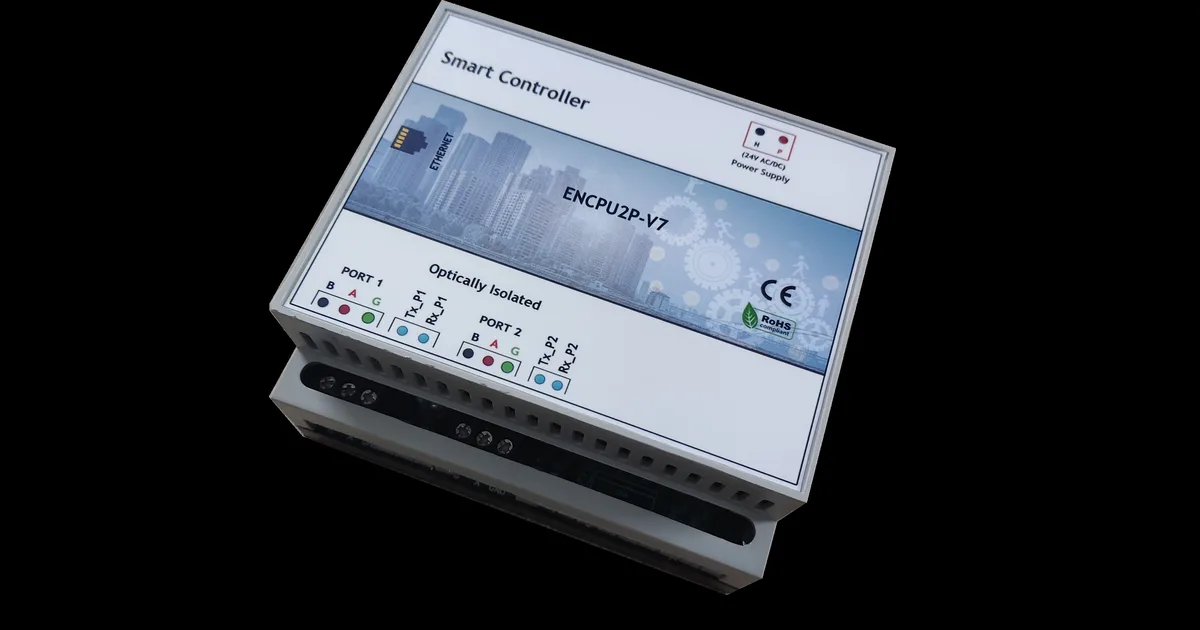
These use PIR or microwave sensors to dim to around 30 percent brightness when no traffic is present, then jump to full output on detection. Higher-end units include GPRS or 4G modules that report fault status, battery health, and charging performance to a dashboard.
Best for: Large estates, gated communities, campuses, and any council managing hundreds of poles across a wide area.
Watch out for: Remote monitoring only pays off if someone is actually watching the dashboard and acting on alerts. Confirm the supplier provides platform access and local technical support.
5. Solar Hybrid Street Lights
These combine solar charging with a grid or generator backup input. When solar generation drops during extended cloud cover, the system tops up from an alternative source rather than going dark.
Best for: Critical routes such as hospital access roads, airport perimeters, toll plazas, and high-security estate boundaries where a single dark night is unacceptable.
Watch out for: They cost more and require a grid connection point, which partly defeats the off-grid advantage. Only specify hybrid where continuity genuinely justifies it.
6. Solar High Mast and Flood Lighting Systems
Rather than lighting a linear stretch, high mast systems place multiple high-output solar flood lights on a single tall pole, typically 12 to 30 metres, illuminating a wide radius.
Best for: Highway interchanges, roundabouts, motor parks, market squares, stadium car parks, and estate central grounds.
Watch out for: These need proper foundation work and a wind load calculation. Nigerian coastal areas in particular demand corrosion-resistant galvanising on the mast.
How to Choose Between Them
ApplicationRecommended TypeFederal highwaysSplit-type or high mastEstate internal roadsAll-in-one or smart integratedRural communitiesAll-in-oneIndustrial parksSplit-typeRoundabouts and motor parksSolar high mastHospital and security routesSolar hybrid
What to Ask Solar Street Light Suppliers Before You Buy
The type matters less than the build quality behind it. Before committing to any order, put these questions to your shortlist of solar street light suppliers:
- What is the actual battery chemistry and cycle life? LiFePO4 should deliver 2,000 or more cycles. Lead-acid will not survive Nigerian ambient temperatures for long.
- Is the controller MPPT or PWM? MPPT extracts significantly more energy from the same panel.
- What is the IP and IK rating? IP65 minimum for weather, IK08 or higher for impact resistance.
- How many days of autonomy at full load without sun?
- What warranty covers the battery, panel, and LED separately?
- Can they supply photometric layouts and pole spacing calculations for the specific road width?
- Do they support OEM or ODM customisation for tender specifications?
- Is there local or regional after-sales support for replacement parts?
Reputable solar street light suppliers will answer all of these with documentation rather than verbal assurances. Ask for test reports, not just brochures.
Final Thoughts
For most Nigerian estate and community projects, all-in-one and smart integrated units offer the best balance of cost, speed, and reliability. Highways and large open areas call for split-type or high mast systems with greater output and longer autonomy. Hybrid systems remain a specialist choice for routes where darkness carries real risk.
Match the type to the application, verify the components, and work with solar street light suppliers who can back their specifications with data. Get that right and the lights will run for a decade with almost no operating cost.