There is a specific type of dread that sets in when your air conditioner starts failing in the dead of summer. It rarely happens all at once. Instead, your system drops subtle clues like small performance dips, weird noises, or an unexpected spike in your energy bill before finally giving up completely on the hottest afternoon of the year.
Ignoring these minor warnings converts a minor repair bill into an expensive emergency replacement, which is why understanding the signs your AC needs repair allows you to intervene before a breakdown occurs.
Let’s dive straight into the 10 critical warning signs that mean your air conditioner is struggling, how to run a basic diagnosis, and when it is time to call in professionals for AC Repair in Jurupa Valley.
Critical Signs Your AC is Breaking Down
Blowing Warm Air
If you find your AC blowing warm air instead, your system has a mechanical or thermodynamic issue. Before panicking, check your thermostat to ensure it was not accidentally switched to “heat” or “fan only.”
If the settings are correct, warm air usually points to a failed compressor, a severe refrigerant leak, or a broken condenser fan motor. Running the system in this state places extreme stress on the compressor, which will eventually cause it to overheat and burn out permanently.
Weak or Insufficient Airflow
Poor airflow means your system is working twice as hard to distribute conditioned air, forcing it into extended running cycles. This is often caused by a failing blower motor, a broken fan belt, or an excessively clogged air filter that is choking off. In zoned systems, it can also indicate a failed damper hidden deep inside your ductwork.
Frequent Cycling (Short-Cycling)
If your system turns on, runs for two to three minutes, shuts off, and then repeats the process ten minutes later, it is short-cycling. This rapid cycling subjects the electrical components to intense wear and tear. Short-cycling can be triggered by simple issues like a frozen coil, but it can also indicate that your system is improperly sized for your home.
Spikes in Indoor Humidity
If your home suddenly feels sticky, clammy, or smells faintly of mildew despite the temperature reading being low, your AC is failing to manage latent heat (humidity). When the system can no longer regulate moisture, it is often due to dirty evaporator coils or an aging compressor that can no longer sustain the necessary pressure dynamics.
Water Leaks Around the Indoor Unit
While your AC creates condensation during operation, that moisture is supposed to be safely funneled outside via a condensate drain line. If you notice pooling water or active dripping around your indoor furnace or air handler, your drain system is compromised.
This is usually caused by a clogged condensate line (often a buildup of algae and dust) or a cracked condensate pan. If left unaddressed, water can destroy your home’s drywall and floorboards and ruin the internal electrical components of your HVAC system.
Ice Accumulation on the Coils
Seeing ice on an air conditioner during a heatwave seems counterintuitive, but it is a major red flag. Ice forms on the outdoor refrigerant lines or the indoor evaporator coils when the temperature of the refrigerant drops below freezing. This happens for two primary reasons:
- Restricted Airflow
- Low Refrigerant Level.
Never try to scrape the ice off yourself; running the system with frozen coils can easily destroy your compressor.
Pungent or Musty Odors
If turning on your cooling system results in a sharp, metallic, or burning smell, you are likely looking at fried electrical wiring or a motor insulation failure. Turn the system off immediately.
If the smell is musty or stale, it indicates biological growth inside the ductwork or on the drain pan, which ruins your indoor air quality and requires professional sanitization.
Strange Noises (Grinding, Squealing, or Clanking)
Loud, jarring noises are an indicator of internal structural failure:
- Squealing or Screeching: Usually indicates a failing blower motor bearing or a slipping fan belt.
- Grinding: Grinding noises often mean the bearings in your compressor or fan motor have completely dried out.
- Clanking or Banging: Points to a loose or broken connecting rod or crankshaft inside the compressor, or a fan blade hitting an obstruction.
Constantly Rising Energy Bills
If your utility bills are skyrocketing month-over-month while your usage habits remain exactly the same, your system’s efficiency is tanking. As components age, get dirty, or lose mechanical lubrication, they require significantly more electricity to achieve the same cooling output.
Too Old to Keep Running
Even the most meticulously maintained air conditioning units have a finite lifespan. Most residential HVAC systems are engineered to last between 10 and 15 years. Once your system crosses the decade mark, internal components naturally degrade. If you notice an increase in minor breakdowns paired with no cooling, it means the system is nearing structural exhaustion.
Air Conditioner Troubleshooting: How Do I Check My System Myself?
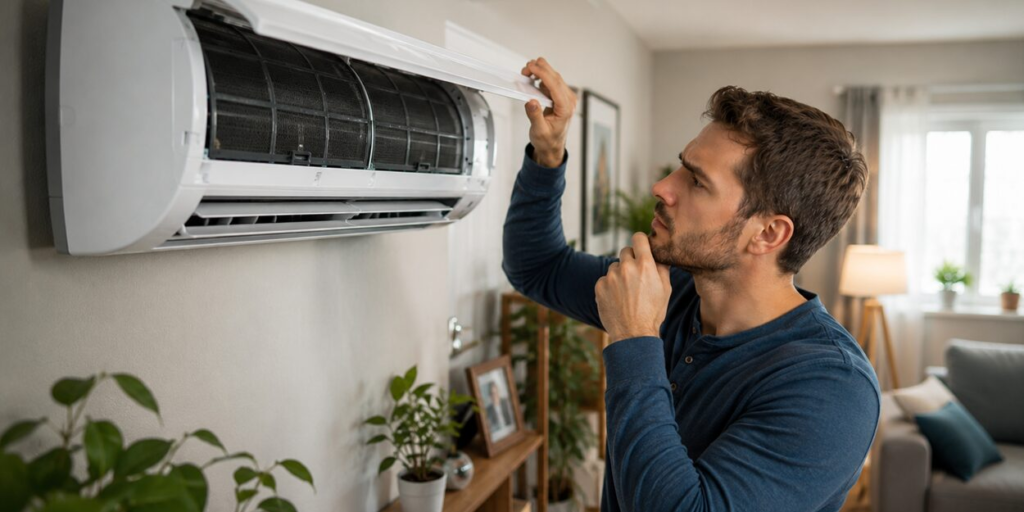
Before you schedule an emergency technician visit, it is wise to perform a quick checklist. Sometimes the issue stems from a simple, easily fixable oversight:
- Air Filter: A completely blocked air filter stops airflow, freezes coils, and stops cooling. Replace your filter if it has been more than 90 days since your last swap.
- Thermostat Batteries: If your thermostat screen is blank or fading, your system won’t receive the signal to engage. Switch out the batteries first.
- Circuit Breaker: Check your home’s electrical panel to see if the dedicated AC circuit breaker has tripped to the “off” position.
- Outdoor Condenser Unit: Walk outside and inspect your condenser. If it is buried under overgrown weeds, leaves, or debris, it cannot reject heat efficiently. Clear a two-foot perimeter around the metal housing.
When Should I Call a Professional for Emergency AC Repair in Jurupa Valley?
It can be tempting to push off a repair to save a few dollars, but HVAC systems are interconnected machines. What could have been a straightforward tightening or replacement job quickly turns into an unfixable mess.
When the heat peaks and your system completely gives out, you don’t have days to wait around for an appointment. If your system fails during extreme weather, seeking out an emergency AC repair in Jurupa Valley is the safest way to bring your home back to livable conditions quickly.
If your air conditioner is showing any of these ten warning signs, do not wait for total system failure to take action. Get in touch with Modern Comfort and Air today to schedule an expert inspection and keep your home cool all season long!