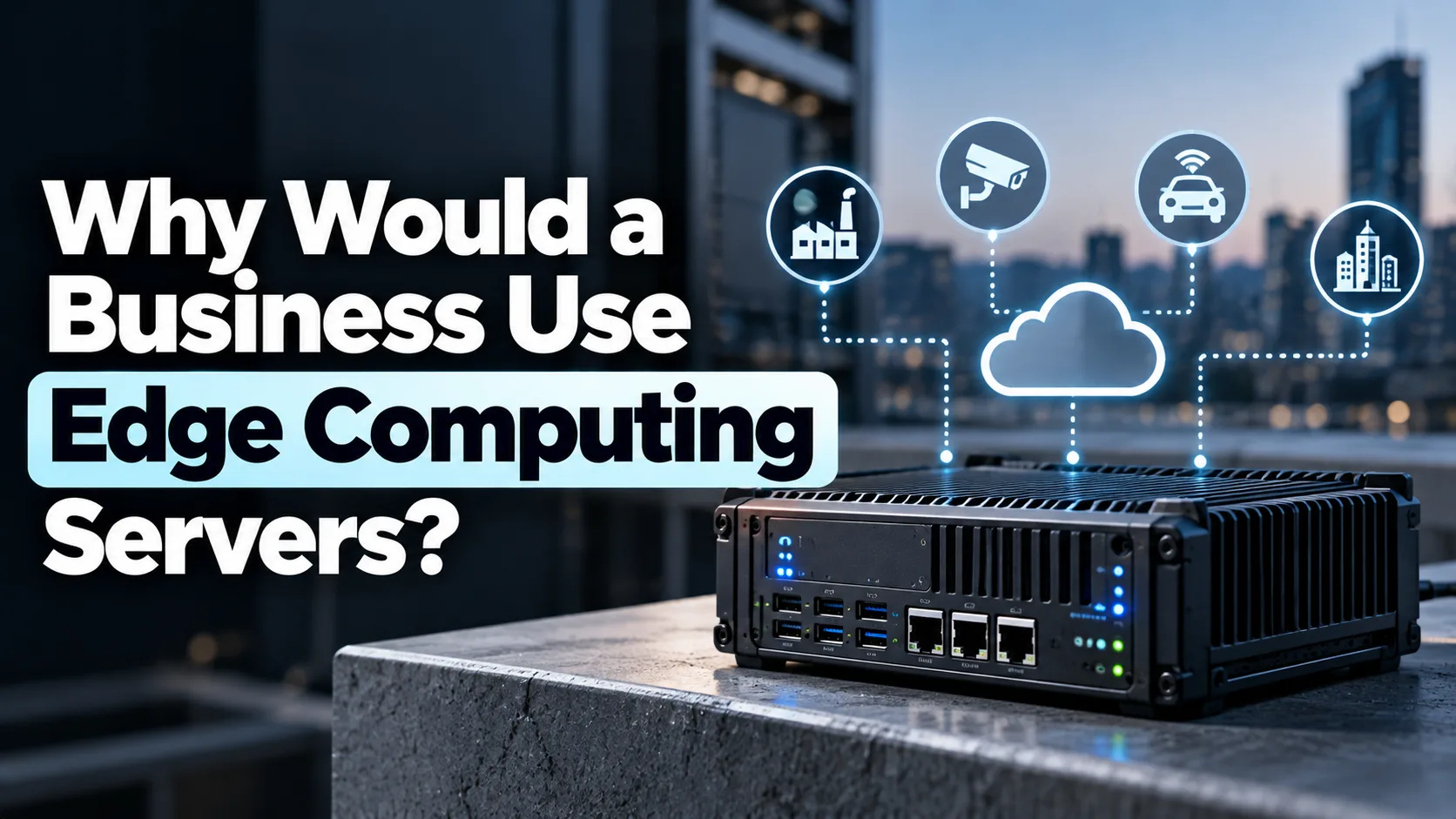
Every second matters when a business runs machines, serves customers, or manages deliveries. A short delay in data processing can slow a production line or affect a customer's experience.
Edge computing servers help prevent these problems by processing data close to where it is created. Instead of sending every request to a distant data center, businesses can handle important tasks at a nearby location. This approach also helps companies manage connected devices, run AI applications, and keep daily operations moving.
According to IDC's February 2026 forecast, global spending on edge computing is expected to reach $450 billion by 2029. This growth reflects the rising need for computing power closer to business operations, where fast and reliable data processing matters most.
Keep reading to understand why businesses use edge computing servers.
How Do Edge Computing Servers Help Businesses Work Faster?
Edge computing servers process data near the devices, machines, and people that need it. This reduces the time required to send information to a central data center and receive a response.
Businesses can use edge computing servers to:
- Reduce delays: Process information locally for faster responses.
- Lower network traffic: Send only useful data to central systems.
- Support daily operations: Keep certain applications running during internet disruptions, provided they have local access to the required resources.
- Improve data management: Process sensitive information closer to its source.
- Support business growth: Add computing resources as workloads increase.
For example, businesses can explore Lenovo ThinkEdge servers when they need to process data closer to their operations. These servers support use cases such as factory monitoring, retail analytics, and AI-based inspection.
A manufacturer, for instance, could use an edge server to analyze sensor readings on-site and identify equipment problems sooner. The right model depends on the required processing power, working conditions, storage, and connectivity.
Practical Uses Across Different Industries
Edge servers can support many everyday business activities:
- Manufacturing: Monitor equipment and identify signs of failure.
- Retail: Update inventory and support checkout systems.
- Warehousing: Track products and improve stock management.
- Transportation: Process vehicle information and camera feeds.
- Remote offices: Run local applications when network connections are unreliable.
For instance, a warehouse can use a local server to flag low stock as soon as inventory falls below a set level. Employees can then arrange replacements without waiting for a distant system to process every update.
Why Do Businesses Use Edge Servers for AI and Data Processing?
AI applications often process large amounts of information. A business may use AI to inspect products, analyze machine performance, or identify unusual activity. Sending every request to a distant data center can increase network traffic and delay results.
Edge servers allow businesses to run AI inference near the equipment that creates the data. AI inference means using a trained model to analyze new information and produce an answer. For example, a factory can process camera images locally to identify product defects before items move to the next production stage.
IDC's forecast of $450 billion in global edge computing spending by 2029 points to the growing importance of local computing infrastructure. However, businesses should choose their hardware based on actual needs rather than trends alone.
Choosing the Right Computing Power
Different applications need different levels of server performance. A basic monitoring tool may work well with standard processing power. An application that analyzes video or runs demanding AI models may need more memory, faster storage, or a graphics processing unit (GPU).
Before choosing a server, businesses should consider:
- The amount of data they need to process.
- How quickly applications must respond.
- The required CPU, memory, and storage capacity.
- Whether specialized AI hardware is necessary.
- How much the workload may grow over time.
These checks help businesses avoid buying equipment that cannot handle their workloads or costs more than necessary.
What Should Businesses Consider Before Choosing Edge Servers?
The right server must match the location, workload, and operating conditions. A server in a data center faces different demands from one installed in a factory or remote branch.
Businesses should review these factors before making a decision:
- Physical design: Check available space, cooling, and environmental conditions.
- Performance: Match processing power and memory to the workload.
- Storage: Allow enough capacity for applications and local data.
- Connectivity: Confirm support for the required devices and networks.
- Reliability: Plan for power protection, backups, and recovery.
- Security: Use encryption, access controls, and regular software updates.
- Management: Choose tools that help IT teams monitor remote servers.
Edge computing may also reduce some costs by limiting network traffic and identifying equipment problems early. However, companies must consider hardware, electricity, maintenance, software, and security costs. Local processing does not automatically make data secure or guarantee lower expenses.
Conclusion
Edge computing servers help businesses process data closer to where they need it. They can reduce delays, support AI applications, limit network traffic, and improve daily operations across factories, stores, warehouses, and remote offices. However, every business has different requirements.
Companies should assess server performance, storage, connectivity, security, and total cost before investing. By matching infrastructure to real business needs, they can build a reliable IT environment that supports current workloads and future growth.