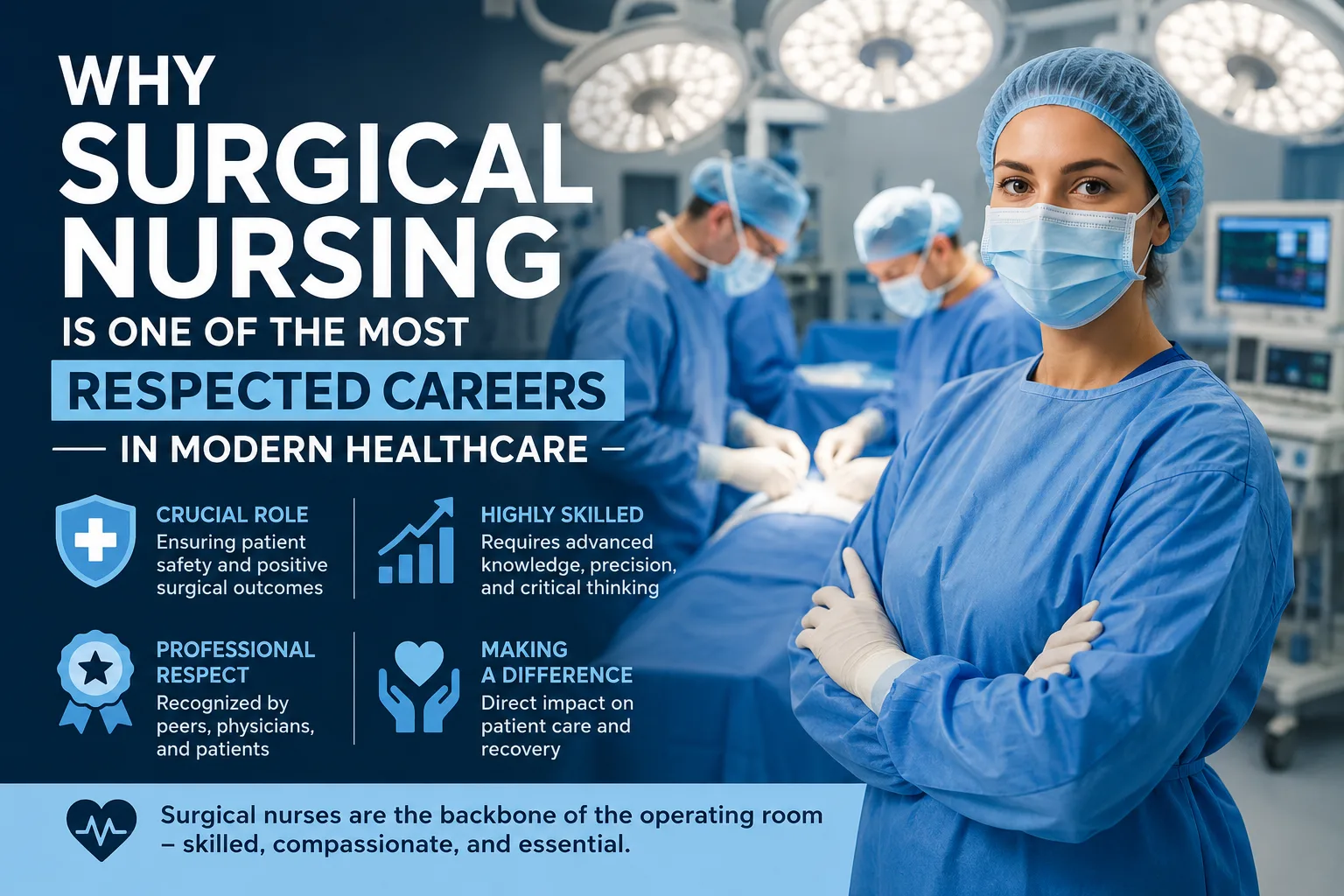
Healthcare professionals play a vital role in ensuring patients receive safe, effective, and compassionate care throughout every stage of treatment. While every nursing specialty contributes to patient outcomes, surgical nursing stands out as a highly specialized field that requires precision, teamwork, and exceptional clinical expertise. From preparing patients before surgery to supporting them during recovery, surgical nurses are an essential part of successful medical procedures.
As healthcare technology continues to advance and the number of surgical procedures increases worldwide, hospitals and healthcare facilities are seeking experienced nursing professionals who can work confidently in fast-paced surgical environments. These professionals help maintain patient safety, support surgeons during operations, and ensure every procedure follows strict clinical standards.
The growing demand for skilled surgical professionals has created excellent career opportunities for nurses looking to expand their expertise. Healthcare organizations continue investing in specialized nursing teams to improve patient outcomes while maintaining efficient surgical services.
A surgery nurse is responsible for supporting patients before, during, and after surgical procedures. These professionals prepare operating rooms, assist surgeons and anesthesiologists, monitor patient conditions, manage sterile equipment, and provide post-operative care to promote safe recovery. Their knowledge, attention to detail, and ability to work under pressure make them an invaluable part of every surgical team.
The Essential Role of Surgical Nurses
Every successful surgery depends on collaboration between multiple healthcare professionals. Surgical nurses help coordinate patient care throughout the entire surgical process while ensuring safety and efficiency in the operating room.
Their responsibilities often include:
- Preparing patients for surgery
- Verifying medical records and surgical plans
- Maintaining sterile environments
- Assisting during surgical procedures
- Monitoring patient conditions
- Supporting post-operative recovery
- Educating patients about recovery instructions
These responsibilities help reduce complications and improve the overall patient experience.
Skills Every Surgery Nurse Should Develop
Working in surgical care requires both technical expertise and strong interpersonal skills.
Clinical Knowledge
Surgical nurses must understand anatomy, surgical procedures, infection prevention, patient monitoring, and operating room protocols.
Attention to Detail
Even small mistakes can affect patient safety. Surgical nurses carefully monitor every stage of the procedure to maintain accuracy.
Communication Skills
Clear communication with surgeons, anesthesiologists, technicians, and patients ensures efficient teamwork and safe care delivery.
Problem-Solving Ability
Unexpected situations can arise during surgery, requiring nurses to think quickly and respond appropriately.
Emotional Resilience
Working in surgical environments often involves long procedures and high-pressure situations, making emotional stability an important quality.
Benefits of Choosing Surgical Nursing
Many healthcare professionals pursue surgical nursing because it offers rewarding career opportunities and continuous learning.
Career Advancement
Surgical nurses can specialize in different surgical disciplines, leadership positions, education, or advanced practice nursing.
Exposure to Advanced Medical Technology
Operating rooms utilize innovative surgical equipment, allowing nurses to work with advanced healthcare technologies.
Strong Employment Demand
Hospitals, specialty surgical centers, and outpatient facilities continue seeking qualified surgical nursing professionals.
Meaningful Patient Care
Surgical nurses help patients during some of the most important moments of their healthcare journey, contributing directly to successful treatment outcomes.
Common Work Settings
Surgical nurses work in various healthcare environments, including:
- Hospital operating rooms
- Outpatient surgery centers
- Specialty surgical hospitals
- Orthopedic surgical units
- Cardiovascular surgery departments
- Neurosurgery centers
- Plastic and reconstructive surgery facilities
Each environment offers unique experiences and opportunities for professional development.
Understanding Emergency Nursing
While surgical nurses focus on planned and emergency surgical procedures, emergency nursing is another essential specialty that supports patients requiring immediate medical attention.
Emergency nurses assess patients experiencing sudden illnesses, traumatic injuries, cardiac emergencies, respiratory distress, and other urgent medical conditions. They prioritize treatment based on the severity of each case while working closely with physicians and emergency healthcare teams.
This specialty requires quick decision-making, adaptability, and the ability to remain calm in high-pressure situations. Many healthcare professionals develop careers in both emergency and surgical settings because the two specialties share strong clinical foundations and teamwork skills.
The Future of Surgical Nursing
Healthcare continues evolving through advances in robotic surgery, minimally invasive procedures, digital patient monitoring, and improved surgical techniques. These innovations create new opportunities for surgical nurses to expand their expertise and contribute to better patient outcomes.
As populations grow and healthcare needs increase, skilled surgical nursing professionals will remain in high demand across hospitals and specialized medical facilities.
Conclusion
Surgical nursing offers healthcare professionals an opportunity to build a rewarding career focused on precision, teamwork, and exceptional patient care. From preparing patients before surgery to supporting successful recoveries, surgery nurses play an essential role in modern healthcare. For nurses interested in expanding their clinical expertise, combining surgical experience with knowledge of emergency nursing creates valuable career opportunities while helping improve patient outcomes in some of healthcare's most critical environments.
Frequently Asked Questions (FAQs)
1. What does a surgery nurse do?
A surgery nurse prepares patients for procedures, assists during operations, monitors patient conditions, maintains sterile environments, and supports post-operative recovery.
2. What skills are important for surgical nurses?
Clinical knowledge, communication, attention to detail, teamwork, problem-solving, and emotional resilience are among the most important skills for surgical nurses.
3. What is emergency nursing?
Emergency nursing is a specialty focused on providing immediate care for patients experiencing serious injuries, illnesses, or other urgent medical conditions that require rapid assessment and treatment.
4. Where can surgery nurses work?
Surgery nurses can work in hospitals, outpatient surgical centers, specialty clinics, trauma centers, orthopedic facilities, cardiovascular units, and other healthcare organizations that perform surgical procedures