
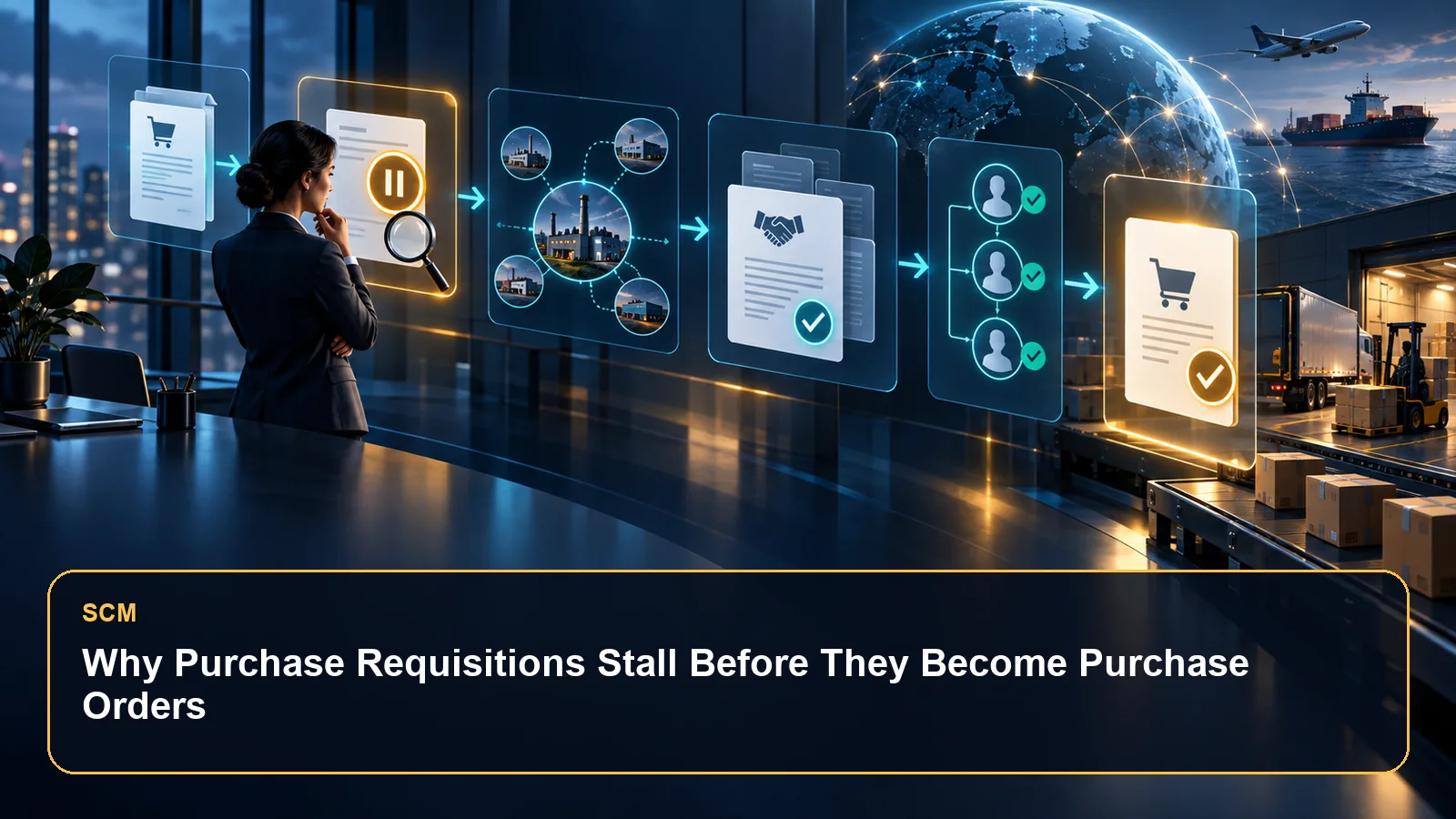
Oracle Fusion SCM Online Training often introduces a requisition as the request and a purchase order as the document sent to a supplier. The difficult part lies between those states. An approved request can still wait because approval confirms business authorization, while order creation depends on separate purchasing conditions. The application must be able to identify a supplier, obtain usable commercial terms, and determine that the line qualifies for automatic processing. When any part of that chain is incomplete, the requisition may be valid but not00 ready to become an order. Understanding that distinction turns a vague delay into a traceable process question.
Approval is necessary, but not sufficient
Approval answers whether the organization permits the spend. It does not necessarily answer who will supply the item, which agreement governs the purchase, or what price and terms should appear on the order. Those are sourcing and document-creation decisions. A team that treats approval as the finish line can therefore misread normal processing as a system failure. The more useful question is whether the approved line contains, or can derive, every attribute required for the next document. This shifts attention from the requisition header to the actual conditions on each line.
One requisition can also contain lines with different levels of readiness. A catalog item tied to an agreement may be straightforward, while another line may lack a clear source or rely on terms that require buyer judgment. If only part of the request converts, the split outcome is evidence. It suggests that approval worked and that a line-specific condition influenced the remainder. Reading the request at line level prevents a broad investigation from obscuring the smaller configuration or data issue that matters.
Automatic order creation follows a chain
Oracle Help Center: How Purchase Orders Are Automatically Created explains that automated order creation can convert an approved requisition into a purchase order and communicate it to the supplier without manual intervention by a procurement agent. The documented flow mirrors work a buyer would otherwise perform: find a supplier, find an agreement, and derive terms and conditions, including price. Automation is therefore not a shortcut around purchasing logic. It is the execution of that logic when the application has enough reliable information to make each decision.
This sequence matters during diagnosis. If a supplier is known but agreement terms cannot be derived, the request has progressed farther than a line with no source. If terms exist but the line does not meet the rule for automated conversion, adding another approval will not address the cause. Teams should identify the last decision the application could make confidently, then examine the next required input. That approach is faster and more precise than resubmitting the same request or changing unrelated controls.
The requisition origin changes what to inspect
The documented automation path covers several requisition origins, including catalog items, items from agreements, punchout catalog items, and requisitions imported through the open interface. Origin is not just historical information. It points to the data path that supplied the line. A catalog line may inherit structured purchasing details, a punchout line may depend on information returned from an external shopping session, and an imported line depends on the quality and completeness of the inbound record. Two visually similar lines can therefore reach different outcomes because they arrived through different routes.
Troubleshooting should preserve that context. Before editing a stalled line, record how it was created and compare it with a line from the same route that converted successfully. Fusion SCM Online Training Differences in supplier, agreement reference, item relationship, price basis, or destination can narrow the search. A successful line from another route may be a poor comparison because its data was derived under different rules. The aim is not to find any purchase order that worked, but to find a genuinely comparable transaction.
Agreement details can decide the outcome
Agreements do more than name a supplier. They provide the commercial frame from which the order can derive terms and price. A requisition may look complete to a requester while still lacking an agreement relationship that supports touchless processing. Effective dates, eligible items, purchasing context, and line attributes all deserve review when the expected agreement is not selected. The practical test is whether the application can connect this exact requisition line to a valid source of terms, not whether an agreement merely exists somewhere in the setup.
A specific rule applies when a requisition is sourced to a contract purchase agreement: the Negotiated check box on the requisition line must be selected for automatic conversion. This small line attribute illustrates why header-level review often misses the cause. The request can be approved, the supplier can be familiar, and the contract can be active, yet the automation condition can remain unmet. Checking the documented qualifier is safer than repeatedly forcing the transaction forward without understanding why it paused.
Use evidence to separate data gaps from process gaps
A disciplined review begins with the requisition line and follows the intended decision path. Confirm the line is approved, identify its origin, verify the proposed supplier, establish which agreement should provide terms, and inspect any qualifier required by that sourcing method. Then compare the result with the order-creation process status and any available exception detail. This sequence distinguishes a missing input from a processing delay. It also creates a record that another analyst can follow without reconstructing the entire case from memory.
Testing should use a small set of controlled variations rather than repeated copies of the same request. Hold the item and destination constant while changing one relevant condition, such as the agreement relationship or the negotiated indicator. Observe whether the line becomes eligible for automatic creation. The goal is not to manipulate production transactions until one passes. It is to prove which decision controls the outcome, correct the governing setup or source data, and then retest through the normal route.
Conclusion
A stalled requisition is usually easier to understand when approval and order readiness are treated as separate states. The request must be authorized, but automatic conversion also needs a source, an applicable agreement, derivable terms, and any line-level qualifier required by the purchasing route. An Oracle SCM Online Training can frame the lifecycle clearly, yet operational diagnosis still depends on tracing one line through those decisions. That habit replaces broad assumptions with a focused question: what information or rule prevented this approved demand from becoming an executable purchase order?