
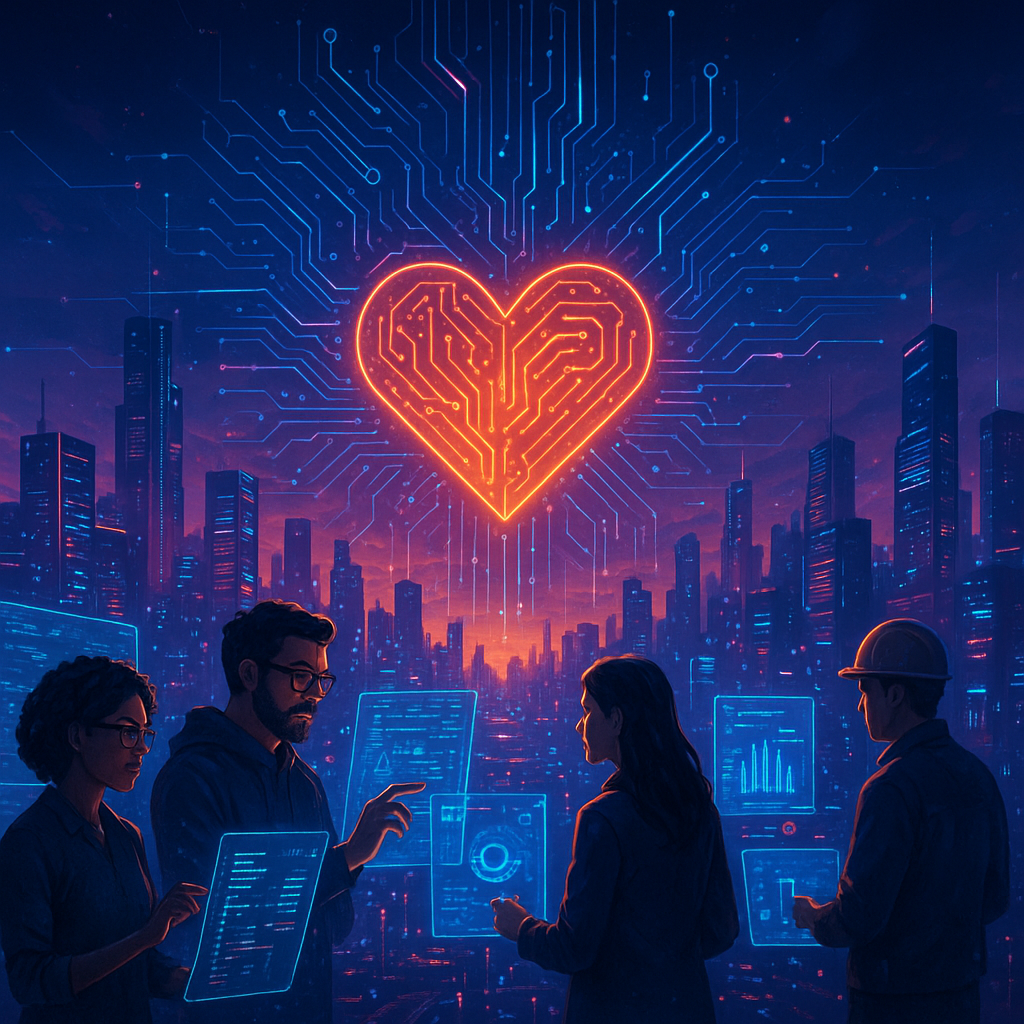
Programming’s Enduring Pulse: An Unexpected Catalyst of Progress
On a crisp morning in April 2026, a team at QuantumSage Labs in Silicon Valley achieved a breakthrough: they programmed the first fully autonomous quantum algorithm capable of optimizing global supply chains in real time. This achievement is not just a landmark for quantum computing but a testament to the evolving power of programming itself. As the invisible backbone of virtually all digital transformation, programming continues to shape the very fabric of modern society. From embedded code in self-driving cars to the massive neural networks powering AI-driven diagnostics, the art and science of programming have become far more than lines of code—they are the heartbeat of technological innovation.
While headlines often celebrate flashy devices or AI breakthroughs, the foundational role of programming remains underappreciated. Yet, programming languages, paradigms, and tools have continuously adapted to meet the demands of an increasingly complex digital ecosystem. This article aims to explore why programming remains essential in 2026, tracing its historical roots, analyzing current trends, unpacking expert insights, and anticipating future shifts that will keep programming at the core of technological progress.
“Programming is no longer just about instructing machines; it’s about architecting possibilities.” — Dr. Lena Kwan, CTO QuantumSage Labs
Tracing the Roots: How Programming Became the Cornerstone of Technology
The evolution of programming from rudimentary punch cards in the 1940s to today’s AI-assisted coding environments is a journey marked by relentless innovation. Early programming languages like Fortran and COBOL laid the groundwork, enabling machines to process complex calculations and business logic. The 1980s and 1990s introduced object-oriented programming, which revolutionized software design by emphasizing modularity and reusability. This era saw the rise of C++, Java, and Python, languages that remain pillars in modern development. By 2026, the landscape has expanded dramatically, with new languages designed specifically for AI, quantum computing, and distributed ledger systems.
Two crucial factors have driven programming’s ascent as a technological cornerstone:
- Abstraction and Accessibility: Programming languages have steadily abstracted complexity, making it easier for developers to create sophisticated software without managing every hardware detail.
- Community and Open Source Movements: Collaborative platforms such as GitHub and GitLab have democratized access to code, accelerating innovation through shared knowledge and collective problem-solving.
In the early 21st century, the rise of mobile computing and cloud infrastructure placed new demands on programming. Developers had to master asynchronous programming, microservices architectures, and real-time data processing. The increased complexity of software systems led to the adoption of automated testing, continuous integration and delivery (CI/CD), and DevOps methodologies, which remain prevalent practices today.
Understanding this historical context is vital to appreciating why programming is more relevant than ever. The continuous layering of abstractions and methodologies has empowered a new generation of developers to tackle challenges unimaginable just a decade ago.
Decoding the Present: Programming Trends Shaping 2026
Today, programming is not a monolithic craft but a diversified ecosystem influenced by emerging technologies. To understand programming’s current state, it helps to examine several key trends that define its role in 2026.
1. AI-Augmented Development: The integration of artificial intelligence into coding workflows has transformed programming productivity. Tools like OpenCodeX and NeuralIDE leverage large language models to assist with code generation, debugging, and optimization, reducing development cycles by up to 40%, according to industry reports.
2. Quantum Programming Languages: The rise of quantum computing has birthed specialized languages such as Q# and Quipper. These enable developers to write algorithms that exploit quantum superposition and entanglement, promising exponential speed-ups for certain computational problems.
3. Low-Code and No-Code Platforms: Democratizing programming, these platforms empower non-developers to build applications through visual interfaces. While these tools accelerate prototyping, they have also sparked debates about the future role of traditional developers.
4. Secure and Ethical Coding: With cyber threats escalating and regulatory landscapes tightening, secure coding practices have become mandatory. Programming frameworks now incorporate built-in security features, and ethical AI guidelines influence algorithm design.
5. Cross-Platform and Edge Computing: The proliferation of IoT and edge devices demands lightweight, efficient code that can run across diverse hardware. Languages like Rust and Go have gained prominence for their performance and safety characteristics.
“The programmer’s role has expanded from code craftsman to ethical guardian, ensuring technology serves humanity responsibly.” — Arjun Patel, Security Lead at CyberFortress
These trends underscore programming’s adaptability and its central role in navigating technological complexity. They also highlight a shift from purely technical skills toward multidisciplinary expertise, including ethics, security, and user experience.
Expert Perspectives: Industry Leaders Reflect on Programming’s Vital Role
To better understand the significance of programming in 2026, insights from industry leaders offer valuable context. At the recent Global Software Summit, held in Berlin, several CTOs and thought leaders emphasized programming’s evolving nature.
Dr. Maria Chen, head of AI at NexaCore Technologies, remarked, “Programming today is about constructing intelligent frameworks that can learn and adapt autonomously. The challenge isn’t writing code—it’s architecting systems that evolve without human intervention.”
Similarly, Ravi Singh, CEO of OpenSourceX, highlighted the importance of community-driven development: “Open source remains the lifeblood of innovation. Programming is a collaborative act, where knowledge sharing accelerates progress beyond what any single company can achieve.”
Industry experts also discussed the growing importance of programming education. With more than 60% of new jobs requiring coding skills, according to the International Labor Organization, there is a global push to integrate programming into early education curricula. This move is intended to prepare future workforces for a digital-first economy.
- Increased investment in coding bootcamps and online platforms is observed worldwide.
- Universities are creating interdisciplinary programs combining programming with ethics, law, and design.
- Corporate training initiatives focus on upskilling existing employees to bridge technical gaps.
These perspectives emphasize that programming is not only a technical skill but a strategic asset that organizations must cultivate and protect.
Case Studies: Real-World Impact of Programming Innovations
Examining concrete examples illustrates how programming drives value across sectors.
Case Study 1: Autonomous Logistics Optimization by QuantumSage Labs
QuantumSage’s quantum programming breakthrough enabled a logistics company to reduce delivery times by 25% while cutting fuel consumption by 15%. Their team used Q# to design quantum algorithms that optimized route planning in ways classical algorithms could not match.
Case Study 2: Rust Adoption in IoT Security
SmartHome Inc. transitioned its firmware codebase from C++ to Rust, enhancing memory safety and preventing vulnerabilities. This switch reduced security incidents by 70% within the first year, showcasing programming language choice as a critical factor in product reliability.
Case Study 3: AI-Powered Code Generation at DevWave
DevWave integrated AI-assisted coding tools into their development pipeline, accelerating feature delivery by 35%. This shift allowed programmers to focus more on architecture and innovation, reducing burnout and improving code quality.
- Quantum programming accelerated complex problem-solving in logistics.
- Memory-safe languages improved IoT device security significantly.
- AI tools enhanced developer productivity and creativity.
These case studies underscore that programming innovations translate directly into operational efficiencies, security improvements, and enhanced creative capacity.
The Road Ahead: What to Watch in Programming’s Future
As we look beyond 2026, programming will continue to evolve in response to emerging technologies and societal needs.
1. Integration of AI and Human Creativity: Programming will increasingly blend automated code generation with human-driven design, emphasizing creativity over rote tasks.
2. Expansion of Quantum Programming: As quantum hardware matures, programming languages and tools will become more sophisticated, unlocking new applications in cryptography, materials science, and AI.
3. Ethical and Responsible Programming: Developers will face greater responsibility to embed fairness, privacy, and transparency into algorithms, responding to regulatory and social pressures.
4. Programming as a Universal Literacy: Coding will become as fundamental as reading and writing, integrated into education and professional development globally.
5. Cross-Disciplinary Collaboration: Programming will increasingly intersect with fields like biology, art, and social sciences, creating novel hybrid disciplines.
“The future of programming is not just what we code, but why and for whom we code.” — Elena Martinez, Director of Ethical AI at FutureTech
To thrive in this future, developers and organizations must embrace continuous learning, ethical awareness, and openness to new paradigms. For readers interested in understanding the foundational role of programming in shaping technology, this detailed exploration offers further depth. Additionally, those curious about how programming continues to redefine society can consult this comprehensive analysis.
Ultimately, programming is more than a technical skill; it is the lens through which humanity builds its digital future.