
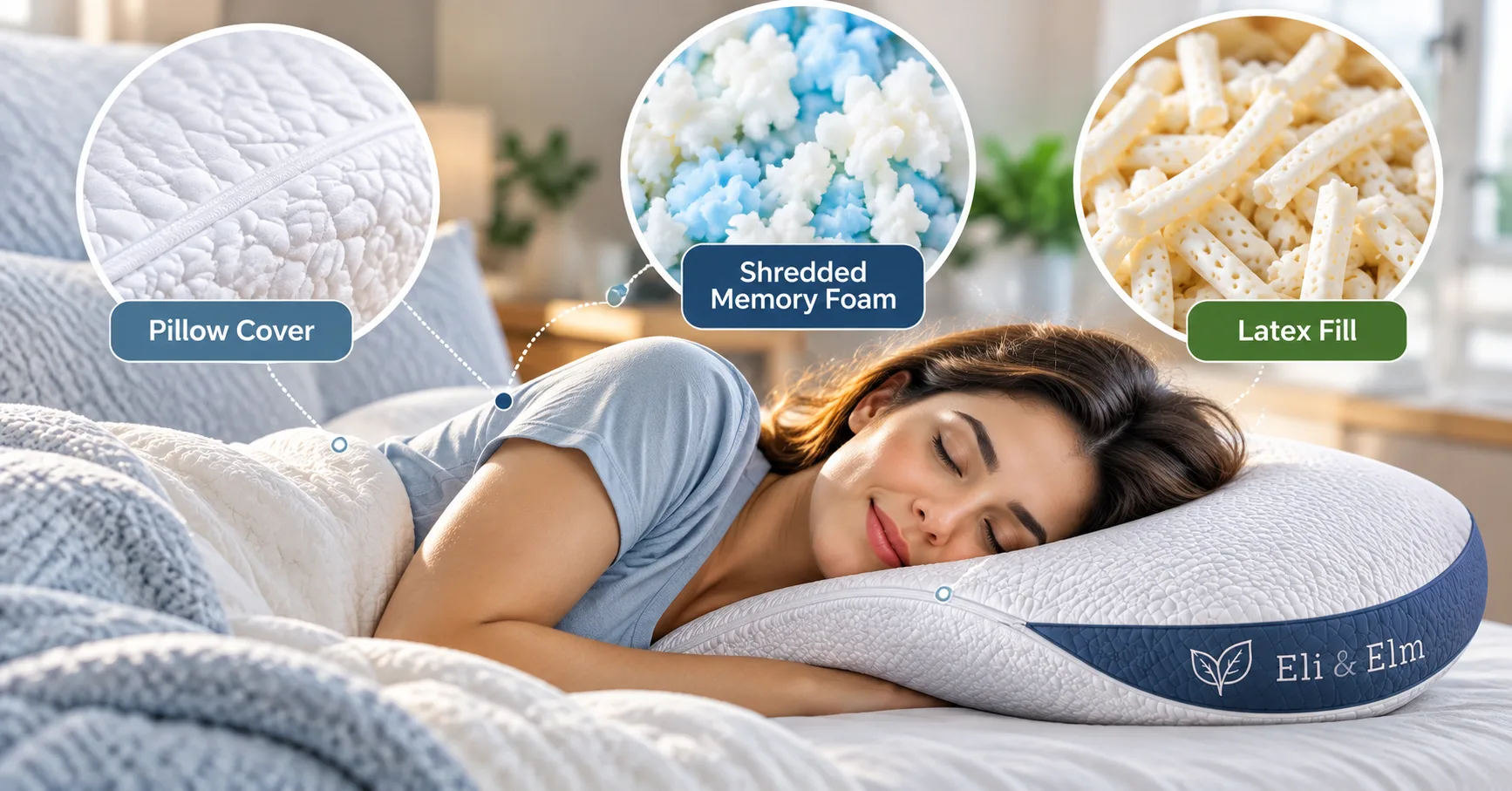
Choosing a pillow is not only about its filling or height. The fabric surrounding the filling can also influence how a pillow feels, how it handles moisture, and how comfortable it remains throughout the night. For side sleepers, who often keep their head in contact with the pillow for several hours, considering the cover and filling together can make the selection process more practical.
A pillow may have a comfortable filling but still feel too warm, too slippery, or too firm because of its outer fabric and construction. Understanding how these components work together helps shoppers compare pillow designs based on their actual needs rather than relying on a single product feature.
Why Pillow Construction Matters
A pillow is made up of several components, and each can affect the overall experience. The filling influences the pillow's shape, responsiveness, and ability to compress under the head. The outer cover contributes to the surface feel, breathability, and ease of maintenance.
These features should not be evaluated in isolation. A filling that feels soft inside one cover may feel noticeably different inside another because the fabric's thickness, stretch, and construction affect how easily the pillow compresses.
For side sleepers, this distinction is especially relevant. The pillow needs to accommodate the head while helping maintain a comfortable position between the head, neck, and shoulders. A suitable design depends on individual body proportions, mattress firmness, and preferred sleeping position.
How Pillow Covers Influence Comfort
Fabric Texture and Surface Feel
The first thing a person notices when lying down is often the pillow's surface. Some covers feel smooth and cool to the touch, while others have a softer or more textured finish.
Cotton is commonly used because it is familiar, washable in many product designs, and available in different weaves. Other fabrics and fabric blends may offer different combinations of softness, stretch, and moisture management.
However, the fabric name alone does not determine comfort. Weave density, finishing, thickness, and the construction of the complete pillow also matter. Shoppers should check the product specifications rather than assuming that every cotton or synthetic cover will feel the same.
Breathability and Moisture Management
People who tend to feel warm while sleeping may want to pay attention to how a pillow cover handles heat and moisture. A breathable fabric can allow air to move through its structure, although the final result also depends on the filling, pillow thickness, and surrounding bedding.
A cooling label should not automatically be treated as proof that a pillow will remain cool throughout the night. The room temperature, personal sleep preferences, and other bedding layers can influence the experience.
When comparing options, look for clear descriptions of the cover material, care requirements, and any specific cooling technology. If a manufacturer makes performance claims, check whether it provides details about how those claims were tested.
How Filling Type Changes the Experience
Shredded Memory Foam
Shredded memory foam consists of smaller foam pieces rather than one solid block. Depending on the design, this construction may allow the filling to shift and compress in response to pressure.
Some adjustable designs allow users to remove or redistribute filling to change the pillow's height. That flexibility can be useful for people who are still figuring out their preferred loft.
Nevertheless, shredded foam pillows are not all identical. The type of foam, quantity of filling, cover construction, and adjustment method can produce different results. Shoppers should check whether the pillow is adjustable and whether the manufacturer provides instructions for making changes.
Latex Filling
Latex pillows are often associated with a more responsive feel. Their firmness, resilience, and shape retention depend on the particular latex formulation and pillow construction.
Some latex pillows use a single molded piece, while others use different structures or combinations of materials. A molded pillow may provide a more consistent shape than a design with loose filling, but the best option depends on the user's preferences.
Cover construction still matters. Even when the filling has the desired feel, the outer fabric can affect the way the pillow feels against the face and how easily it compresses under the head.
Why Side Sleepers Should Consider Both Components
Side sleeping creates a different set of comfort considerations from back or stomach sleeping. The space between the head and mattress is influenced by shoulder width, mattress softness, and the position of the body.
A pillow that is too low for one person may feel comfortable to someone with different proportions. Likewise, a pillow that initially feels supportive may not remain comfortable if its filling shifts or compresses more than expected.
The cover and filling should therefore be assessed as a complete system. Consider these questions before choosing a pillow:
- Does the height suit your sleeping position? Look for a design that accommodates your shoulder-to-head space without forcing your neck into an uncomfortable angle.
- Does the surface feel comfortable? Consider fabric texture, sensitivity to different materials, and whether you prefer a smooth or soft finish.
- Does the pillow retain its shape? Check product details and user feedback for information about compression, adjustment, and maintenance.
- Can the cover be cleaned easily? Review washing instructions and determine whether the cover is removable.
- Does the pillow suit your temperature preferences? Evaluate the cover, filling, and available cooling features together rather than relying on a single marketing claim.
These questions provide a more useful starting point than choosing a pillow based on a popular material or an appealing product description alone.
Connecting Pillow Height, Cooling, and Neck Comfort
Pillow height and surface temperature are separate considerations, but both can influence whether a pillow feels suitable. A pillow with a comfortable surface may still be unsuitable if its height does not match the sleeper's needs.
For readers comparing temperature-related features, the article Best Cooling Side Sleeper Pillow: How to Choose the Right One provides a related perspective on evaluating cooling features when choosing a pillow.
Neck comfort also deserves individual consideration. The article Overnight Changes: Best Pillow for Side Sleepers Neck Pain explores another aspect of pillow selection: how design and sleeping preferences may relate to perceived comfort. A pillow should not be treated as a guaranteed solution for persistent neck pain, which may require professional assessment.
Reading these topics together can help shoppers separate three different questions: whether the pillow feels comfortable against the skin, whether its height suits their sleeping position, and whether its construction matches their preferences.
A Practical Way to Compare Pillows Before Buying
Rather than beginning with a brand name, create a short checklist of the features that matter most to you.
Start with sleeping position and preferred height. Then consider the filling type, surface fabric, temperature preferences, and cleaning requirements. Finally, review the product's dimensions, return policy, and any available details about adjusting or maintaining the filling.
If you are comparing designs specifically intended for side sleeping, explore the Best side sleeper pillow product page to review the available product information and determine whether its features match your requirements. Evaluate the stated specifications rather than assuming that one design will suit every sleeper.
It can also help to keep expectations realistic. A pillow's materials and construction can inform a buying decision, but individual comfort varies. Reviews may offer useful observations, yet differences in body shape, mattresses, room conditions, and personal preferences mean that another person's experience will not necessarily predict your own.
Final Thoughts
A pillow's comfort comes from more than its filling alone. The outer cover, material construction, loft, and maintenance requirements all contribute to the complete design.
For side sleepers, considering these features together makes it easier to compare options and identify potential trade-offs. A breathable cover may appeal to someone who tends to feel warm, while an adjustable filling may be useful for someone who wants to experiment with pillow height. Neither feature automatically makes a pillow the right choice for everyone.
The most practical approach is to identify your priorities, verify the product specifications, and compare the complete pillow rather than relying on a single claim. With a clearer understanding of how covers and fillings work together, you can make a more informed decision based on your own comfort preferences.