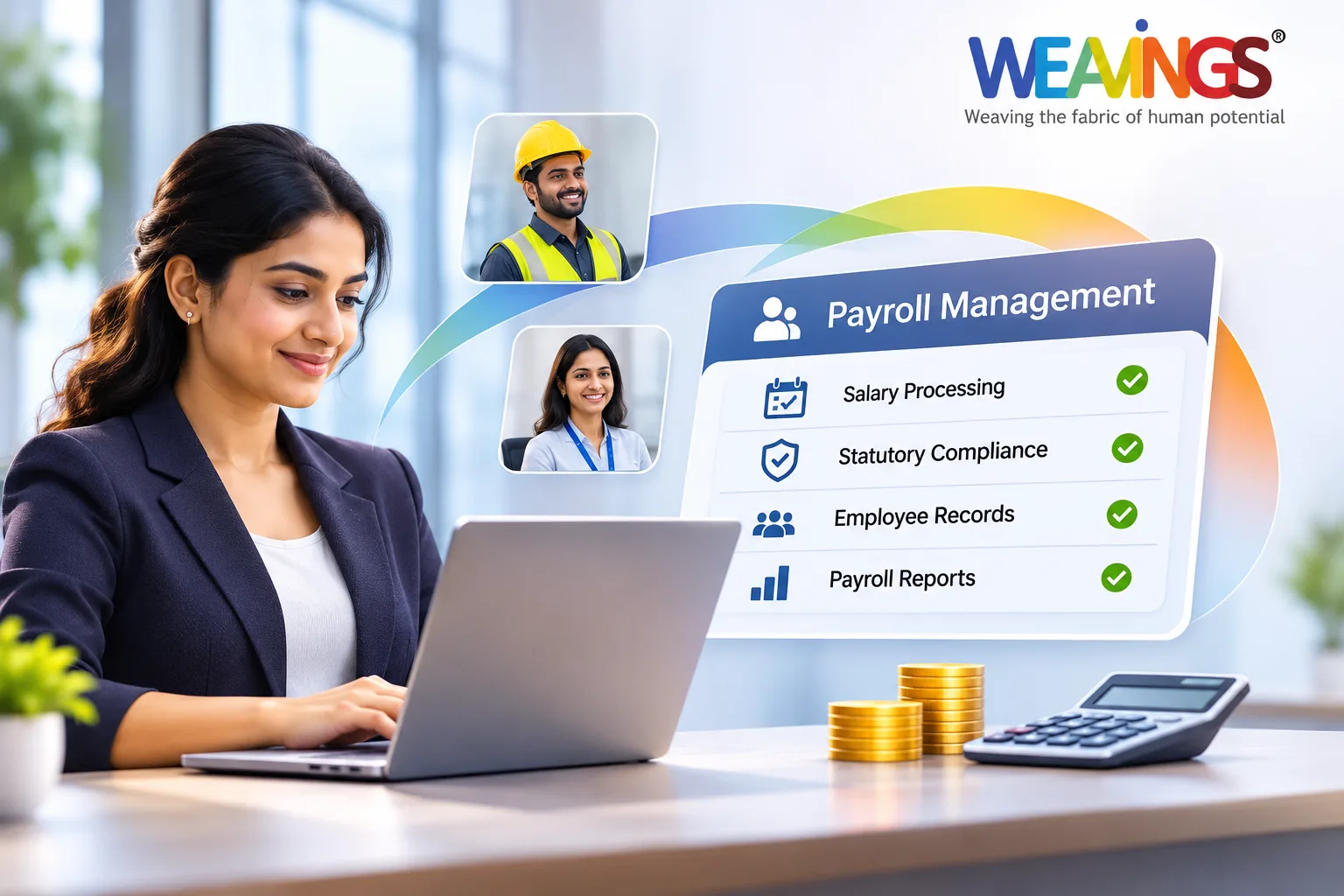
Managing employee payroll is no longer limited to calculating salaries and transferring payments. As businesses expand across locations, hire different categories of employees and manage complex salary structures, payroll administration becomes an increasingly demanding responsibility.
From attendance tracking and salary deductions to employee documentation and statutory requirements, organizations must maintain accurate payroll records while ensuring timely payments.
This is why many businesses are adopting professional Payroll Outsourcing Services in India to simplify payroll operations, reduce administrative pressure and establish more consistent workforce management processes.
Why Payroll Management Becomes Challenging as Businesses Grow
A small organization with a limited workforce may be able to handle payroll through an internal HR or accounting team. However, payroll requirements become more complicated when employee numbers increase or operations expand into multiple locations.
Different salary structures, shift allowances, overtime, reimbursements, leave adjustments and employee benefits require careful calculation every month.
Businesses employing permanent employees, contract workers and temporary staff must also manage different employment arrangements and associated payroll requirements.
Without a structured payroll system, these activities can lead to processing delays, calculation errors, inconsistent employee records and additional administrative work.
Professional payroll management services help organizations bring greater consistency to these activities through defined processes and reporting mechanisms.
How Payroll Outsourcing Helps Businesses Improve Efficiency
Payroll outsourcing involves assigning agreed payroll administration responsibilities to an external service provider with experience in salary processing and workforce management.
A payroll outsourcing partner can help businesses coordinate employee salary calculations, attendance inputs, statutory deductions, payslip generation and payroll reporting.
More Accurate Salary Processing
Salary accuracy is essential for maintaining employee confidence.
A structured payroll process helps ensure that attendance records, approved leave, incentives, reimbursements and applicable deductions are considered before final salary calculations.
Review and approval workflows can also help identify discrepancies before payroll is finalized.
Reduced Administrative Workload
Internal HR teams often spend considerable time collecting attendance details, confirming salary revisions, processing employee requests and preparing payroll reports.
Outsourcing repetitive payroll activities allows these teams to dedicate more attention to recruitment, employee engagement, workforce planning and other HR priorities.
Improved Payroll Reporting
Reliable payroll reporting gives management greater visibility into employee costs, salary components and workforce-related expenses.
Businesses operating across multiple branches can benefit from consolidated reports that help finance teams monitor payroll expenditure and maintain organized records.
The Importance of Payroll Compliance in India
Payroll administration involves several statutory responsibilities that vary depending on employee eligibility, salary structure, location and applicable regulations.
Organizations may need to coordinate deductions and records relating to Provident Fund (PF), Employees' State Insurance (ESIC), Tax Deducted at Source (TDS) and Professional Tax.
Errors in payroll documentation or statutory calculations can create unnecessary compliance risks.
Businesses can strengthen their processes by combining payroll management with professional Statutory Compliance Services.
This approach supports accurate recordkeeping, payroll-related documentation and better coordination between payroll and compliance activities. However, employers should continue reviewing their legal responsibilities and the scope agreed with their service provider.
How HR Technology Supports Modern Payroll Operations
Technology plays an important role in reducing repetitive administrative work and improving the organization of workforce information.
An HR information system can help businesses maintain employee profiles, attendance records, leave information and other relevant HR data in a centralized environment.
Integrating payroll processes with reliable employee information can reduce repeated data entry and improve coordination between HR and finance departments.
Organizations looking to strengthen their workforce administration can explore HRIS Solutions alongside payroll outsourcing.
A connected approach to employee information and payroll administration is especially useful for businesses with distributed teams and frequent workforce changes.
Why Third Party Payroll Services Matter for Contract Employees
Contract staffing has become an important workforce model for businesses managing seasonal demand, operational expansion and project-based requirements.
Industries such as manufacturing, logistics, retail, e-commerce and facility management frequently work with contract employees across multiple operational locations.
Managing payroll for these workers requires coordination between attendance records, employee documentation, salary calculations and applicable statutory requirements.
Third party payroll services help businesses administer payroll for outsourced workers through defined procedures.
Organizations using Contract Staffing Services can benefit from aligning workforce deployment with payroll and employee administration processes.
This coordination can help employers manage changing workforce requirements while maintaining better visibility into payroll records and administrative responsibilities.
What Should Businesses Look for in a Payroll Outsourcing Partner?
Selecting a payroll provider requires more than comparing service charges.
Businesses should evaluate the provider's experience, payroll processing capabilities, data confidentiality practices, statutory knowledge and ability to support changing workforce requirements.
An effective payroll partner should demonstrate clear procedures for collecting monthly inputs, verifying calculations, handling payroll corrections and delivering management reports.
Companies should also examine how the provider manages employee onboarding, resignations, full-and-final settlements, salary revisions and employee payroll queries.
For multi-location businesses, the ability to coordinate payroll information across different offices, facilities and operational teams is particularly important.
The objective should be to identify a provider that offers reliable administration and supports long-term operational efficiency.
Building a Scalable Payroll Management Process
As businesses grow, payroll should evolve from a repetitive monthly activity into a structured workforce administration function.
Clear payroll calendars, approved employee data, defined responsibilities and consistent reporting can help organizations maintain control over payroll operations.
Outsourcing can support this transition by introducing more organized processes and reducing dependence on manual administrative activities.
Weavings Manpower Solutions supports businesses with payroll administration, salary processing, employee records and compliance-focused workforce services across India.
For organizations managing growing employee numbers, contract workers or geographically distributed operations, professional payroll outsourcing can provide a practical foundation for efficient and consistent workforce management.
Ultimately, successful payroll management is not simply about processing salaries on time. It is about maintaining accuracy, supporting employees, managing compliance requirements and helping businesses operate with greater confidence.