
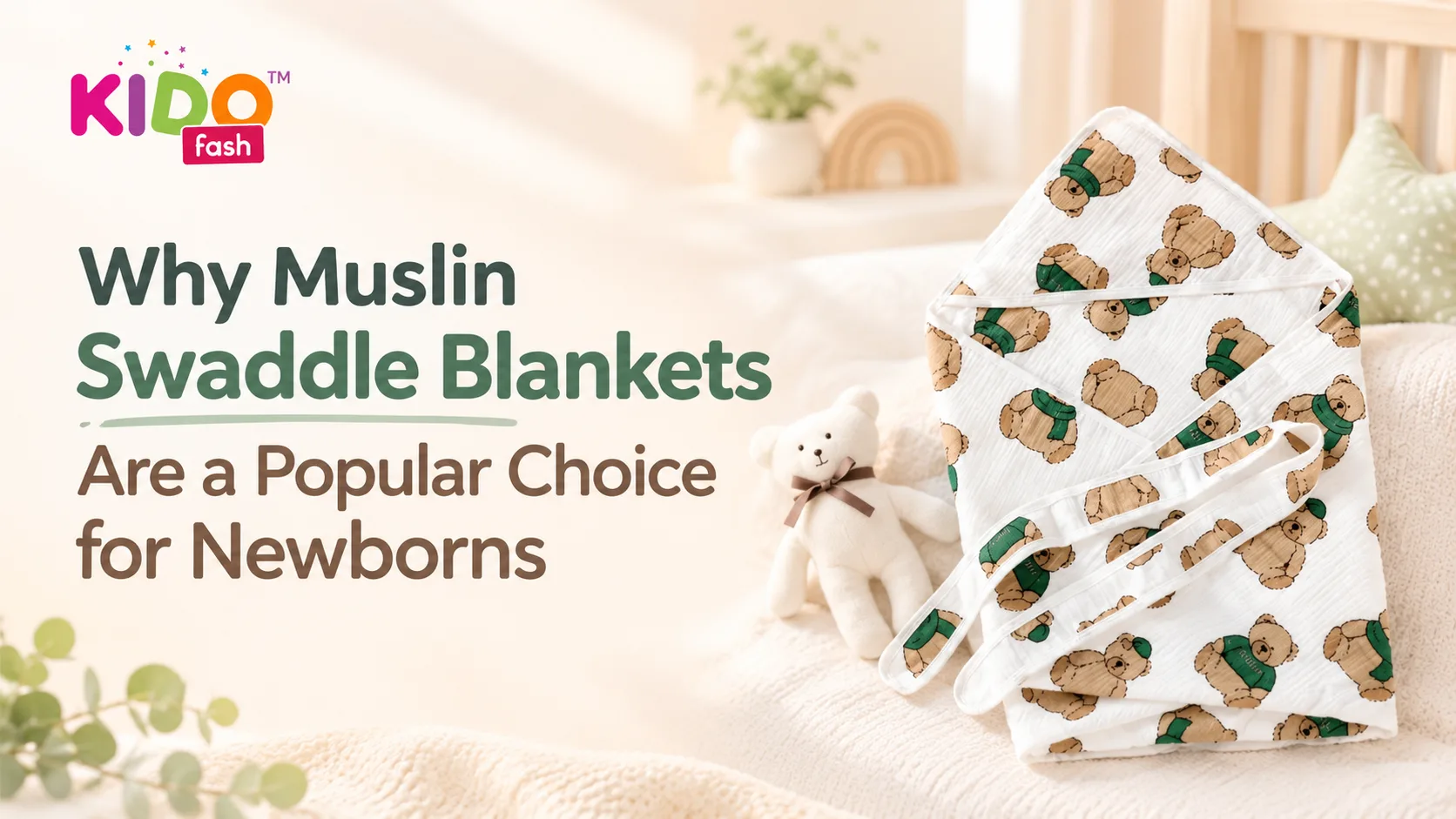
Quick Summary: Muslin swaddle blankets are light, breathable, and get softer with washing, which is why many parents choose them for newborns. This article covers fabric basics, safe swaddling and when to stop, a four-step wrap, buying checks, care, gifting, and the most relevant questions.
Introduction
Ask any new parent what went into the hospital bag, and a muslin cloth is usually the first answer. Swaddle blankets are among the first things families buy, and muslin is the fabric most of them choose. The reason is simple: newborns startle easily, feel temperature changes quickly, and have skin that reacts to rough textures. A good muslin blanket handles all three. This article explains why muslin blankets suit newborns so well. You will learn how the fabric is made, how it handles heat, and why it softens with every wash. We also cover safe swaddling steps, the right time to stop, and a short checklist for buying a newborn blanket without guesswork. We also cover a few common mistakes and answer frequently asked questions. By the end, picking a swaddle you can trust should feel much easier. Let us start with what makes muslin different from other fabrics.
Why Newborns Settle Better in Swaddle Blankets
Newborns carry a startle reflex, called the Moro reflex, that sends their arms flying outward at sudden sounds or movement. It often wakes them. A snug swaddle keeps arms close and mimics the tight space of the womb, so many babies settle faster.
Swaddling is optional, and it does not suit every baby. Some dislike having their arms held. Watch your baby's cues and adjust.
Muslin suits this work because it drapes and folds easily, so you can wrap firmly around the chest without stiffness.
What Sets Muslin Apart From Other Fabrics
Muslin is a plain-weave cotton fabric with a loose, open structure. The threads are slightly apart, so air passes through the cloth easily. Flannel and jersey knits pack their fibres tighter and hold more heat.
Most cotton muslin swaddle blankets use 100% cotton, though some brands blend in bamboo viscose. Check the label, because "muslin" names the weave, not the fibre.
You will also see single-layer and multi-layer versions. Single-layer cloth suits warm weather. Two or more layers add a little weight for cooler rooms.
Staying Cool Without Losing Comfort
Overheating is a recognised risk factor linked to sudden infant death syndrome, so fabric choice matters for sleep. A breathable blanket lets heat and moisture escape, which keeps your baby from turning clammy. Muslin swaddle blankets support comfort in three ways:
- Open weave: Air moves through the cloth.
- Lightweight: A single layer adds little bulk.
- Moisture handling: Cotton absorbs sweat and spit-up quickly.
Together, these keep a swaddled baby comfortable. Your best check is simple. Feel the back of your baby's neck. If it feels damp or hot, remove a layer. Keep the room at a comfortable temperature and dress your baby in one light layer beneath the swaddle.
Why Softness of the Swaddle Blankets Improves With Every Wash
New muslin can feel slightly crisp. After a wash or two, the fibres relax, and the cloth turns soft and gently crinkled. Newborn skin is thin and sensitive, so gentle texture matters. Three habits protect that softness:
- Wash the blanket before first use to remove finishing residue.
- Use a mild, fragrance-free detergent.
- Skip fabric softener, which can coat fibres and reduce absorbency.
These small steps keep the cloth soft for months. Muslin also dries quickly, which helps when spit-ups pile up.
One Blanket, Many Uses
Muslin swaddle blankets are generous in size, often around 110 to 120 cm square. That space gives parents plenty of uses beyond swaddling:
- A light shade over the pram, with airflow kept open
- A nursing cover during feeds
- A burp cloth over the shoulder
- A soft layer for tummy time on the floor
One light blanket in the bag handles a surprising number of situations. That is why many families buy a set of three or four.
A Simple Guide to Swaddling
The diamond fold of the swaddle blanket is the most common method for a newborn baby blanket. Follow the steps, then check the safety rules below:
1. The Wrapping Method
- Lay the blanket flat as a diamond. Fold the top corner down about 15 cm.
- Place your baby on their back, with shoulders just below the fold.
- Hold the left arm straight, pull the left corner across the chest, and tuck it under the right side.
- Fold the bottom corner up loosely toward the chest.
- Bring the right corner across and tuck it in.
2. Safety Rules to Follow
- Always lay a swaddled baby on their back to sleep.
- Keep the wrap of the swaddle blanket snug at the chest but loose at the hips, so the legs can bend up and out. You should fit two or three fingers between the chest and the cloth.
- Keep fabric below the neck and away from the face.
- Avoid swaddling in a hot room.
Knowing When to Stop Swaddling
Swaddling should only be done in early weeks. Stop when your baby shows signs of trying to roll, which can begin around two months, sometimes earlier. A swaddled baby who rolls onto the tummy cannot use their arms to push up, which makes this the safety line.
Many families then move to a sleep sack. If your baby resists the change, try one arm out for a few nights before freeing both. Keep the muslin for its other uses.
Common Mistakes To Avoid
Even good swaddle blankets cause problems when used the wrong way. Watch for these:
- Wrapping too tightly around the hips, which can affect hip development
- Leaving loose fabric near the face
- Layering a thick outfit under the swaddle in warm weather
- Continuing to swaddle after rolling begins
- Washing with softener
Each mistake is easy to fix once you spot it.
A Short Checklist Before You Buy
Swaddle blankets for newborns look alike on a shelf, but small details separate good ones from average ones. Use this list:
- Fibre content: Look for 100% cotton, or organic cotton muslin if you prefer it.
- Size: Around 110 to 120 cm square gives enough fabric for a secure wrap.
- Weave: Hold it to the light. It should look airy but not sparse.
- Edges: Neat stitching stops fraying after repeated washes.
- Certification: Where a brand claims OEKO-TEX Standard 100, ask to see proof.
- Layers: Pick single-layer for hot climates and double-layer for cooler nights.
A few minutes spent on these points saves money and avoids returns.
Conclusion
Good muslin swaddle blankets proves its worth because it does a few things well. It breathes, it softens, and it adapts to a growing baby. It also helps newborns settle. Check the weave, the size, and the safety basics before you buy, and stop swaddling once your baby starts rolling. Kidofash offers baby essentials made with this kind of everyday practicality in mind. Pick a blanket that fits your routine, and trust your instincts about what keeps your baby comfortable.
FAQs
Q. My baby keeps breaking out of the swaddle. Am I doing it wrong?
Ans. Probably not. Most escapes happen because the blanket is too small or the tuck is too loose at the chest. Try a larger cloth and tuck firmly across the chest, but keep the hips loose. Some babies simply dislike being wrapped, and that is fine.
Q. Muslin looks so thin. Will my baby feel cold at night?
Ans. A single layer of muslin swaddle blanket is light by design, so on cool nights or in an air-conditioned room it may not be enough. Add warmth by choosing a double-layer cloth or dressing your baby in one extra light layer underneath. Avoid piling on loose blankets. Check the back of your baby’s neck. Warm and dry means the layers are right.
Q. How do I tell if my baby is too hot inside the swaddle?
Ans. For this, you need to look for a damp neck or hair, flushed cheeks, fast breathing, or fussing that began after wrapping. Cold hands and feet are not a reliable guide, because newborns often have them. If you see these signs, unwrap and remove a layer.
Q. Is it okay to swaddle with my baby’s hands up near the face?
Ans. Yes, it's completely okay to swaddle with your baby’s hand near the face. Some babies settle better when they can reach their mouth or hands. Make sure the wrap stays snug around the chest, so the cloth cannot ride up over the nose or mouth, and keep fabric below the chin.
Q. Why did my new muslin blanket shrink a little in the first wash?
Ans. Cotton often shrinks slightly the first time it meets water, especially in a hot wash or hot dryer. That is why parents wash it before first use. Choose a gentle cycle, and expect the soft, crinkled texture that muslin develops. It is not a defect.