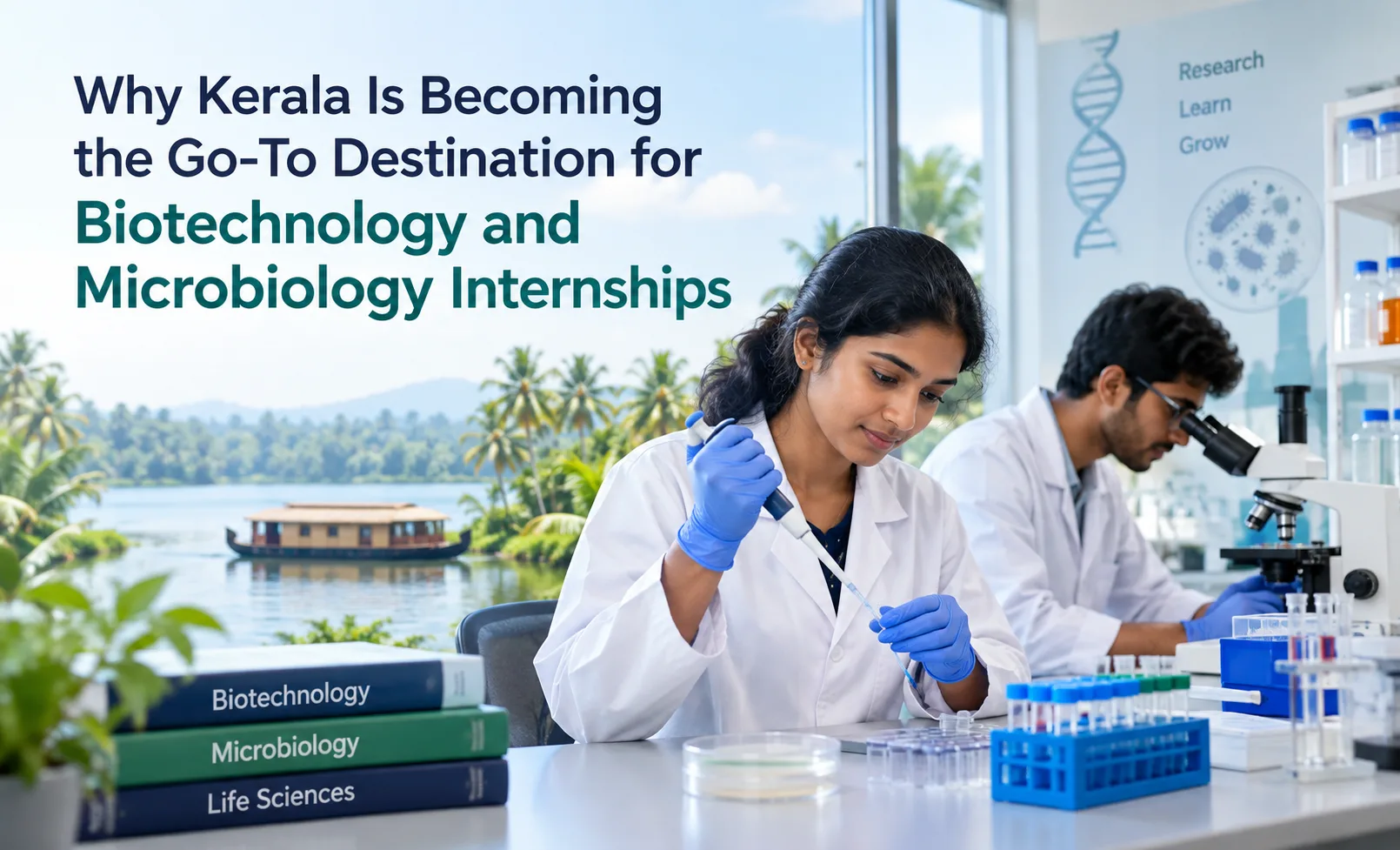
Kerala's life sciences sector has quietly transformed over the past few years. What was once a state known mainly for its healthcare system is now emerging as a genuine hub for biotechnology research, training, and hands-on scientific education. For students trying to figure out where to gain real-world lab experience, that shift matters.
If you're a life sciences student weighing your options, here's why Kerala deserves a serious look.
A Growing Biotechnology Ecosystem
Kerala is home to a growing number of research-focused organizations, diagnostic labs, and training institutes working across genomics, molecular biology, and microbiology. A well-established biotechnology company in Kerala doesn't just offer employment — many also open their doors to students through structured internship programs, giving them a rare chance to work alongside real scientists on real projects rather than simulated coursework.
This matters because internships are often where theoretical knowledge either clicks into place or falls apart. Hands-on exposure to lab equipment, protocols, and real sample handling builds confidence that classroom learning alone can't provide.
What a Biotechnology Internship Offers
A biotechnology internship in Kerala typically exposes students to:
- Molecular biology techniques like PCR, gel electrophoresis, and DNA extraction
- Lab safety protocols and standard operating procedures
- Exposure to research workflows, from sample prep to data interpretation
- Mentorship from working scientists and lab professionals
- A clearer sense of which specialization actually suits them
For many students, this is the first time they see how a research lab functions day to day, which makes career decisions far easier later on.
Why Microbiology Internships Matter Too
Alongside biotechnology, a microbiology internship in Kerala offers a slightly different but equally valuable experience. These programs typically focus on:
- Culturing and identifying microorganisms
- Understanding infection pathways and diagnostic techniques
- Working with clinical or environmental samples
- Building foundational skills for hospital labs, diagnostic centers, or public health roles
Students often benefit from exposure to both tracks before specializing, since biotechnology and microbiology overlap more than most people expect — especially in genomics-driven research.
What to Look for in an Internship
Not all internships are created equal. Before committing your time, consider:
- Hands-on lab access — Will you actually run experiments, or just observe?
- Mentorship quality — Are experienced scientists guiding you, not just supervising?
- Relevance to your goals — Does it align with where you want your career to go?
- Duration and structure — Short internships build awareness; longer ones build real competency.
- Real project exposure — Internships tied to ongoing research add far more value to your resume.
Building a Career, Not Just a Resume Line
Kerala's expanding network of biotechnology and microbiology training opportunities means students no longer need to travel to metro cities for meaningful lab experience. Organizations like Veta Genomics are part of this shift, offering internship and training programs designed to give students genuine exposure to genomics and molecular lab work — not just a certificate.
Whether you're drawn to biotechnology research or microbiology diagnostics, the internship you choose should do more than fill a summer. It should sharpen your skills, clarify your career direction, and give you something real to talk about in your next interview.