A multi-day wedding celebration in Jaipur gives families something that a rushed single-day function often cannot: time. Time for relatives to arrive comfortably, time for different traditions to be enjoyed properly, time for two families to know each other, and time for the couple to absorb one of the biggest moments of their lives.
A wedding is not only an event on a stage. It is a meeting of people, stories, customs, friendships, and emotions. When celebrations are spread across two or three days at a resort, every function can have its own mood without placing unnecessary pressure on the family or guests.
Lohagarh Fort Resort offers an atmosphere where wedding celebrations can unfold at a comfortable pace, with accommodation and event spaces available within one destination-style setting.
Why choose a multi-day wedding celebration in Jaipur?
The biggest advantage is that the wedding no longer feels like a race against time. Guests do not need to arrive, attend the ceremony, eat dinner, and leave within a few hours. They can settle in, meet relatives, take part in rituals, and enjoy the setting.
A multi-day format also allows the bride and groom to celebrate every important moment instead of combining everything into one packed schedule. Mehendi, haldi, sangeet, pheras, reception, and farewell rituals can all receive the attention they deserve.
The celebration starts feeling like a family holiday with a wedding at its heart.
Day one: arrival, reunions, and a gentle beginning
The first day should not feel overly demanding. Guests may be travelling from Jaipur, Delhi, other parts of Rajasthan, or different cities across India. The aim is to let everyone settle in comfortably.
A welcome lunch or high tea can become the first gathering point. This is where cousins reconnect, elders meet one another, and the energy of the wedding begins naturally. Instead of immediately moving into a large formal function, families can organise a relaxed evening such as a welcome dinner, folk music performance, or informal cocktail gathering.
This slower start is especially helpful for guests who arrive with children or elderly family members. It gives everyone time to adjust before the more energetic functions begin.
Day two: colourful rituals and shared happiness
The second day can be dedicated to rituals that are joyful, informal, and full of participation. Mehendi and haldi are no longer quick ceremonies squeezed between travel and makeup schedules. They can become experiences where friends and family spend time together.
A daytime mehendi can use vibrant décor, floral details, music, live food counters, and open spaces where guests can move freely. The haldi function can be designed as a warm family gathering instead of a short photo opportunity. When there is enough time, people participate more naturally and the photographs feel more genuine.
Later in the evening, the sangeet can shift the mood completely. Music, performances, speeches, and dance become much more enjoyable when guests are already settled at the venue and do not have to worry about returning to distant hotels.
A 5-star resort in Jaipur can make this transition from daytime ritual to evening celebration feel seamless, with separate spaces offering different visual moods.
Day three: the wedding ceremony with calm focus
The actual wedding day deserves a calm and well-paced schedule. The bride and groom should not begin the day exhausted from a late night, and families should not be rushing through essential rituals.
A peaceful breakfast, sufficient preparation time, easy access to rooms, and a well-organised ceremony space can reduce stress greatly. When guests are staying within the venue, they can arrive for the main ceremony without transport delays or confusion.
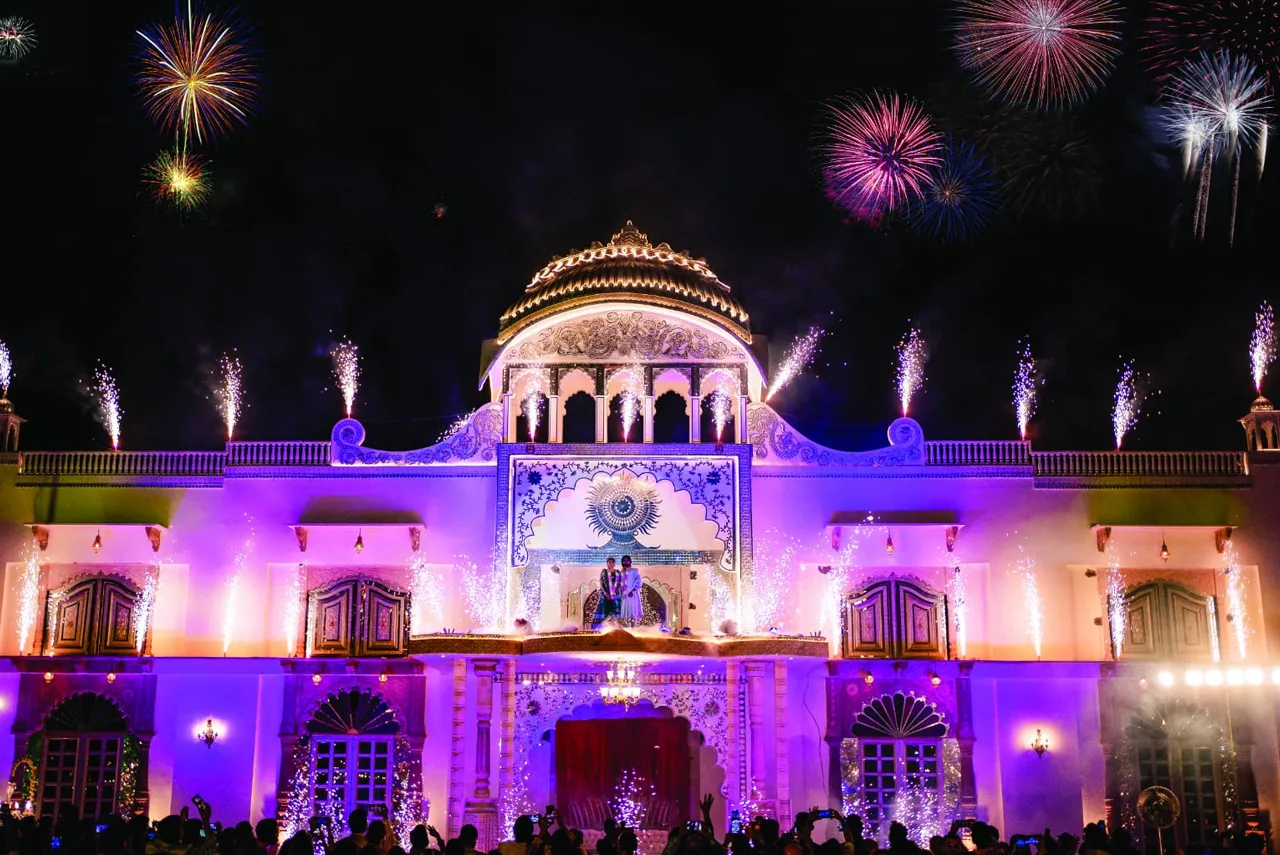
The wedding itself can be planned around the family’s traditions. Some may choose a daytime ceremony with a bright garden setting. Others may prefer evening pheras with lights, flowers, and a more dramatic atmosphere. The important point is that the setup should feel personal rather than copied from another wedding.
A thoughtfully chosen heritage wedding venue near Jaipur can add warmth and character to the ceremony while still allowing the couple’s own style to stand out.
A separate reception creates a more relaxed celebration
When the reception is separated from the wedding ceremony, both events feel more enjoyable. The wedding remains focused on family rituals and blessings, while the reception can become a more social evening for meeting guests, taking photographs, and enjoying dinner.
The couple does not have to rush through greetings immediately after pheras. They have time to rest, change, and enter the reception with fresh energy. Guests also appreciate a smoother experience, especially when the stage, dining areas, and seating are planned with enough space.
A multi-day wedding makes room for this comfort. It lets each celebration have a beginning, middle, and conclusion without merging every emotion into one long day.
Better bonding between two families
The early functions of a wedding are often where the most meaningful relationships form. A shared breakfast, a casual game, a mehendi conversation, or a group dinner can help both families become comfortable with one another.
This matters because weddings are about more than two people. Parents, siblings, relatives, and close friends all become part of a new relationship. When everyone stays at the same place, these interactions happen naturally.
The bride and groom also benefit. Instead of meeting every guest for only a few seconds on stage, they may share quiet conversations with people who have travelled to celebrate with them.
More time means better photographs and memories
A rushed wedding photography schedule can make every moment feel staged. A multi-day plan gives photographers enough opportunity to capture real expressions, spontaneous conversations, and the smaller details that matter later.
Photos from a wedding are not only about the couple standing on stage. They include a grandmother watching a ritual, cousins laughing during mehendi, parents sharing an emotional moment, friends preparing for sangeet, and families gathering over meals.
These unscripted memories are often the most valuable ones. A venue with gardens, heritage-inspired architecture, and varied event areas creates a natural backdrop for them.
Planning becomes easier for the host family
At first, a multi-day wedding may seem more complicated. In reality, it can make planning easier because the schedule is distributed. Instead of managing every ritual, guest arrival, meal, and function in one short window, the family can organise each part properly.
Accommodation, meals, functions, and guest support can be coordinated in advance. Guests know where to stay and where to gather. The wedding planner and venue team can manage transitions more smoothly. The host family gets more time to enjoy rather than constantly solve last-minute problems.
A wedding that remains in everyone’s heart
The best weddings are remembered for how they felt. Guests may forget the exact flower arrangement or song list, but they remember whether they felt welcomed, included, and happy.
A resort wedding itinerary in Jaipur gives the family a chance to create that feeling over several unhurried days. It turns ceremonies into experiences, guests into participants, and a wedding into a shared chapter that people talk about for years.