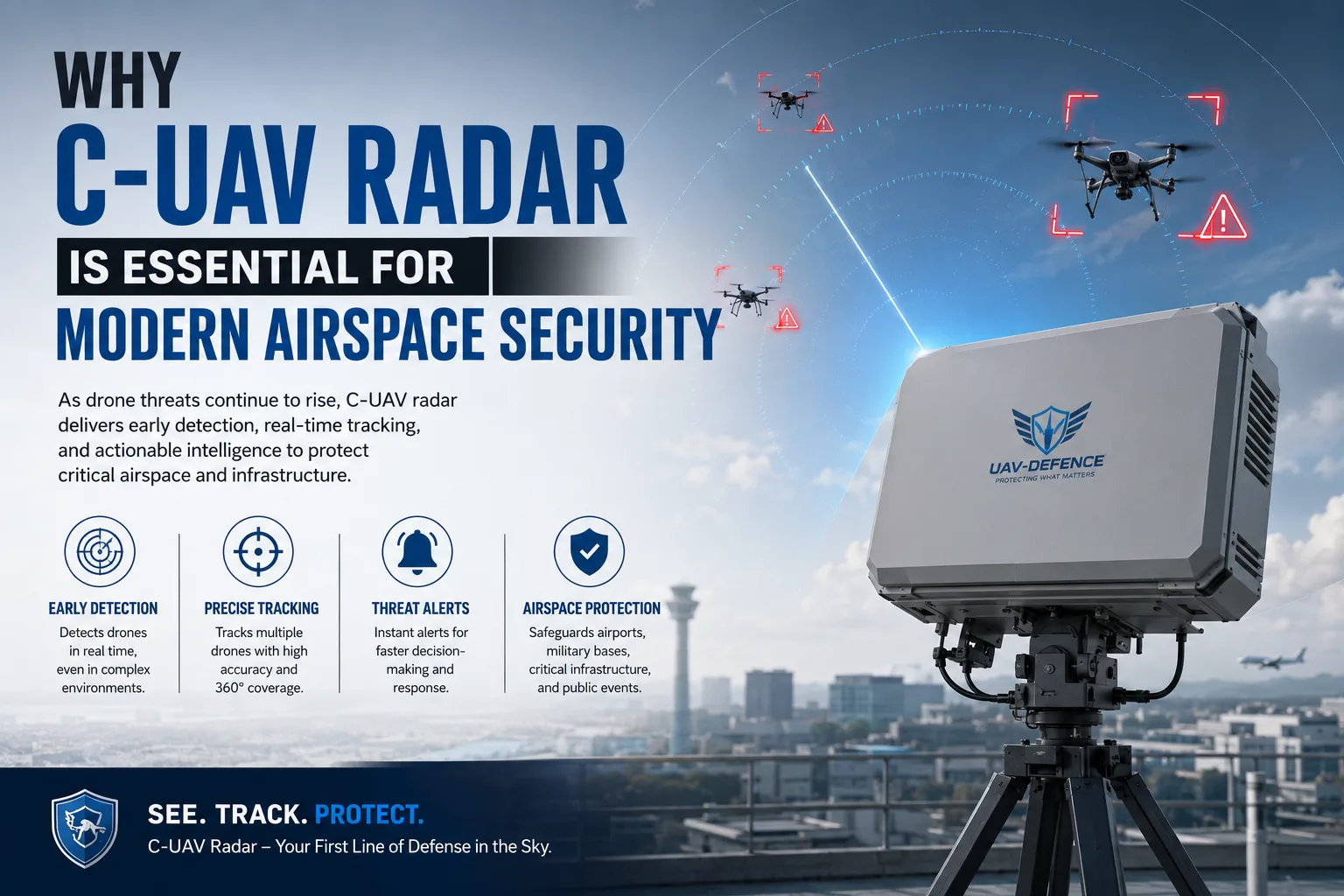
Unmanned aerial vehicles tend to fly low and have low radar cross-sections, making them invisible to many air defence systems. Adding a dedicated C-UAV radar to the security chain enables persistent domain awareness that can track both small UAVs and larger threats.
Small commercial and custom-built drones can sometimes be hard to detect. With the current security systems most places have, it's hard to see during the night. Having a specific radar dedicated to keeping track of drones in a certain perimeter would help fill that gap in security.
The Role of Radar in Multi-Layered Defence
Although optical sensors and radio-frequency detectors could provide some useful information, they nevertheless have certain disadvantages. One drawback of using cameras is their dependence on good visibility. Another limitation is presented by passive radio-frequency scanners, which are unable to pick up signals from drones that operate autonomously. On the other hand, radar can track targets independently.
The radar works continuously in all weather conditions, such as rain and fog, at night and follows several objects at a time. The radar gives warnings about the direction, speed, and height of the targeted object, giving enough time to security personnel to take necessary actions against the intruder.
Integration with Automated Command Systems
By transmitting location data to central command software, UAV defence platforms can relay precise information on the location of the UAV seconds after an unauthorised aircraft enters the area. Automation of this process removes potential human error during a tense security operation.
Prompt target cueing enables electro-optical cameras to acquire incoming drones. Moreover, it allows the directional radio-frequency jammers to use the spectrum most needed to neutralise the threat while leaving the rest of the spectrum free for other users at the facility.
Selecting Modern Detection Hardware
Selecting hardware designed for small drone signatures allows you to maximise detection performance while minimising nuisance alarms from birds and other ground traffic. Specialised systems isolate legitimate drone threats to enable fast response across mission-critical installations.
For sites that require enhanced protection from low-flying objects, it is critical to rely on professional security companies that are familiar with the latest technological advances and methods in the field. UAV Defence has been offering surveillance services that safeguard valuable assets and secure critical sites.
By taking measures of comprehensive UAV defence, it is possible to protect airspace from emerging drone threats.
Frequently Asked Questions
What Is a C-UAV Radar?
It is a specialised radar designed for detecting, tracking and identifying small unmanned aircraft operating in the lower airspace.
Can Standard Air Traffic Control Radar Spot Small Drones?
No. Air traffic control radars suppress low-speed low-altitude targets with a small cross-section in order to avoid clutter on the display.
How Far Can Counter-Drone Radar Detect Targets?
The maximum detection range depends on the target’s size and power of the transmitter. It can vary from 1.5 km for a micro-drone to 10 km for a fixed-wing aircraft.