When homeowners plan a new patio, walkway, or driveway, they often focus on the pavers they'll see every day. However, what lies beneath the surface plays the biggest role in determining how well that hardscape performs over time.
In Atkinson, NH, and throughout Southern New Hampshire, seasonal freeze-thaw cycles, varying soil conditions, and heavy rainfall can all affect the stability of hardscape installations. That's why experienced contractors place as much emphasis on base preparation as they do on the finished appearance.
A properly prepared foundation helps reduce settling, improves drainage, and supports the long-term performance of patios, walkways, retaining walls, and driveways.
How Deep Should a Paver Base Be in Southern New Hampshire?
There isn't a single base depth that works for every project. The appropriate depth depends on several factors, including the intended use of the hardscape, existing soil conditions, drainage, and anticipated loads.
According to guidance from the Concrete Masonry & Hardscapes Association (CMHA):
- Patios and walkways generally require about 4 inches of compacted aggregate base under suitable site conditions.
- Residential driveways typically require at least 6 inches of compacted aggregate because they must support vehicle traffic.
- Areas with poor drainage, weaker soils, or greater frost susceptibility may require a thicker base, based on site evaluation and engineering considerations.
Rather than applying the same specification to every project, qualified hardscaping contractors evaluate each property individually before determining the proper excavation depth.
Why Soil Conditions Matter
No two properties in Southern New Hampshire have identical ground conditions. Understanding the existing soil helps determine how the base should be constructed.
Well-Drained Sandy Loam
Sandy loam generally drains efficiently and provides stable support for residential hardscapes. When properly compacted, these soils often require fewer adjustments to the standard base design.
Rocky or Granite-Derived Soil
Many areas around Atkinson contain granite-derived soils, ledge, or rocky subgrades. These conditions often provide excellent load-bearing capacity but may require additional excavation, grading, or drainage planning to achieve a consistent foundation.
Clay or Poorly Draining Soil
Sites with finer-textured or poorly draining soils retain moisture longer. Since excess moisture contributes to frost movement, contractors may increase aggregate depth or use geotextile fabric to improve stability and drainage where appropriate.
Understanding Frost Heave
One of the biggest challenges for hardscapes in New Hampshire is frost heave.
Frost heave occurs when moisture within frost-susceptible soils freezes and expands. As temperatures rise, the ground settles again. Repeated freeze-thaw cycles can gradually cause pavers to shift or become uneven.
Potential problems include:
- Uneven patios and walkways
- Raised or sunken pavers
- Trip hazards
- Loose edging
- Standing water
- Premature surface deterioration
While no hardscape is completely immune to ground movement, proper excavation, drainage, and a well-compacted aggregate base significantly reduce the risk of frost-related damage.
Why Proper Compaction Is Essential
Base depth alone does not determine the strength of a hardscape.
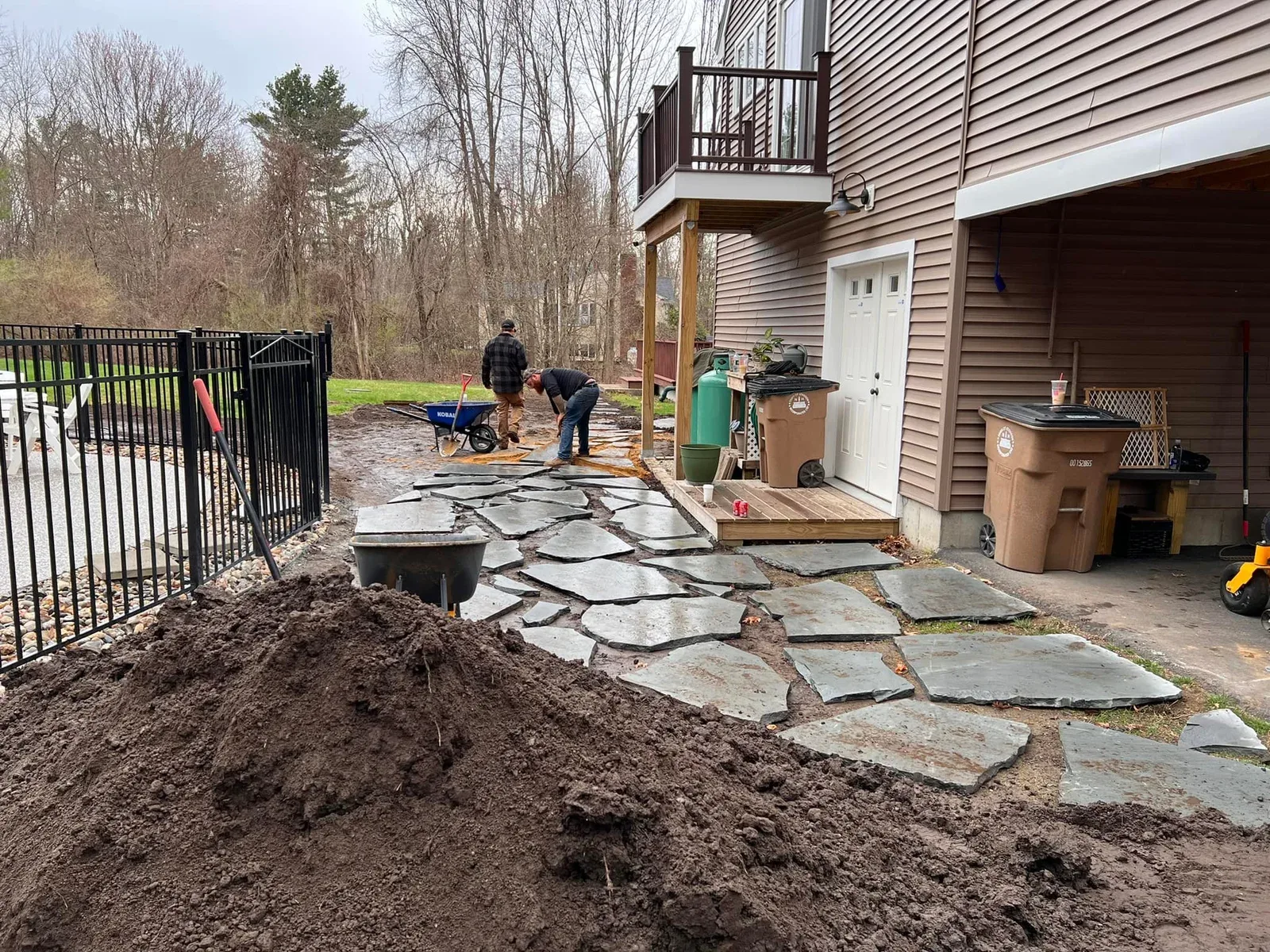
Professional installers place aggregate in multiple thin layers, known as lifts, and compact each layer thoroughly using a vibrating plate compactor. This process creates a dense, stable foundation capable of supporting the finished surface.
Insufficient compaction can allow the base to settle after installation, leading to uneven pavers and costly repairs.
Drainage Is Just as Important as the Base
Inadequate drainage is one of the most common causes of premature hardscape problems.
Proper drainage design helps prevent water from collecting beneath the pavers, reducing the likelihood of settlement and frost-related movement.
Experienced contractors typically:
- Grade the surface to direct water away from structures
- Use free-draining aggregate materials
- Maintain consistent slopes
- Install edge restraints to preserve structural integrity
- Evaluate natural drainage patterns before construction begins
Managing water effectively contributes to a longer-lasting installation.
Can a Thinner Base Save Money?
Reducing excavation or using less aggregate may lower the initial installation cost, but it often increases the likelihood of future problems.
Common issues associated with inadequate base preparation include:
- Settling or shifting pavers
- Surface depressions
- Uneven walkways
- Edge movement
- Drainage problems
- Increased repair costs
Investing in proper site preparation from the beginning is typically more cost-effective than repairing or rebuilding a failed installation later.
What About Weed Growth?
Many homeowners believe weeds grow up through the gravel base. In reality, weeds typically establish when wind-blown seeds settle into the joints between pavers and organic debris accumulates over time.
A properly installed hardscape with stable joints, quality jointing material, and routine maintenance helps reduce weed growth and keeps the surface looking its best.
Questions to Ask Before Hiring a Hardscaping Contractor
Choosing the right contractor is just as important as selecting the right materials.
Before starting your project, consider asking:
- How do you determine the appropriate base depth?
- How do you account for Southern New Hampshire's freeze-thaw climate?
- What type of aggregate do you use for the base?
- Do you compact the base in multiple lifts?
- How will you manage drainage on my property?
- Will you evaluate soil conditions before excavation begins?
A knowledgeable contractor should be able to explain their installation process and recommend solutions based on your property's specific conditions.
Final Thoughts
A professionally installed hardscape begins with careful planning beneath the surface. Proper excavation, site evaluation, drainage, aggregate selection, and thorough compaction all contribute to a patio, walkway, or driveway that remains attractive and functional for years.
Whether you're installing a new outdoor living space or replacing an aging hardscape, working with an experienced hardscaping contractor in Atkinson, NH who prioritizes proper base preparation can help protect your investment and reduce the need for future repairs.
Frequently Asked Questions
How deep should a paver base be in Southern New Hampshire?
For many residential projects, patios and walkways commonly use about 4 inches of compacted aggregate, while residential driveways generally require at least 6 inches. The final depth depends on soil conditions, drainage, and expected loads.
Why is frost heave a concern in New Hampshire?
Freeze-thaw cycles cause moisture within the soil to expand and contract, which can lift or settle pavers if the base and drainage are not properly designed.
Do rocky soils require special preparation?
Yes. Granite-derived or rocky soils may require additional excavation, grading, or drainage planning to create a stable and consistent foundation.
Does proper base preparation prevent weeds?
Not entirely. Most weeds grow from seeds that settle in the paver joints rather than through the base. Proper installation and regular maintenance help minimize weed growth.
Why is compaction important?
Compacting the aggregate base in multiple layers creates a stable foundation that helps reduce settling, improves load distribution, and supports long-term hardscape performance.