
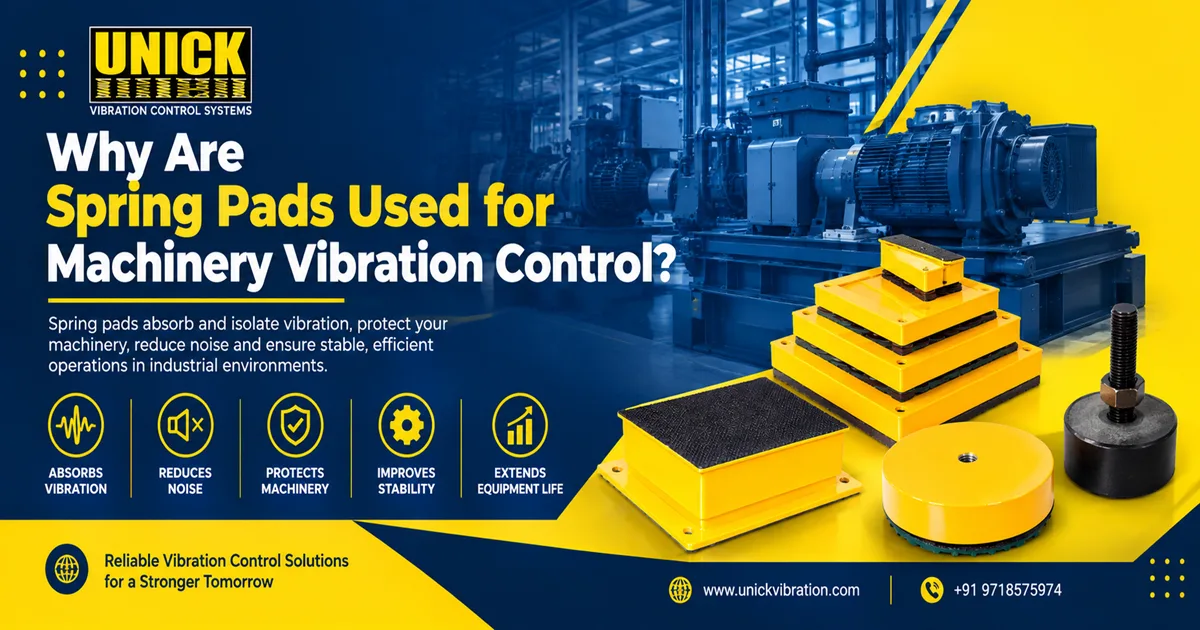
Why Are Spring Pads Used for Machinery Vibration Control? This question becomes important when a machine produces continuous movement, noise or vibration during operation. Heavy equipment can transfer dynamic forces into the floor, foundation and nearby structures. Spring pads create an isolation layer between the machine and its supporting surface, helping reduce this transfer and maintain more stable operating conditions.
How Machinery Vibration Affects Industrial Operations
Vibration is common in machines containing motors, rotating components, compressors, blowers or other moving parts. A small amount of movement may be normal, but excessive vibration can create several operational problems.
It may loosen fasteners, affect machine alignment, increase noise and place additional stress on components. Vibration can also travel through concrete floors and disturb nearby machines, workstations or building areas. In precision operations, uncontrolled movement may affect cutting accuracy, product quality and repeatability.
The source of vibration can vary. It may result from an unbalanced rotating part, poor alignment, uneven load distribution, worn components, an unsuitable foundation or resonance at a particular operating speed. Before selecting any isolation product, the actual source and behaviour of the vibration should be understood.
Why Are Spring Pads Used for Machinery Vibration Control?
Spring pads are used because they combine load support with vibration isolation. A correctly selected pad compresses under the weight of a machine and responds to the dynamic forces created during operation. Instead of allowing all movement to pass directly into the floor, the pad absorbs and isolates part of that energy.
This makes spring-based isolation useful for machines that generate low-frequency vibration or require greater deflection than a basic rubber pad can provide. The spring element allows controlled movement while helping prevent vibration from spreading through the supporting structure.
However, successful isolation depends on proper selection. A pad that is too stiff may not provide enough isolation, while an under-rated pad may compress excessively or affect machine stability.
How Do Spring Pads Work?
A spring pad normally contains a load-bearing spring assembly along with supporting plates and protective materials. Depending on the design, it may also include rubber or elastomeric layers to control high-frequency vibration and reduce metal-to-metal contact.
When the machine operates, the spring moves slightly in response to changing forces. This controlled deflection separates the vibration generated by the equipment from the floor. The aim is not to stop every movement inside the machine but to reduce the amount of energy transferred outside it.
The effectiveness of the system depends on the relationship between the machine’s operating frequency and the natural frequency of the isolation arrangement. Better separation between these frequencies generally results in more effective isolation.
Main Benefits of Using Spring Pads
Reduced vibration transfer
Spring isolation helps limit the movement passing from the machine into the floor, foundation and surrounding structure. This can be especially useful when several machines operate within the same production area.
Lower operational noise
Structure-borne vibration often creates noise in floors, walls and nearby metal components. Reducing vibration transfer may also lower the secondary noise produced around the equipment.
Better machine stability
Correctly selected pads support the machine at its load-bearing points and help maintain balanced operating conditions. This is important for machines with uneven weight distribution.
Protection for nearby equipment
Vibration from one machine can affect sensitive equipment installed nearby. Isolation helps reduce the possibility of movement travelling across a shared floor or supporting structure.
Less stress on structural surfaces
Repeated dynamic forces can place unnecessary stress on concrete foundations and supporting frames. A suitable isolation arrangement helps reduce the direct transfer of these forces.
Machinery Commonly Installed on Spring Pads
Spring pads can be considered for many types of industrial equipment, including:
- Compressors and air-handling equipment
- Blowers and industrial fans
- Generators and power equipment
- Pumps and motor assemblies
- Textile and embroidery machines
- Printing and packaging equipment
- Hydraulic machinery
- HVAC systems
- Heavy production machines
The same pad should not be selected for every application. Spring Pads for Heavy Machine installations must be chosen according to actual load, speed, vibration frequency and mounting conditions.
Important Factors in Spring Pad Selection
Machine weight
The total machine weight and the load at each mounting point must be calculated. Weight is not always distributed evenly, so each pad may carry a different load.
Operating speed
Machines operating at different speeds produce different vibration frequencies. This information helps determine the required spring stiffness and deflection.
Centre of gravity
A machine with a high or uneven centre of gravity may require additional attention to stability. Excessively soft isolation can allow unwanted movement during starting, stopping or load changes.
Number of mounting points
The number and position of mounting points affect load distribution. Pads should be placed under structurally suitable areas of the machine base.
Floor and foundation condition
The supporting surface should be level, strong and capable of carrying the machine load. Damaged or uneven floors can reduce the effectiveness of the installation.
Environmental conditions
Oil, moisture, chemicals, heat and outdoor exposure may affect pad materials. The selected product should be suitable for the working environment.
For technically demanding installations, consulting an experienced Industrial spring pad supplier in India can help businesses compare load capacity, spring deflection and mounting requirements before making a selection.
Installation and Maintenance Considerations
Before installation, the machine base and floor should be inspected. Each mounting location must be clean, level and able to support the expected load. The machine should be lowered onto the pads carefully so that sudden impact does not damage the spring assembly.
After installation, the equipment should be checked for proper levelling and equal support. Loose contact at one mounting point can cause rocking or uneven loading. Fasteners, clearances and connected pipes or ducts should also be inspected because rigid external connections may create an alternative path for vibration.
Periodic checks are useful, particularly during the first few weeks of operation. Any unusual compression, corrosion, shifting or change in machine level should be investigated. Maintenance requirements will depend on the pad design and operating environment.
When Spring Pads May Not Be the Right Choice
Spring isolation is not suitable for every vibration problem. Machines that create strong horizontal forces, impact loads or sudden movement may require restraints, dampers or a different mounting arrangement. Some high-frequency applications may be controlled effectively with rubber, cork or elastomeric products.
Vibration caused by worn bearings, misalignment, imbalance or a damaged machine component should not be treated only by placing pads underneath the equipment. The mechanical fault should be corrected first. Isolation products are most effective when the machine itself is in proper operating condition.
Making a Practical Selection
The right vibration-control solution should be based on measurement and operating conditions rather than product appearance alone. Machine weight, speed, frequency, mounting position and surrounding structure all influence performance.
Unick Vibration offers different vibration-isolation products for industrial machinery, but the final selection should always match the technical needs of the equipment. Businesses dealing with persistent machine movement or structure-borne noise should first inspect the source of the problem and then choose a suitable mounting system with proper technical guidance.