A fuel tank rarely fails all at once. It gives warnings for months or years first: a few more water-drain cycles than last year, a filter that clogs faster, a delivery schedule that keeps getting tighter. Businesses that get caught off guard usually see those signs and file them under “deal with it later.”
Here is how to tell when an existing system has stopped doing its job, and what to evaluate before choosing new fuel storage solutions.
You are running out of capacity
The clearest signal is operational. If deliveries have crept from weekly to twice a week, or someone is checking tank levels nervously before a long weekend, the tank is too small for the business it now supports.
Undersized storage costs money in quiet ways. More frequent deliveries add coordination time and sometimes fees. A tank that sits near empty leaves no buffer for a supply disruption or a storm. Small-volume orders also make it harder to take advantage of favorable pricing.
A practical benchmark is five to ten days of average consumption, plus headroom for peak periods. If your current tank holds three days of fuel, growth has outrun your storage. Diesel Direct’s skid tanks range from 250 to 10,000 gallons, with ground tanks up to 50,000 gallons for heavy, steady demand, so capacity can match current use rather than what the business needed when the old tank went in.
The fuel keeps getting contaminated
Repeated contamination usually points to the tank, not the fuel.
Water is the most common culprit. It enters through condensation, worn seals, damaged vents, or loose fill caps, then settles at the bottom of the tank. Once there, it feeds microbial growth that forms sludge, clogs filters, and corrodes tank walls and fuel systems. Older single-wall steel tanks with internal rust are especially prone to this cycle.
If you are draining water more often, replacing filters early, or seeing equipment stall from fuel problems, cleaning and treating the fuel may only buy time. A tank that keeps letting water in will keep producing the same problem.
The tank shows physical wear
Walk around your tank and look honestly. Warning signs include:
- Rust, pitting, or flaking paint, particularly along seams and welds
- Weeping or staining at fittings, valves, or the base
- Dents, bulges, or a tank no longer sitting level on its supports
- Cracked hoses, a sticking nozzle, or a meter that no longer reads accurately
- Stained soil or dead vegetation near the tank
Any sign of active leaking calls for immediate attention, not a future upgrade plan. A leak is a fuel loss, an environmental liability, and potentially a reportable event.
Maintenance costs keep climbing
Every tank needs some upkeep. When repair bills, emergency service calls, and replaced components add up year over year, compare them to the cost of a new system.
Older pumps and meters wear out. Parts for discontinued equipment become harder to find. At some point, keeping an aging system running costs more than replacing it, and the replacement comes with modern safety features the old tank never had.
Your operation has changed
Sometimes the tank is fine, and the business has moved past it.
You may have added equipment that needs a different fuel, started using DEF, moved to multiple sites, or taken on projects that need portable storage instead of a fixed installation. A permanent tank at headquarters does little for crews working at temporary job sites, where a portable jobsite fuel tank or mobile tank trailer fits better.
New expectations around fuel tracking can also drive an upgrade. If you need to know exactly which vehicle drew how many gallons, an older tank without metering or access control cannot provide it.
What to evaluate before upgrading
Start with size, based on what you burn today and where the business is heading, not the volume of the tank you are retiring. Replacing a 1,000-gallon tank with another 1,000-gallon tank only resets the clock on the same capacity problem.
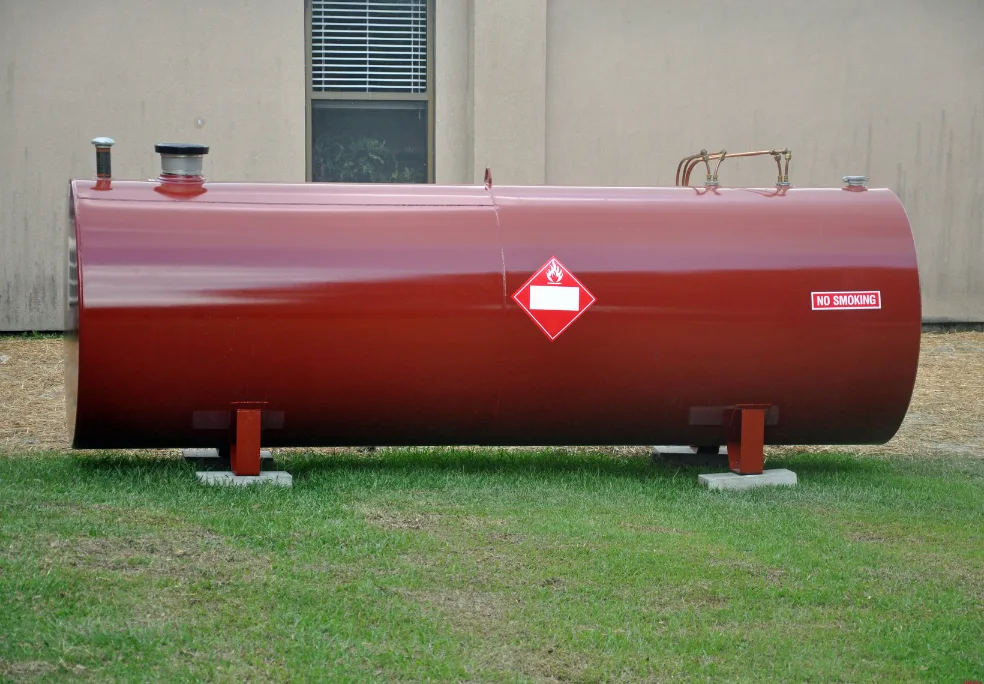
Construction comes next. Modern on-site fuel tanks use double-walled steel with secondary containment of at least 110 percent of capacity, protecting against external damage and giving you a margin if the inner wall ever fails. If your current tank is single-walled, this alone may justify the upgrade.
Then decide how much visibility you want. Tank monitoring reports levels automatically and can trigger refills before you run low. Secured dispensing, such as FUELLOC, counts every gallon and ties it to an approved vehicle or machine. Together they turn the tank from a fuel source into a fuel record. Check the practical hardware too: a built-in pump and meter, secure hose access, and lifting eyes and forklift pockets if the tank will ever move.
Review regulations carefully before installing anything. Facilities storing larger volumes above ground may fall under the federal Spill Prevention, Control, and Countermeasure rule, which generally applies once aggregate aboveground storage passes 1,320 gallons. State and local fire codes, environmental rules, and permits add their own requirements, and they differ from one jurisdiction to the next.
Finally, weigh renting against buying. Renting suits short projects and changing needs, while buying fits permanent, predictable consumption. Diesel Direct offers fuel storage solutions for both, including portable, permanent, mobile trailer, and specialty tanks, along with the deliveries that keep them filled.
Frequently Asked Questions
What signs indicate a fuel storage tank needs to be replaced?
Common signs include rust or corrosion, leaks or staining around fittings, recurring water or microbial contamination, rising repair costs, and inaccurate meters or worn pumps. A tank that can no longer keep up with consumption or lacks modern containment is also a strong candidate for replacement.
How does increased fuel demand affect existing storage capacity?
Higher demand drains a tank faster, requiring more frequent deliveries and leaving less buffer during supply disruptions or emergencies. A useful target is five to ten days of average consumption on hand. If your tank holds much less than that, it is likely undersized.
How often should commercial fuel storage tanks be inspected?
Many owners do a quick monthly visual check and a more thorough review each year, with formal inspections by a qualified inspector at intervals set by the tank’s standard, size, and type. Requirements vary by jurisdiction and regulation, so confirm the schedule that applies to your site.
What safety and regulatory requirements apply when upgrading fuel storage?
Look at secondary containment, overfill protection, labeling, and placement relative to buildings and drains. Larger aboveground storage may require a Spill Prevention, Control, and Countermeasure plan, and state and local fire and environmental codes may require permits. Check requirements before installation.
Can upgrading a fuel storage system reduce maintenance costs and fuel waste?
Yes. Properly sized modern fuel storage solutions reduce water intrusion and contamination, cut emergency repairs, and lower leak risk. Monitoring and secure dispensing also reduce fuel loss from overfills, runouts, and unauthorized use.