A small particle in flight has kinetic energy. The mass is low, but the speed is high. When it reaches the glasses, the energy doesn’t simply strike and remain there. As the lens bends a little, the force is spread throughout the material. Then the part that reaches your eye is much weaker, not a strong punch.
Polycarbonate handles this by giving a little. That flex helps it avoid a full break. Side shields, along with a secure wrap, help to ensure the coverage is even. It protects around you, not only at the front.
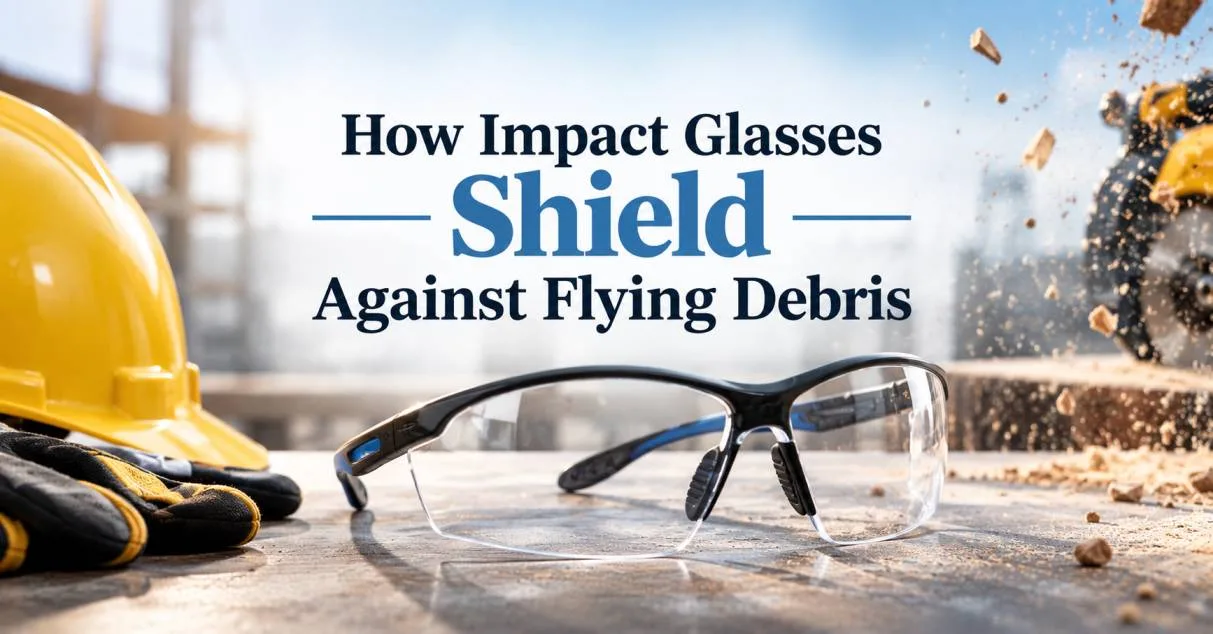
The Transparent Shield: How Impact Glasses Take the Hit
At first, your eyes don’t notice it. The impact resistant safety glasses grab your attention at first sight. This piece sits between you and the force that’s rushing toward you. It takes the blow, and the danger becomes less serious. A see-through barrier holds back the impact. You keep your sight clear.
- The lens sends the incoming energy away. Your eye registers a subtle visual echo rather than the actual collision.
- The frames come around the sides. They close the gaps so that no debris can fall or slide inside.
- The shield stays where it should. It fits properly and feels light, so you only gain the advantage when you wear it.
- Coatings on the shield resist scratches and fog. They help the view stay clear when the environment gets harsh.
Why a Cracked Lens Is a Saved Eye?
Cracks can hint at what was lost. The lens could have been the one to fail. It did not fail. Rather than affecting your sight, the energy was released and the damage concentrated on the fracture. So no, it is not “broken” the way you would fear. It feels as though it has been worn through with time. The section remained aligned and maintained its original form. You also get this as low cost coverage. You pay once, in one quiet payment.
- Polycarbonate does not break the same way as glass. It tears and stretches, and it stays in one piece. So the force that could have driven fragments into your eye instead dissipates on the plastic. The fracture pattern you see is a sign of design. The lens is designed to fail intentionally, preventing shattered pieces from flying toward the face it protects.
- A curved lens points toward what is moving in quickly. The shield stayed put and met the impact at the right moment. The scuff marks and dents appear to be pre-existing. They don't seem random. The landing attempt did not get through, yet the view remained open.
- A fracture begins when force moves through a sequence of decisions. First, the material bends. Then it keeps part of that energy. After that, it lets the rest go, pushing outward. For a short instant, the lens only performed its task. It was intended to direct attention toward you, not to preserve its own shape. The harm you notice is really there to provide protection. The job was already finished before you noticed a problem.
The special impact glasses turn a frightening moment into something that passes by without notice. That is the best outcome safety can aim for.
When you pick them up next time, think about what they are. Not just plastic. Clear protection. A straightforward promise that your eyes will keep catching sunsets, identifying faces, and anticipating what’s next. Something may break or fall. The shield is ready. Then you move on, and you might not even notice it happened.