
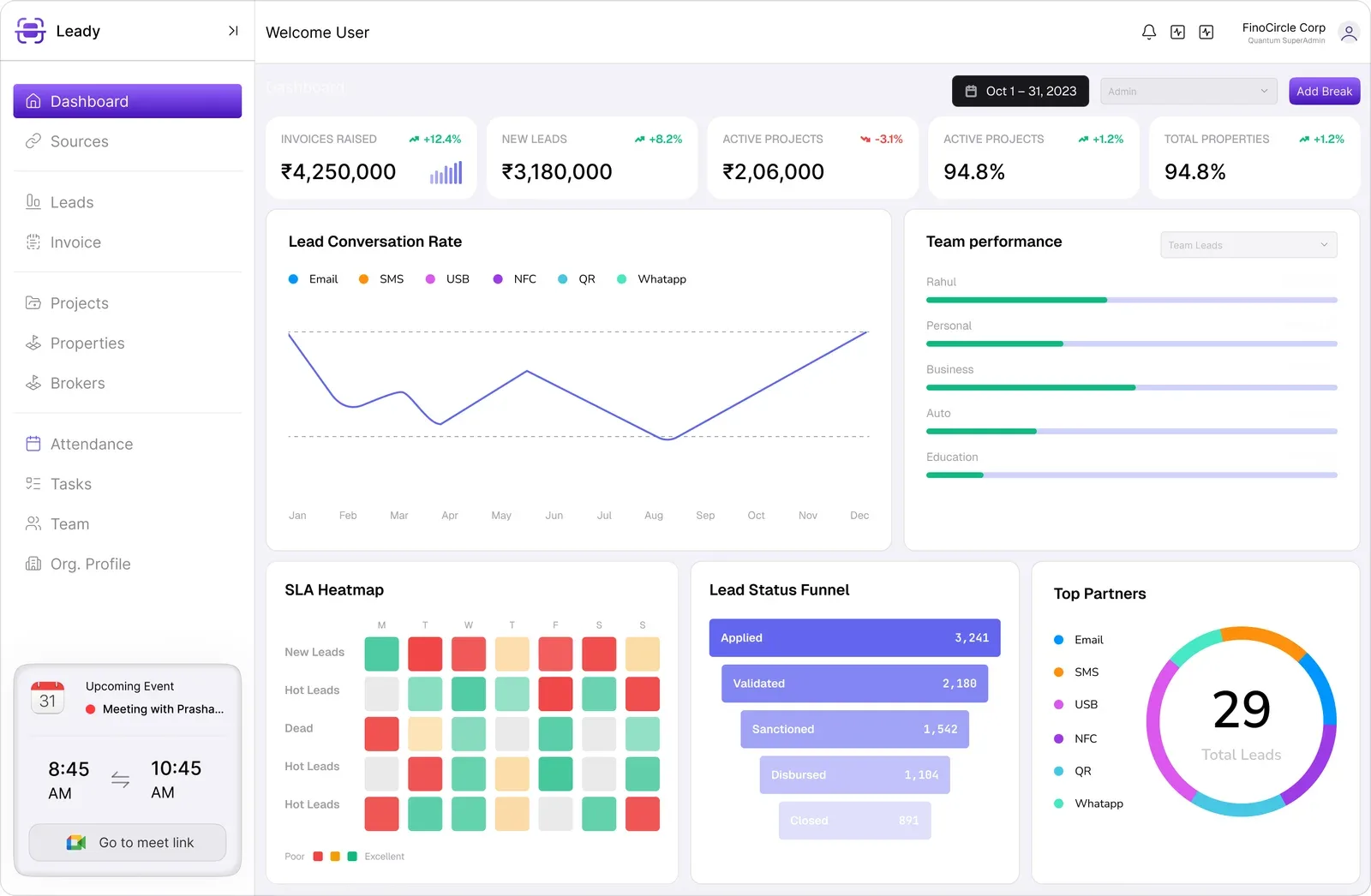
Real estate marketing has changed dramatically. Buyers no longer move from seeing one advertisement to contacting an agent and immediately purchasing a property. Instead, they may discover a project through Google, visit its website, watch a video, click a social media ad, download a brochure, attend a virtual tour, and finally speak with a sales representative.
With so many interactions happening before conversion, one question becomes increasingly important for real estate businesses: Which marketing activities actually generate sales?
That is where marketing attribution comes in.
Marketing attribution helps real estate companies understand which channels, campaigns, and touchpoints contribute to lead generation and, ultimately, property sales. For businesses such as Leadynest, using attribution effectively can provide a clearer picture of marketing performance and help teams make smarter decisions about where to invest their budgets.
What Is Marketing Attribution?
Marketing attribution is the process of identifying and assigning credit to the marketing touchpoints that influence a customer's journey toward conversion.
For real estate, a customer's journey can be long and complicated. Someone might first discover a property through a Facebook advertisement, search for the developer on Google several days later, visit the website, download a brochure, and eventually submit an inquiry after receiving an email.
If the final inquiry is credited only to the email campaign, the business could overlook the important role played by the earlier advertising and search interactions.
Attribution attempts to connect these interactions so marketers can understand the complete customer journey.
Why Attribution Matters in Real Estate
Real estate companies often manage multiple marketing channels simultaneously. These may include:
- Google Ads and search engine optimization
- Facebook and Instagram advertising
- Property listing platforms
- Email marketing
- WhatsApp campaigns
- YouTube and video advertising
- Content marketing
- Referral campaigns
- Offline events and property exhibitions
Without attribution, marketers may rely on surface-level metrics such as clicks, impressions, or the number of leads generated.
But leads are not the same as sales.
A campaign might generate hundreds of inquiries while producing very few qualified prospects. Another campaign may generate fewer leads but contribute to several high-value property transactions.
Attribution helps businesses move beyond "How many leads did this channel generate?" to the more meaningful question: "Which channels contributed to revenue?"
Understanding the Real Estate Customer Journey
Real estate purchases typically involve considerable research and decision-making. Buyers may spend weeks or months comparing properties, locations, prices, amenities, developers, and financing options.
This makes the customer journey particularly important.
Consider a hypothetical buyer who:
- Sees a property advertisement on Instagram.
- Searches for the project on Google.
- Visits the website.
- Reads a blog about the neighborhood.
- Downloads a property brochure.
- Receives a follow-up message.
- Schedules a site visit.
- Eventually books the property.
If the company measures only the final conversion source, it may conclude that the follow-up message generated the sale.
In reality, several marketing interactions helped move the buyer through the funnel.
Marketing attribution provides a framework for understanding these interactions.
Common Attribution Models
Different attribution models assign credit in different ways. Understanding them can help real estate marketers interpret their data more effectively.
First-Touch Attribution
First-touch attribution gives credit to the first marketing interaction.
For example, if a buyer first discovers a property through a Google search, Google receives the attribution credit.
This model can be useful for understanding which channels are effective at generating initial awareness.
Last-Touch Attribution
Last-touch attribution gives all credit to the final interaction before conversion.
If a customer submits an inquiry after clicking an email link, the email campaign receives the credit.
Although simple, this model can overlook earlier interactions that influenced the customer's decision.
Multi-Touch Attribution
Multi-touch attribution distributes credit across multiple interactions.
For example, a buyer's journey might involve paid advertising, organic search, content, email, and a sales call. Instead of assigning all the credit to one channel, the model recognizes multiple contributions.
For complex real estate buying journeys, this approach can provide a more complete perspective.
Connect Marketing Data With Sales Data
One of the biggest challenges in real estate attribution is the gap between marketing and sales data.
A marketing platform may show that an advertisement generated a lead. But what happened afterward?
Did the sales team contact the prospect?
Did the prospect schedule a site visit?
Did they qualify as a serious buyer?
Did they make a booking?
These outcomes matter more than a simple lead count.
Real estate companies should therefore connect marketing platforms with their CRM and sales systems. This allows them to trace a prospect from the original marketing interaction through the sales pipeline.
For a platform or organization such as Leadynest, this type of connected reporting can make marketing performance considerably easier to understand.
Measure Revenue, Not Just Leads
One of the most important principles of real estate attribution is to focus on business outcomes.
Suppose Campaign A generates 500 leads and Campaign B generates 100 leads.
At first glance, Campaign A appears more successful.
But imagine that Campaign A produces only two property bookings, while Campaign B contributes to ten bookings.
Looking only at lead volume would produce a misleading conclusion.
Useful attribution metrics can include:
- Cost per qualified lead
- Cost per site visit
- Lead-to-opportunity rate
- Site-visit-to-booking rate
- Customer acquisition cost
- Revenue generated by campaign
- Return on advertising spend
- Time from first interaction to conversion
These metrics provide a more complete view of marketing effectiveness.
The Role of CRM and Tracking Technology
Effective attribution requires accurate data collection.
Real estate businesses should use consistent tracking across their marketing channels. UTM parameters, CRM integrations, conversion tracking, call tracking, and properly configured analytics systems can help connect customer interactions.
It is also important to maintain clean CRM records.
Duplicate leads, missing source information, incorrect campaign names, and disconnected offline conversions can make attribution unreliable.
Technology can help collect the information, but teams still need clear processes for maintaining data quality.
Attribution Helps Improve Marketing Decisions
The goal of attribution is not simply to create complicated reports.
Its real value is helping marketers make informed decisions.
If data shows that certain campaigns consistently produce qualified prospects and completed transactions, marketers can investigate what makes those campaigns effective. Likewise, channels that generate large volumes of low-quality leads can be examined more closely.
Attribution can also reveal opportunities that simple reporting misses.
For example, a blog article may generate very little direct revenue but consistently assist customers who later convert through another channel. Removing that content based solely on last-click data could eliminate an important part of the customer journey.
Build a More Complete Picture With Leadynest
Real estate marketing is no longer about identifying a single advertisement that "made the sale." Modern buyers interact with brands across multiple platforms before they are ready to make a significant financial decision.
Marketing attribution helps businesses understand this journey.
By connecting advertising data, website activity, CRM information, sales outcomes, and revenue, real estate companies can move from assumptions to evidence-based marketing decisions.
For Leadynest, the opportunity is clear: understand not only where leads come from, but how marketing interactions contribute to qualified opportunities and actual property sales.
The more accurately a business can connect marketing activity with revenue, the better equipped its team becomes to allocate budgets, improve campaigns, and create experiences that support buyers throughout their journey.