
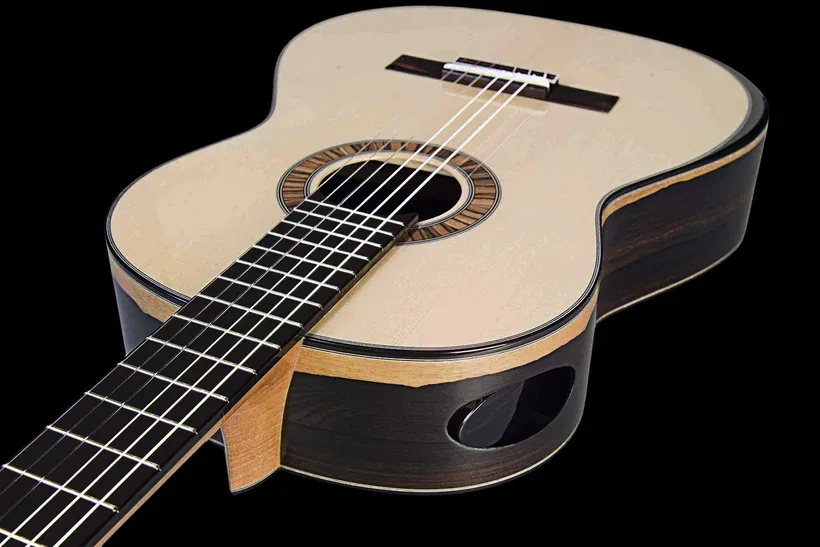
Ever picked up a guitar, tried playing a song you love, and thought, “Why does this sound so different from the version in my head?” It happens! A classical guitar, with its nylon strings and warm, rounded sound, can give familiar melodies a whole new feeling.
If the Kremona Solea Classical Guitar has caught your eye, you might be wondering if it is mainly for classical music or can handle other styles, too. Can you play Spanish melodies, Latin music, folk tunes, or a song you have been humming all week?
Let's explore the possibilities, one musical style at a time.
Classical Music: Where Every Note Has Room to Breathe
Imagine a quiet room and a melody that needs neither a singer nor a band to make an impression. That is where classical guitar music feels especially rewarding.
Classical pieces often combine melody and supporting notes, allowing one guitarist to create the sense of several musical parts playing together. Your thumb may carry the lower notes while your other fingers pick out the tune above them.
You could explore composers such as Francisco Tárrega and Fernando Sor. Start with simpler arrangements if you are still learning. You do not have to rush into difficult pieces to enjoy the sound.
Even a short passage can feel expressive when you give each note the time and care it deserves.
Spanish Music: Ready for a Little Drama?
Have you ever listened to a Spanish guitar melody and felt an urge to tap your foot before you even knew the tune? That mixture of rhythm, tension, and flowing notes is hard to resist.
Spanish guitar music ranges from gentle melodies to lively pieces with sharp accents and quick runs. A nylon-string classical guitar is well suited to exploring these sounds.
Try working on:
- Spanish classical melodies: Focus on smooth phrasing and clear notes.
- Romantic guitar pieces: Shape the melody so it feels expressive rather than mechanical.
- Flamenco-inspired music: Explore rhythmic patterns and accents. Traditional flamenco uses its own techniques and often a guitar designed for that style.
Playing Spanish music does not mean every piece must be fast or dramatic. Sometimes, a slow melody says much more.
Latin Music: Let the Rhythm Move Your Fingers
Perhaps you enjoy bossa nova, samba, or other Latin styles. You might be asking, “Can a classical guitar really work for music with such a strong groove?”
Yes, many Latin arrangements work beautifully on nylon strings. Bossa nova, in particular, pairs a gentle guitar sound with syncopated rhythms and rich chords.
You can begin with simple chord patterns and a steady bass line. Once those feel comfortable, practise the rhythmic changes that give the music its character.
A few styles worth exploring include:
- Bossa nova: Soft rhythms, smooth chords, and a relaxed feel.
- Samba arrangements: Lively rhythmic patterns that take practice to coordinate.
- Latin ballads: Melodic songs where the guitar supports the tune with chords and fingerpicking.
Do not worry if your rhythm feels uneven at first. Slow practice with a metronome can help you bring the bass notes and chords together naturally.
Folk Music and Fingerstyle: Familiar Songs, a Different Feeling
Here is a fun idea. Take a folk song you already know, perhaps one you have sung with friends or heard around the house. Now imagine playing its melody on a nylon-string guitar, with soft bass notes underneath.
Suddenly, a familiar song feels a little more personal.
Folk music often works well on classical guitar because many songs can be adapted for fingerstyle playing. You can pick the melody, add simple chords, and create your own arrangement.
This approach also works for selected acoustic pop songs, traditional tunes, and instrumental versions of familiar melodies. If you are a beginner, look for music with:
- Simple chords and manageable chord changes.
- A clear melody without too many fast finger movements.
- A steady bass pattern you can practise separately.
- A comfortable range for your fingers and hands.
You do not need to master advanced classical technique before playing music you enjoy. Let your favourite songs keep you motivated.
Can You Play Modern Songs on the Kremona Solea Guitar for Sale?
Of course, with the right arrangement. Pop songs, film themes, love songs, and instrumental covers can all be adapted for classical guitar.
However, nylon strings sound and respond differently from steel strings or electric guitar pickups. If you expect bright strumming, heavy distortion, or a powerful rock sound, the result will be different.
That does not make the guitar less versatile. It simply means you may want to approach the song differently.
For example, replace strong electric-guitar chords with fingerpicked patterns, play the vocal melody as an instrumental piece, or use softer chord voicings to bring out the song's emotion.
The goal is not to copy the original recording note for note. It is to discover what the song can become in your hands.
What Should You Consider Before Choosing One?
If you are considering the Kremona Artist Series Solea Classical Guitar, think about the music you genuinely want to play, not just the styles you think a classical guitarist should learn.
Ask yourself:
- Do I enjoy fingerpicking more than strumming?
- Am I drawn to classical pieces, Spanish melodies, or modern song arrangements?
- Do I want an instrument for personal practice, performances, or both?
- Have I tried a nylon-string guitar to see how its neck, strings, and tone feel?
These questions can help you decide whether a classical guitar suits your musical goals. Check the exact model specifications and, if possible, try the instrument before buying. Comfort, setup, and sound preference matter just as much as your preferred music style.
Let Your Musical Taste Lead the Way!
The Kremona Solea Classical Guitar is worth exploring if you enjoy the warm tone and expressive playing of nylon strings. Classical music, Spanish melodies, Latin rhythms, folk tunes, and adapted pop songs all offer different ways to enjoy this type of instrument.
Still unsure which style to try first? Start with the music that makes you want to pick up a guitar. Learn a short melody, repeat it until it feels natural, and experiment with your own phrasing.
You do not need to choose one musical identity and stay there forever. Sometimes, the most rewarding part of playing is discovering a style you never expected to love.