
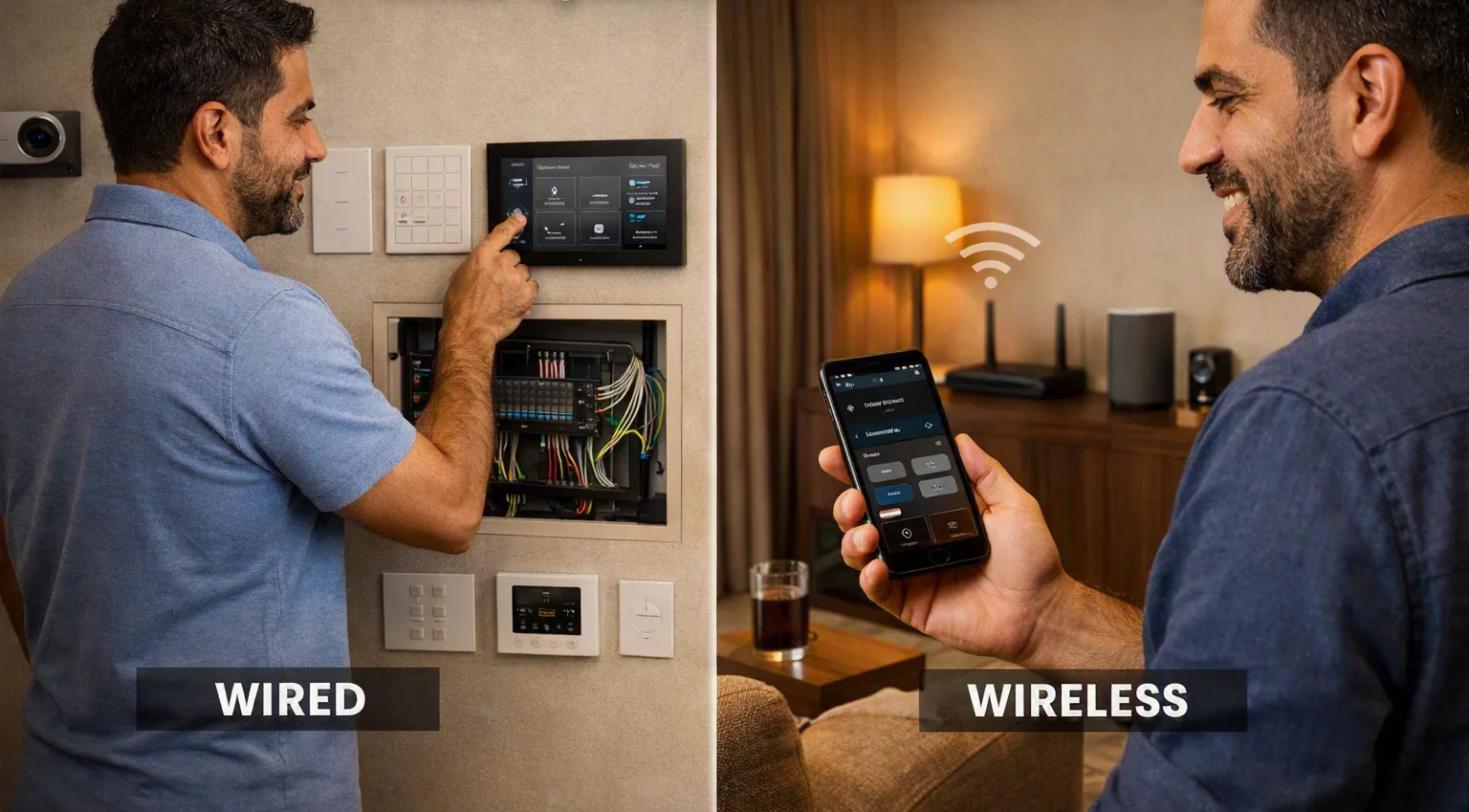
When planning smart home automation dubai, one of the first decisions is whether to use a wired or wireless system. Both options can control lights, air conditioning, security devices, curtains, entertainment systems, and other equipment. The main difference is how these devices communicate with the central control system.
The right choice depends on the home layout, construction stage, number of devices, and how much flexibility is needed. Understanding the strengths and limits of both systems can make planning easier.
What Is Wired Home Automation?
Wired home automation uses physical cables to connect devices and control systems. These cables may carry power, control signals, or network data between different parts of the home.
Wired systems are often planned during construction or renovation because cables can be placed inside walls and ceilings. This can create a neat installation with fewer visible connections.
A wired setup can be useful for larger homes where many devices need to work together. Since communication does not depend mainly on wireless signals, walls and other physical barriers have less effect on communication.
What Is Wireless Home Automation?
Wireless home automation uses technologies such as Wi-Fi, Bluetooth, Zigbee, or other wireless communication methods. Devices communicate without requiring control cables throughout the property.
Wireless systems are often easier to add to an existing home. For example, a homeowner may start with smart lights and later add sensors, locks, thermostats, or other devices.
This approach can also reduce the need for drilling or opening walls. However, wireless performance can depend on the home’s layout, network quality, distance between devices, and interference from other signals.
Reliability and Communication
Wired systems generally provide stable communication because devices use physical connections. This can be useful when many devices need consistent communication.
Wireless systems can also work reliably when properly planned. A strong network, suitable device placement, and good coverage can help reduce connection problems.
The reliability of either system depends on the quality of the equipment and the way the system is designed.
Installation and Home Design
Wired automation usually requires more planning. Cables need to be considered before walls, ceilings, and other areas are finished. Changes after installation may require additional work.
Wireless automation offers more flexibility for completed properties. Devices can usually be installed without running control cables through the walls.
For a new home, wired automation may be easier to include during the construction stage. For an existing home, wireless equipment can provide a simpler installation path.
Flexibility and Future Changes
Wireless systems are generally easier to change or expand. New devices can often be added without changing the existing wiring.
Wired systems can also be expanded, but the original design needs to allow for future devices and connections. Good planning is therefore important before installation.
Homeowners who expect their needs to change over time may prefer a system that allows simple additions.
Cost Considerations
The cost of automation depends on the number of devices, type of equipment, installation requirements, and level of control.
Wired systems may require more installation work, especially in finished properties. However, they can provide a long-term infrastructure for larger automation setups.
Wireless systems may require less physical installation work, but additional network equipment or wireless devices may be needed as the system grows.
Instead of comparing only the initial cost, it is useful to consider installation work, maintenance, expansion, and future changes.
Which System Is More Suitable?
There is no single option that works best for every home. Wired automation can be suitable for new construction, larger properties, and systems that require stable communication between many devices.
Wireless automation may be more suitable for apartments, completed homes, rental properties, or homeowners who want to add smart devices gradually.
A hybrid approach is also possible. Some important devices can use wired connections, while smaller or easier-to-change devices use wireless communication.
Planning the Right Setup
Before selecting a system, consider the home’s construction stage, network coverage, number of devices, future expansion plans, and preferred level of control. It is also useful to decide which devices are essential and which can be added later.
A well-planned system should match the property rather than simply choosing one technology for every device. With the right planning, smart home automation dubai can be designed around the practical needs of the home without making the setup unnecessarily complex.