
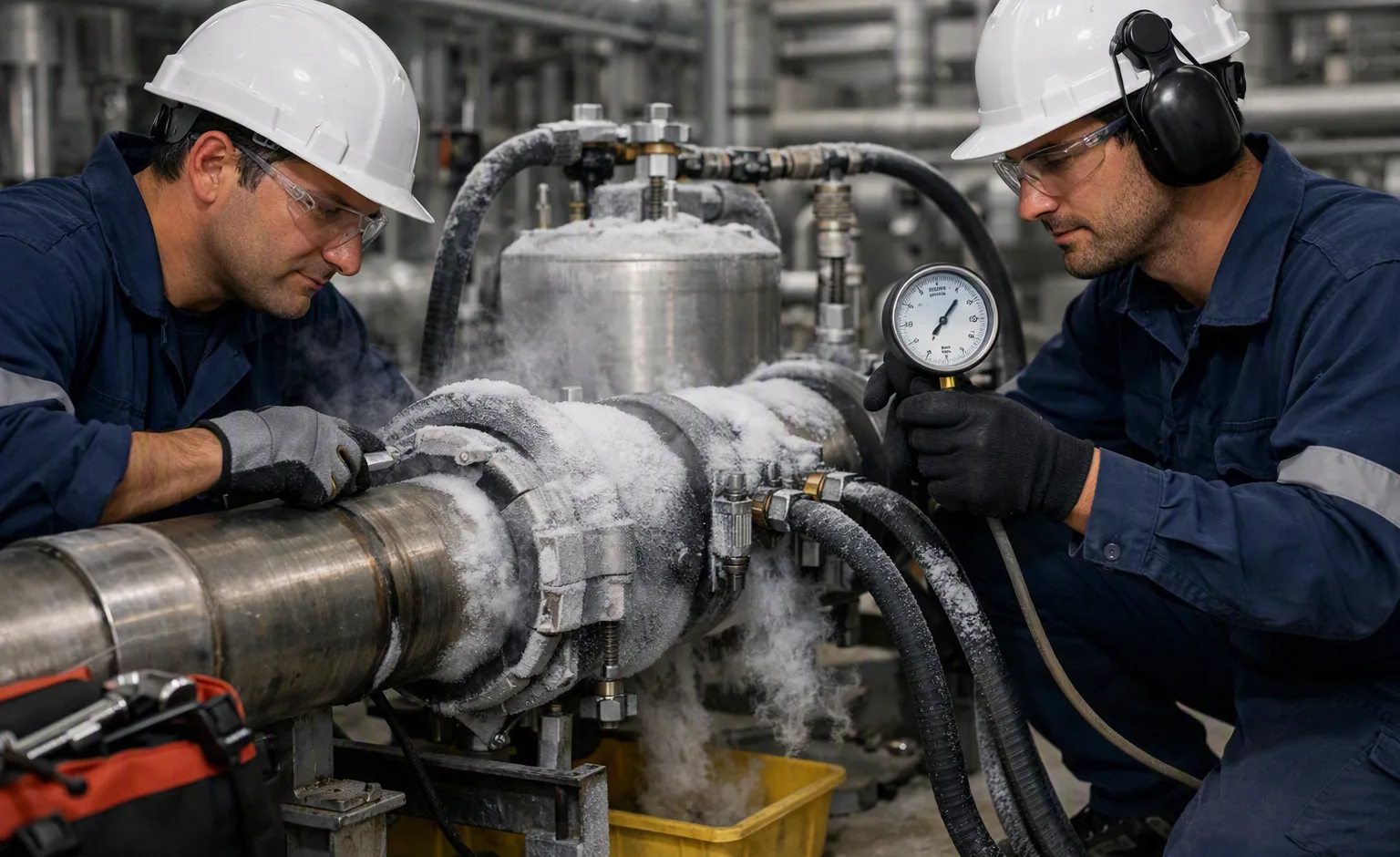
Pipe freezing services in Dubai use a controlled cooling process to turn the water inside a section of pipe into a solid ice plug. This ice plug can temporarily block the flow of water and create a safe working area for certain maintenance tasks. The method is useful when draining an entire pipe system is difficult or when water needs to remain in other parts of the system.
The basic process involves placing a special freezing jacket or cooling unit around a selected section of the pipe. A refrigerant or cooling medium removes heat from the pipe wall. As the pipe becomes colder, the water inside it gradually loses heat and starts to freeze.
What Happens to Water as It Gets Colder?
Water normally changes from a liquid to a solid when its temperature reaches around 0°C under normal atmospheric conditions. During pipe freezing, heat is removed from the water through the pipe wall.
At first, the water temperature slowly drops. Small ice crystals then begin to form against the inside surface of the pipe. As more heat is removed, these crystals grow toward the center of the pipe.
The freezing process does not happen instantly. The thickness of the pipe, type of pipe material, water temperature, surrounding temperature, and cooling equipment can all affect how quickly an ice plug develops.
How the Ice Plug Forms Inside the Pipe
The ice usually begins forming around the coldest part of the pipe. The frozen area gradually becomes thicker as more water loses heat. Over time, the ice can form a solid section across the internal diameter of the pipe.
This solid ice section acts as a temporary barrier. It can restrict or stop water movement through that section of the pipe. The strength of the ice plug depends on factors such as pipe size, water conditions, freezing temperature, and the length of the frozen section.
A properly formed ice plug needs to be strong enough for the planned maintenance work. This is why temperature and freezing conditions need to be monitored during the process.
Does Water Expand When It Freezes?
Water behaves differently from many other liquids when it changes into ice. As water freezes, its molecules arrange themselves into a structure that takes up more space than liquid water. This means frozen water has a larger volume than the same amount of liquid water.
This expansion is important during pipe freezing work. If water is trapped in a completely closed section of pipe, there may be limited space for expansion. This can increase pressure within the pipe.
For this reason, the condition of the pipe system must be understood before freezing begins. Technicians need to identify valves, fittings, connected sections, and other points that may affect pressure or water movement.
Why Pressure Matters During Freezing
Pressure is an important part of controlled pipe freezing. When water freezes in a confined space, changes in volume and temperature can affect pressure inside the system.
A pipe may also contain trapped water between valves or other closed points. If the freezing process is started without understanding these conditions, pressure may develop in an unwanted area.
Before starting the work, the relevant pipe section should be checked carefully. The freezing location, pipe condition, water flow, valve position, and connected equipment should all be considered.
How Temperature Is Monitored
Temperature monitoring helps show how the freezing process is progressing. Cooling equipment is normally positioned around the selected pipe section, while temperature readings are checked during the operation.
The temperature needs to become low enough for the required ice plug to form. However, simply reaching a low temperature does not always mean that the ice plug is ready. The pipe size, material, water movement, and surrounding conditions can influence the freezing time.
Continuous observation helps identify changes during the process. It also allows technicians to respond if the temperature does not develop as expected.
What Happens to Water Flow During Freezing?
As ice begins to form inside the pipe, the available space for liquid water becomes smaller. This gradually reduces water movement through the frozen section.
Once a strong ice plug has formed, the frozen section can stop normal flow through that part of the pipe. Water may still be present on both sides of the plug, depending on the design of the system.
This temporary blockage allows certain maintenance activities to take place without removing all the water from a larger pipe network. However, the actual application depends on the pipe design and the conditions of the system.
What Happens When the Pipe Is Warmed Again?
After the maintenance work is completed, the cooling equipment is removed or stopped so the frozen section can warm gradually. As the temperature rises, the ice starts changing back into liquid water.
The melting process should be controlled rather than rushed. A gradual return to normal temperature helps technicians observe the pipe and system conditions as the ice disappears.
Water flow can then return through the previously frozen section when the system is ready. The timing depends on pipe size, ambient temperature, the amount of ice formed, and the equipment used during the operation.
Factors That Affect Freezing Time
Several conditions can change how long it takes to create an ice plug. A larger pipe generally contains more water and may require more time to freeze. Thicker pipe walls can also affect how quickly heat moves away from the water.
The starting temperature of the water is another important factor. Warmer water requires more cooling before freezing begins. Water movement can also affect the process because moving water carries heat through the pipe.
The surrounding environment matters as well. A warm room, direct sunlight, nearby machinery, or other heat sources can influence the freezing process.
Understanding these factors helps determine whether pipe freezing is suitable for a particular maintenance situation and how the process should be controlled.