A breaking news alert can appear on your phone within seconds. One moment, the screen is quiet. The next, a notification announces a major election result, corporate development, market movement, natural disaster, or other important event.
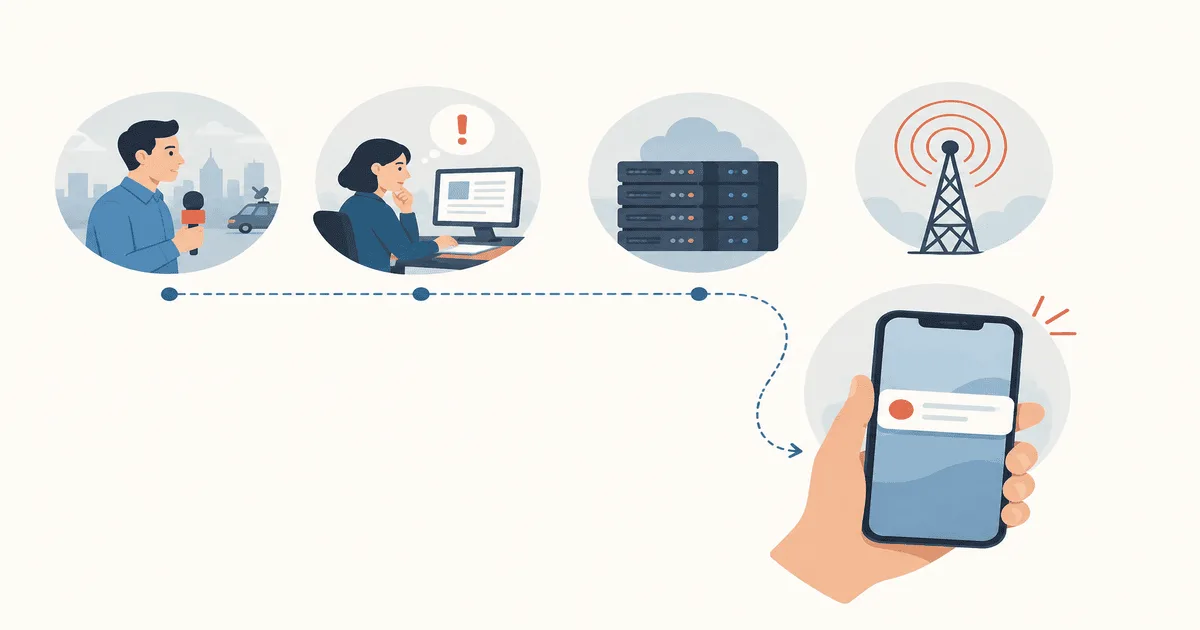
That short alert may seem simple, but there is a surprisingly long chain behind it. Journalists, editors, publishing systems, servers, notification platforms, and your smartphone all play a role before those few words appear on the screen.
It Starts With a News Event
The process begins when something happens that could matter to the public.
Reporters monitor government announcements, company statements, financial markets, emergency services, court decisions, live events, and other sources. Some developments are spotted directly by journalists, while others are flagged through automated monitoring systems.
Technology has become an increasingly important part of this process. News organizations use software to monitor large amounts of information, identify developing stories, and help journalists respond quickly. For readers who follow technology news, this behind-the-scenes infrastructure is just as significant as the devices and applications they use every day.
But finding a potential story is only the first step.
Editors Decide What Deserves an Alert
Not every article becomes a push notification.
Editors have to decide whether an event is important and urgent enough to interrupt someone's phone activity. They also need to make sure the wording accurately reflects what is known.
This can be difficult during the first few minutes of a developing story. Early reports may be incomplete, conflicting, or subject to change. An editor therefore has to balance speed with accuracy.
The wording needs to be short while still giving readers enough context to understand why the alert matters. A notification might contain only a headline and a few additional words, but those words can influence how people understand a developing event.
News organizations also have to consider how frequently they send alerts. Sending too many notifications can cause alert fatigue, leading users to mute notifications or stop paying attention to them.
The Publishing System Sends the Request
Once an editor approves an alert, the newsroom's publishing system sends it into the organization's notification infrastructure.
The request can include the notification message, headline, destination inside the app, and information identifying the appropriate audience. The publisher's servers then communicate with a push notification service.
The exact system depends on the device platform. Apple's ecosystem uses Apple Push Notification service, commonly known as APNs. Android applications commonly use Firebase Cloud Messaging, or FCM.
These services act as an important link between the publisher and the user's device. Instead of a news organization's server maintaining a direct connection with millions of individual smartphones, the push service handles much of the delivery process.
Your Phone Has a Digital Destination
Your smartphone does not simply receive every notification sent by a publisher.
When a user installs an app and grants notification permissions, the app can obtain information that allows notifications to be delivered to that particular installation. Push notification systems can also support broader groups of users, depending on how the publisher has designed its notification system.
This is what allows a news organization to distribute one breaking alert to thousands or millions of subscribers without manually addressing each phone.
The publisher sends the notification request to the appropriate push service, which then determines how to route the message toward the intended devices.
The Push Service Handles Delivery
After receiving the request, the notification service processes it and attempts to deliver it to the relevant smartphones.
When a device is connected and available, delivery can happen extremely quickly. That speed is one reason breaking alerts can appear almost immediately after a newsroom publishes them.
There are exceptions, though. A phone may be offline, have limited connectivity, or have system settings that affect notification delivery. Push services can also delay or manage delivery in certain situations to protect battery life and system performance.
So when a newsroom presses send, the alert is not necessarily guaranteed to appear on every phone at exactly the same moment.
Your Smartphone Makes the Final Decision
The last stage happens on the device itself.
Once the notification reaches the smartphone, the operating system determines how it should be presented. Depending on the user's settings and the notification's configuration, it may appear on the lock screen, notification center, or status area. It may also produce a sound or vibration.
Your personal settings can make a difference. Notification permissions, Focus modes, Do Not Disturb settings, battery controls, and other operating system features can influence what you see and hear.
The app itself may also behave differently depending on whether it is open, running in the background, or inactive.
Why It Feels Almost Instant
The speed of a breaking news alert comes from several systems working together.
First, a significant event has to be detected. A reporter or monitoring system identifies it. Editors assess the information and approve the alert. The publishing platform sends the notification request to a push service. That service routes the message toward the appropriate devices, and the smartphone's operating system finally presents it.
All of those steps can happen in seconds.
So the next time your phone buzzes with a breaking news notification, the alert is more than a simple message. Behind those few words is a coordinated system combining journalism, editorial judgment, software, network infrastructure, and mobile technology to move information from an event to your screen.