
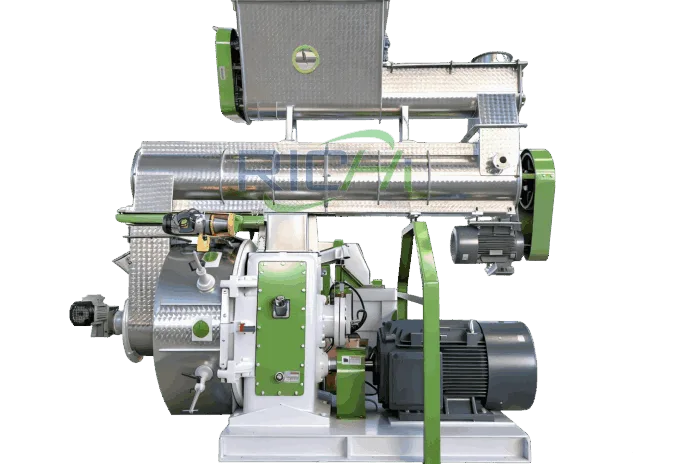
Grass is one of the most accessible fibrous materials for pellet production. It can be processed into compact pellets for livestock feed, biomass fuel, or other agricultural applications. However, the cost of producing grass pellets is not determined by the pelletizing machine alone. Raw material conditions, production capacity, preparation equipment, energy consumption, and the final pellet specification all influence the overall investment.
Understanding these factors is useful for farms and agricultural businesses that are evaluating a grass pellet project.
What Influences Grass Pellet Production Costs?
The term grass pellet machine price can refer to the cost of a standalone pellet mill or a complete production system. These are substantially different investments.
A standalone machine may be suitable when the grass has already been dried and crushed to an appropriate size. A complete line may additionally include a dryer, hammer mill, feeder, cooler, screener, conveyors, and packaging equipment.
Therefore, comparing machine prices without considering the complete process can result in an inaccurate estimate.
Raw Material Preparation
Grass generally contains long fibers and may have relatively high moisture after harvesting. These characteristics affect the pelletizing process.
If the moisture level is too high, drying may be necessary. Long stems may also need to be reduced in size before entering the pellet mill.
For livestock applications, producers often process materials such as grass, hay, alfalfa, and other forage crops. A 5T/H hay pellet machine for sale may therefore be considered when the same facility handles several types of dried forage.
The actual equipment should nevertheless be selected according to the physical properties of the specific raw material.
Capacity and Investment
Production capacity is another major cost factor.
A small farm producing pellets for its own animals may require a relatively modest processing system. A commercial feed producer needs higher throughput and may require continuous material handling and automated control.
The capacity of supporting equipment should also match the pellet mill. A high-capacity pelletizer connected to an undersized dryer or crusher can create a production bottleneck.
Capacity should therefore be calculated from the required daily output rather than selected only according to the machine's nominal rating.
Feed or Fuel Application
The intended application affects the equipment configuration.
Grass pellets used as animal feed normally require attention to nutritional formulation, cleanliness, particle size, and pellet durability. Depending on the feed formula, grinding, mixing, and conditioning equipment may be incorporated into the production process.
A biomass application may have different requirements concerning moisture, pellet diameter, durability, and storage.
For example, feed pellet machine systems are normally designed around the formulation and feeding requirements of livestock rather than simply the physical compression of grass.
Standalone Machine or Complete Line?
A standalone pellet machine may reduce the initial equipment investment when upstream and downstream processes are already available.
A complete production line is more appropriate when the raw material needs drying and crushing or when automated cooling, screening, conveying, and packaging are required.
A typical grass pellet process may include:
Raw Material Preparation → Drying → Crushing → Pelletizing → Cooling → Screening → Packaging
Not every project requires every stage. The final configuration depends on moisture, capacity, and product requirements.
What Should Buyers Compare?
When evaluating suppliers, buyers can compare more than the equipment quotation. Important factors include:
- Expected production capacity
- Motor power
- Raw material moisture range
- Required particle size
- Pellet diameter
- Energy consumption
- Die and roller specifications
- Spare parts availability
- Maintenance requirements
- Supporting equipment
The terminology pellet mill for sale is often used broadly, but machines with similar descriptions can have different configurations and operating conditions.
A supplier should therefore receive detailed information about the grass before recommending a specific model.
Conclusion
The cost of grass pellet production depends on much more than the pellet mill itself. Raw material preparation, production capacity, intended application, automation level, and supporting equipment can all change the total investment.
For a small farm, a compact system may be sufficient when prepared grass is readily available. Larger operations may benefit from an integrated line that combines drying, crushing, pelletizing, cooling, screening, and packaging.
The most useful approach is to evaluate the complete processing requirement first and then compare equipment based on actual production conditions.
For technical specifications and additional background, learn more about grass pellet production equipment and how different configurations are matched to fibrous agricultural materials.